Bee Sensory Bin
This bee sensory bin is a themed, hands-on activity for preschoolers that supports fine motor play and pretend exploration. It works well during a spring unit, a letter B focus, or anytime you want a contained activity kids can return to over a few days.
If you’re building out bee activities for preschool, this sensory bin is best used as a set-it-up-once activity rather than a quick fill-in. The materials are theme-specific but reusable and easy to store for future use.
This is the kind of activity you prep ahead of time, then pull out when you want something ready that doesn’t require constant instruction. Once it’s set up, kids can explore independently while you step back.
Sensory Bins At-a-Glance
Prep level: Medium (set up once, reuse all week)
Ages: Preschool and Pre-K
Time to set up: 15–20 minutes
Materials: Themed sensory materials (reusable or swappable)
Skills supported: Fine motor control, scooping and pouring, pretend play
Mess level: Low (dry materials, contained bin)
Good to know: This sensory bin works best when prepped ahead of time. Once it’s set up, kids can explore independently with minimal direction.
Why This Sensory Bin Works
This sensory bin is designed to be set up once and used multiple times without constant direction.
- The dry base keeps the activity contained and easy to reset
- The color contrast helps materials stand out and invites sorting and scooping
- Open-ended tools encourage fine motor practice through play
- The bin supports independent exploration without needing prompts or instructions
- Materials store easily so the activity can be reused later
This is a good choice when you want a hands-on activity that stays available and doesn’t need to be reintroduced every time.
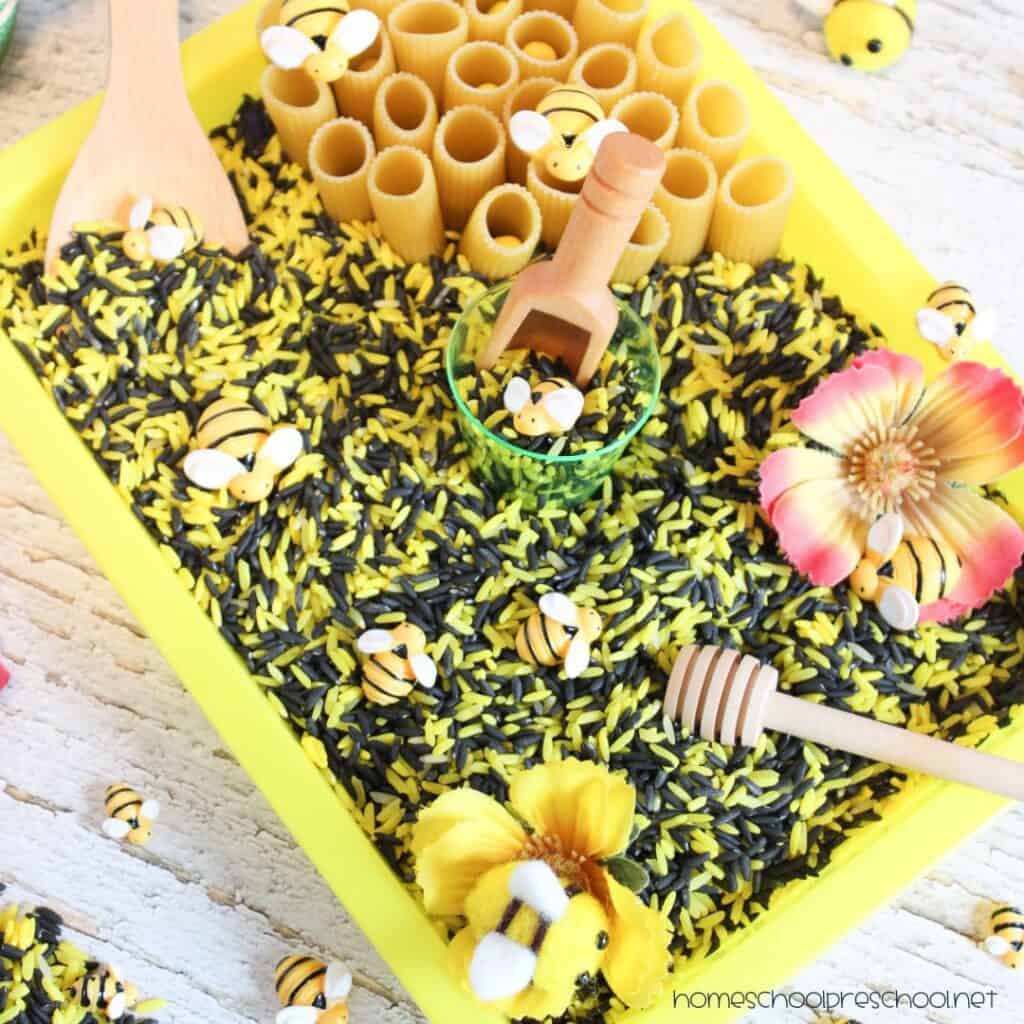
Bee Sensory Bin
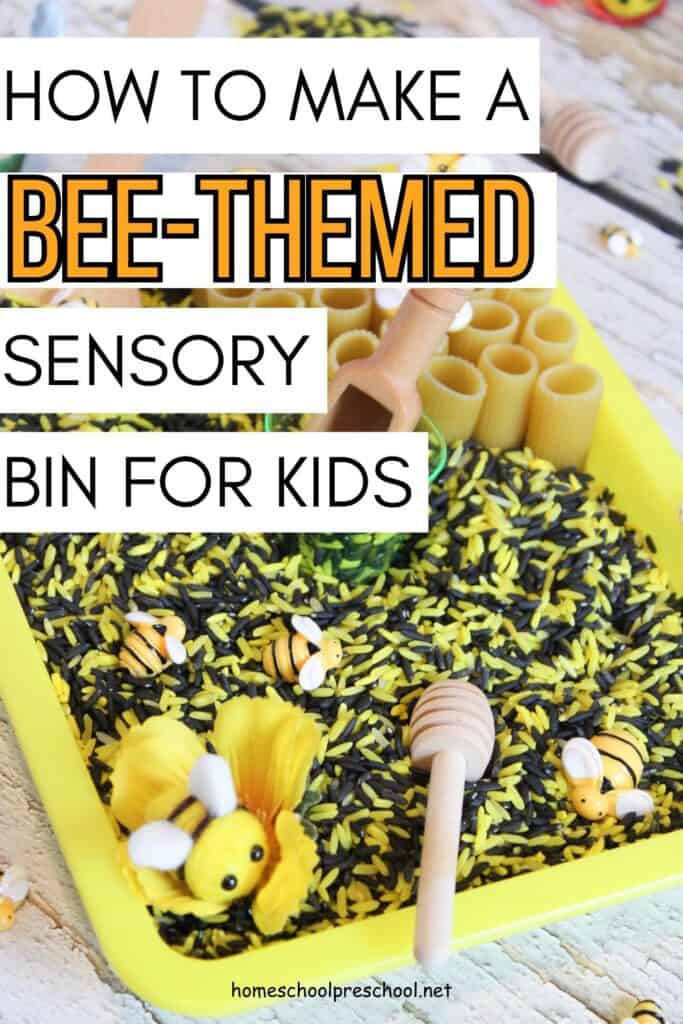
A sensory tray or bin is a fantastic way to introduce preschoolers to the world of bees while keeping them entertained and engaged. This hands-on activity promotes sensory exploration, fine motor skills, and imaginative play.
With just a few simple materials, you can create a bee-themed sensory experience that’s perfect for a classroom or home learning environment.
What You’ll Need
- 4 cups white rice (dried)
- Yellow acrylic paint
- Black acrylic paint
- Measuring spoon (1 tablespoon)
- 2-gallon ziplock bags
- Large baking sheet
- Wax paper
- Bee toys or figurines
- Scoops and cups
- Optional: dried rigatoni pasta and playdough (for making a hive)
These are examples of materials used in this sensory bin. You can swap in what you already have at home.


How to Set Up the Bee Sensory Bin
Split the rice into two separate ziplock bags. Add one tablespoon of yellow paint to one bag and one tablespoon of black paint to the other. Seal the bags tightly and shake them until the rice is fully coated.
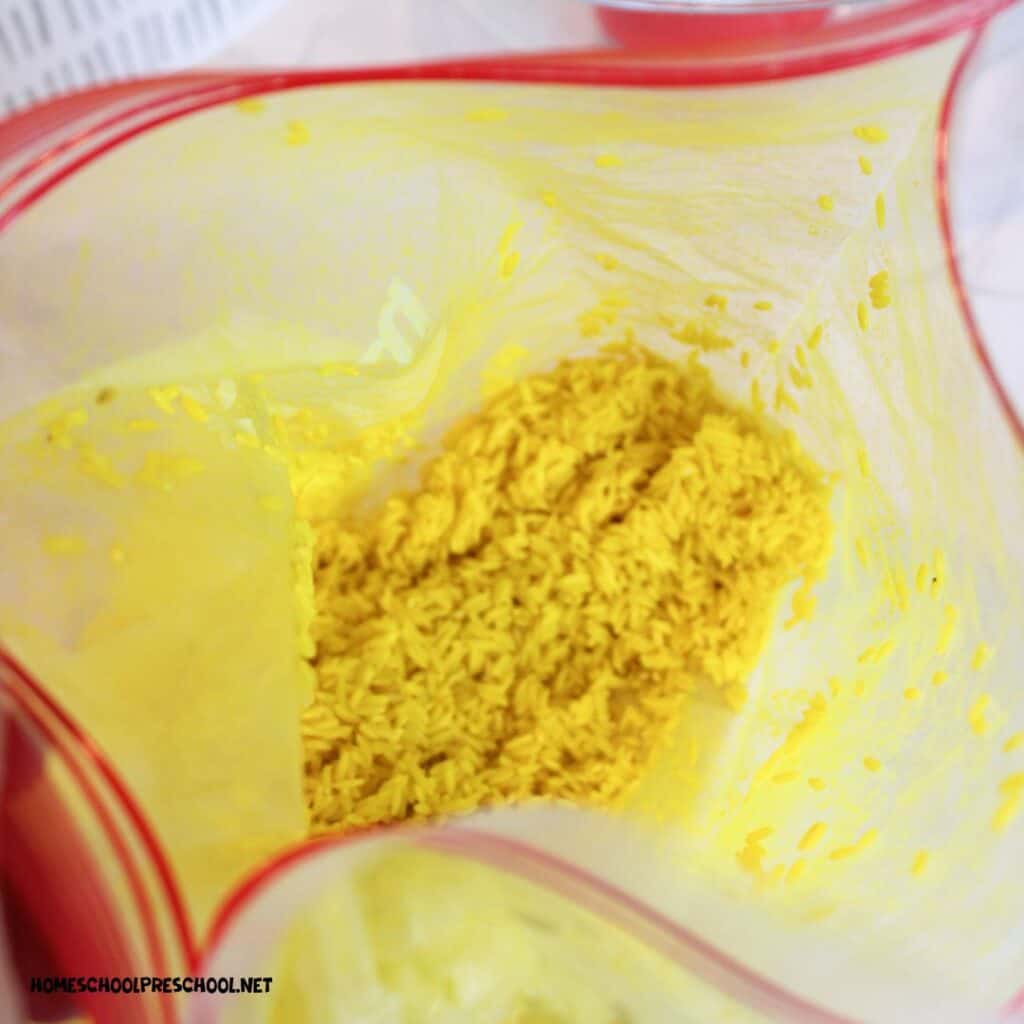
Spread the rice onto a wax paper-lined baking sheet in a single layer. Let it dry for 3-4 hours.
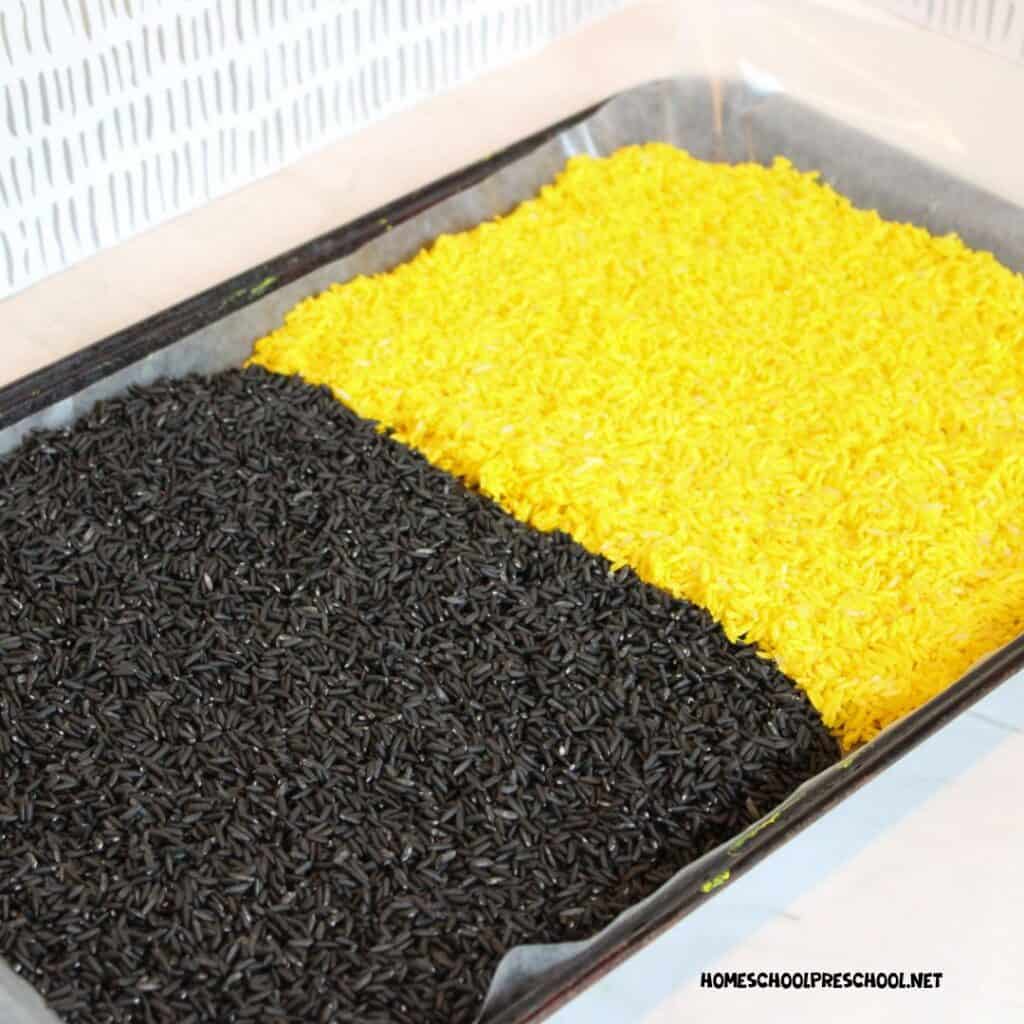
Once dry, mix the yellow and black rice together.
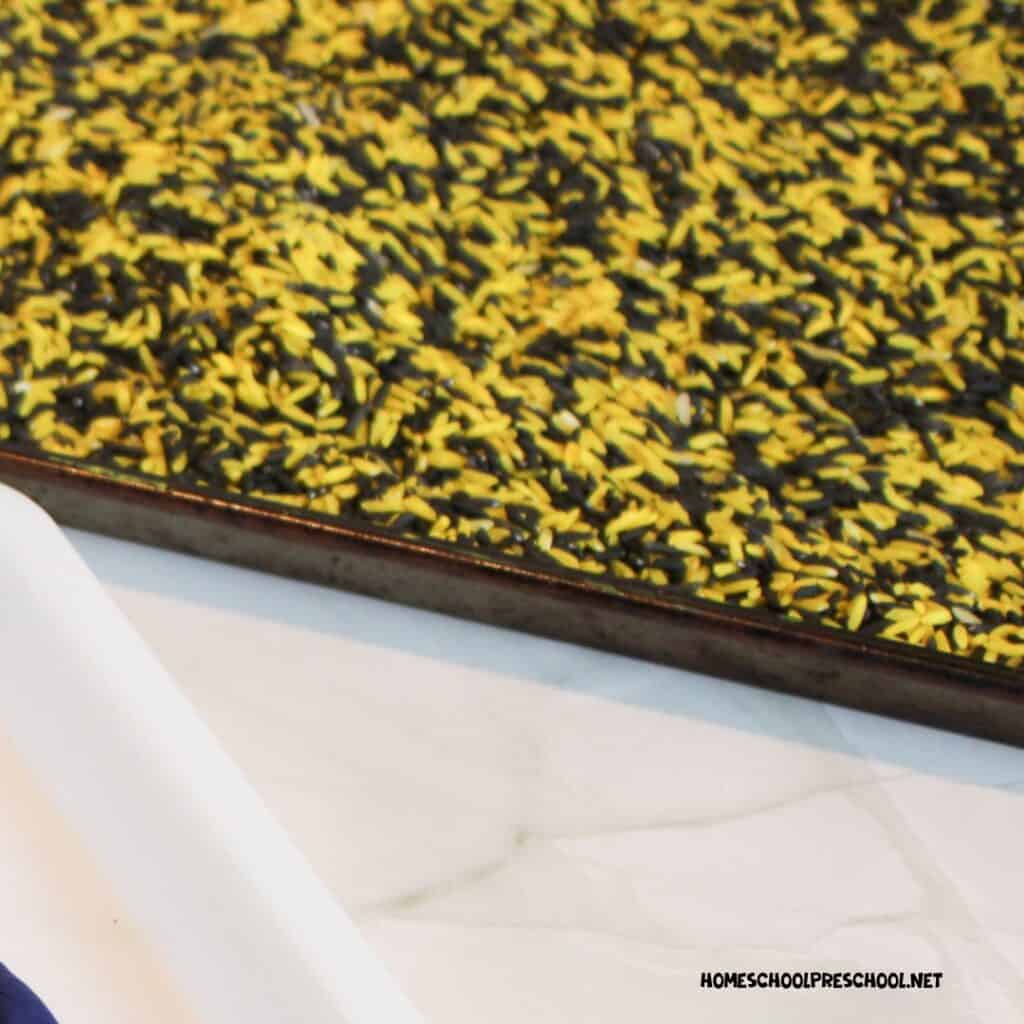
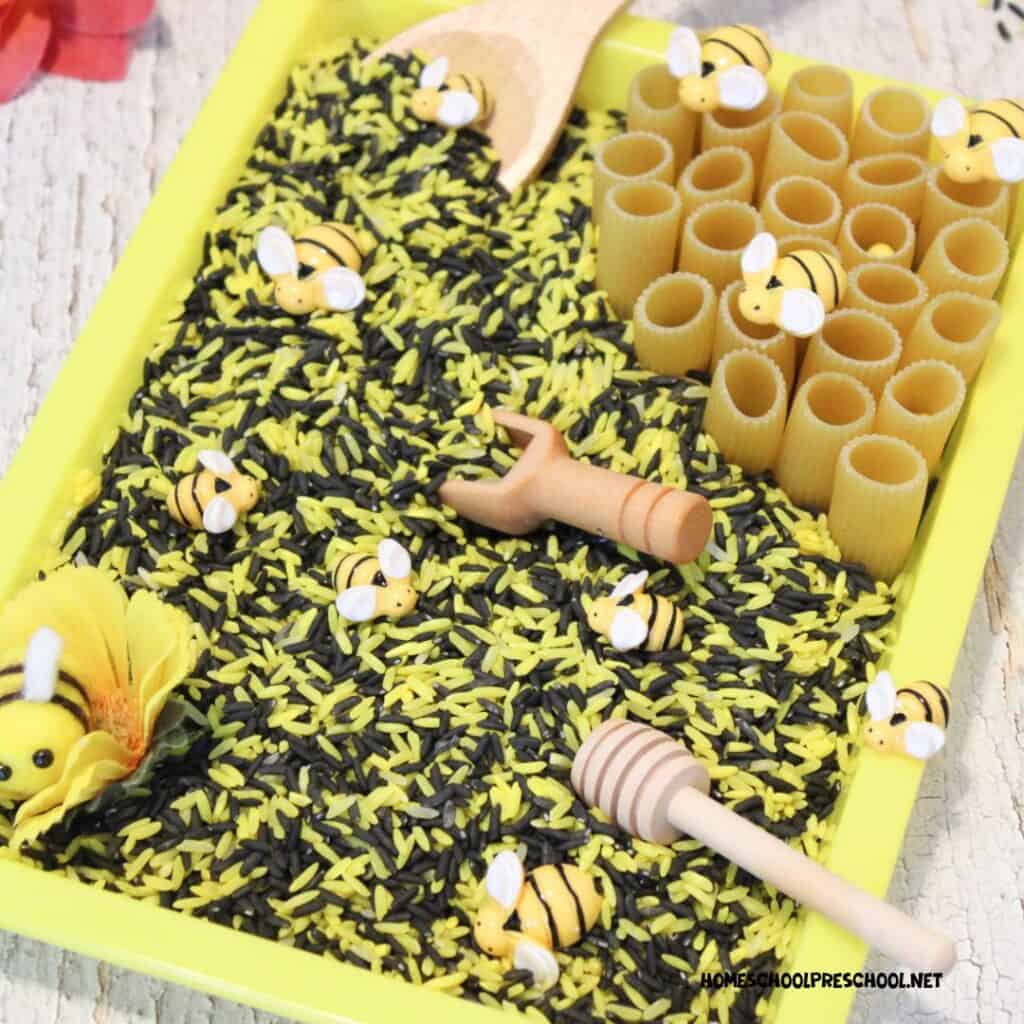
Pour the rice into your sensory bin and add bee toys, scoops, and cups.
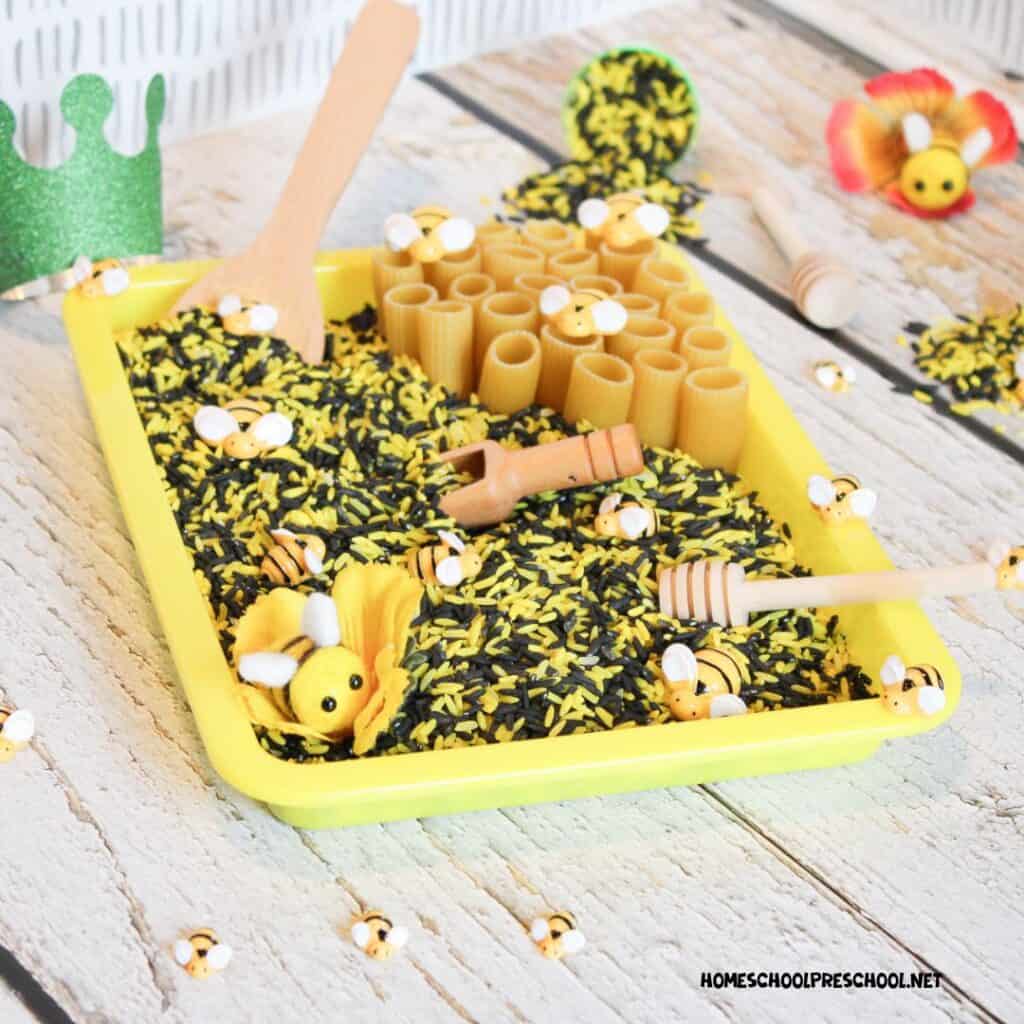
Optional: Create a hive by flattening playdough and pressing dried rigatoni pasta into it. Add this to the sensory bin for extra fun!
How Kids Use This Sensory Bin
Kids explore this bee sensory bin through simple, open-ended actions rather than guided steps.
They scoop and pour the rice, move bee figurines through the bin, and fill or empty the pasta “hives” using the wooden tools. Some children focus on repeating the same motion, while others create simple pretend play as they move bees from place to place.
This bin doesn’t require prompts or directions to be engaging. Once it’s set up, children choose how long to stay with it and how they interact with the materials. It can be revisited over multiple days, with play changing naturally as familiarity grows.
Bee Sensory Bin Variations
You can reuse the same materials and adjust the setup depending on how you want to use the bin.
Bumble Bee Sensory Bin
Stick to black and yellow materials only and remove extra props. This keeps the focus on scooping, pouring, and visual contrast.
Honey Bee Sensory Bin
Add a honey dipper, small jars, or cups to encourage filling and emptying. This variation works well for repeated fine motor practice.
Bee Sensory Tray
Use a shallow tray instead of a deep bin and offer fewer materials at a time. This option is helpful if you want a shorter setup or limited space.
Pre-K Extension Ideas
Invite sorting by size or color, count bees as they’re moved, or add number cards for light structure without turning it into a lesson.
Books to Pair with This Sensory Bin
Read one of these books before setting up the bee sensory bin or alongside open-ended play.


Try This Next: More Bee Activities for Preschool
If your child enjoys this bee sensory bin, these activities build on the same skills with minimal setup.
- Bee Movies – Watch a short, age-appropriate bee movie before or after play
- Bee Crafts for Preschool – Low-prep projects that use familiar materials
- Bee Worksheets for Preschool – Print-and-go options when you want a table activity
- Spring Sensory Play Ideas – Easy sensory activities you can rotate through the season
Each of these works as a follow-up, not a replacement. Pick one that fits your day and skip the rest.
Bee Sensory Bin FAQs
Using a large plastic bin with high sides can help contain the rice. You can also place a sheet or tablecloth underneath the bin to make cleanup quick and easy.
A bee sensory bin is ideal for preschool and kindergarten-aged kids, typically ages 3-5. Just be sure to supervise younger children closely to avoid choking hazards.
Absolutely! You can try dried pasta, colored beans, or even shredded paper as an alternative to rice. Just be sure the materials are safe and easy for kids to handle.
Want a simple guide you can keep on hand?
Grab the printable bee sensory bin tutorial with setup tips and material ideas.

This bee sensory bin is an easy way to offer hands-on play without filling your day with extra activities. Once it’s set up, it stays available and works at your child’s pace.
You don’t need to do every extension or variation for it to be worthwhile. Set it out, let your child explore, and bring it back when it fits your day.
Simple, reusable activities like this are often the ones kids return to the most—and that’s enough.

Tara is the brains behind Homeschool Preschool, where her journey from preschool and public school teacher to homeschooling mom of three fuels her passion for early childhood education. With a blend of expertise and firsthand experience, Tara’s writings offer practical tips and engaging resources to support families in creating meaningful learning adventures at home.