How to Use Book Companions in Preschool Literacy Lessons
If you’ve been wondering how to use book companions in preschool literacy lessons, you’re in the right place! Here at Homeschool Preschool, we love turning story time into meaningful, hands-on learning experiences.
Book companions are printable activity packs designed to pair with popular picture books. They help little learners build early literacy skills, understand story structure, and strengthen fine motor coordination—all while having fun.
Let’s explore what book companions are, why they’re so effective, and how you can start using them to build a joyful literacy routine with your preschooler.
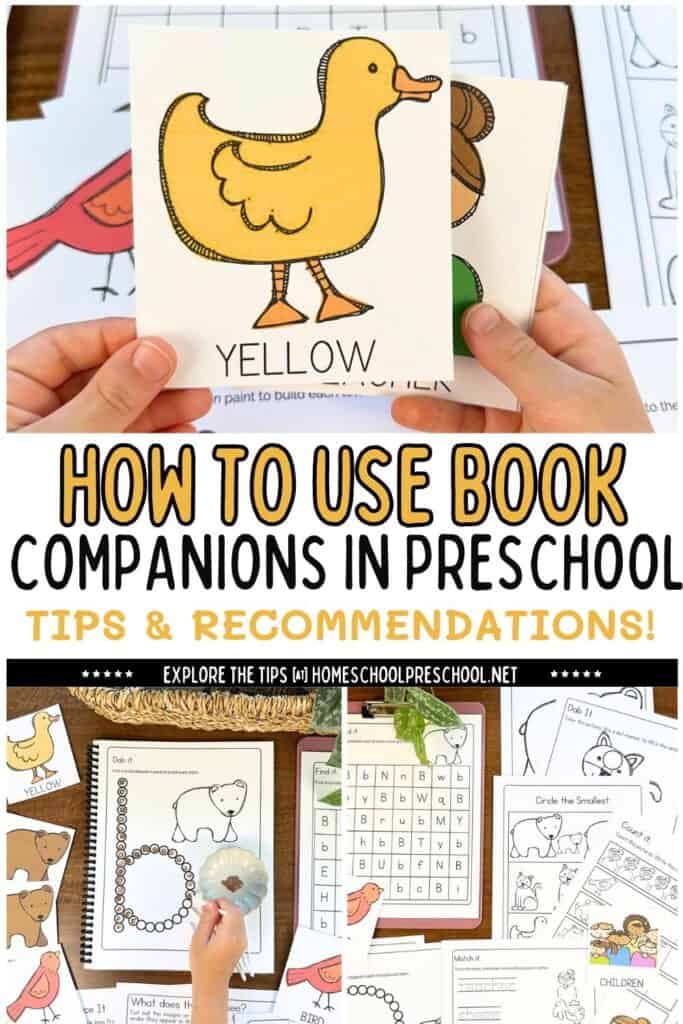
What Is a Book Companion?
A book companion is simply a collection of activities that go along with a favorite picture book. It’s an easy way to take a story your child already loves and turn it into something more hands-on and interactive.
These activities may include sequencing cards, vocabulary matching games, simple tracing pages, puppets for retelling the story, or coloring sheets. They help reinforce what your child is hearing during read-aloud time—things like remembering the order of events, recognizing characters, learning new words, and even practicing those fine motor skills.
Whether you’re doing preschool at home or just looking to add a little more structure to story time, book companions are a flexible way to keep learning fun and meaningful.
Why Use Book Companions in Preschool?
Book companions are such a helpful way to make the most of story time, especially with little ones who love reading the same book over and over again (ask me how I know!). These book activities give your child a chance to truly connect with the story by listening closely, discussing what’s happening, and retelling it in their own words.
They’re also great for reinforcing important skills through play and repetition—things like recognizing colors, remembering the order of events, or picking out new vocabulary. And if you’re like me and trying to keep some rhythm in your days, book companions can be a lifesaver. You can use them during circle time, for quiet table work, or even to fill that tricky afternoon slump.
Bonus tip: They’re also great for transitions—perfect for morning warm-ups, calming down before nap, or winding down at the end of the day.
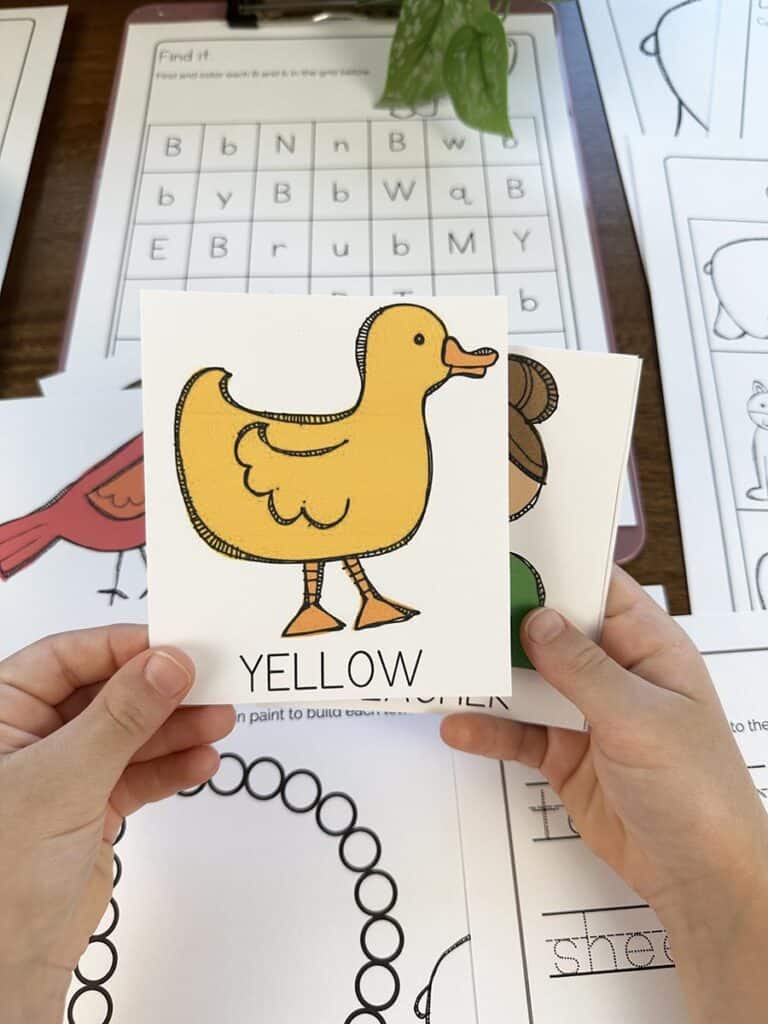
Key Literacy Skills Supported by Book Companions
Book companions aren’t just fun—they actually help build important early literacy skills in simple, natural ways. Here are a few of the areas they support:
Vocabulary Building
Reading the same book a few times helps new words sink in, but book companions take it a step further. Activities like picture-word matching, naming characters or objects, and talking about the story all help grow your child’s vocabulary without feeling like a “lesson.”
Story Retelling
Preschoolers love to tell stories in their way, and book companions provide them with the tools to do so. Sequencing cards, felt characters, or puppets allow them to put events in order and explain what happened—great for developing memory, language skills, and confidence.
Comprehension
Simple questions like “What happened next?” or “Why was the bear looking for his friends?” help kids think deeper about the story. Many book companion activities include matching pictures to ideas or sorting things by what happened first, next, and last.
Phonemic Awareness
Some book companions include rhyming games, beginning sound activities, or listening tasks that gently introduce those early sound-awareness skills—without needing a formal phonics program.
Fine Motor Integration
All those coloring pages, tracing lines, and cutting pieces? They’re doing double duty—helping little hands get stronger while keeping kids engaged in the story.
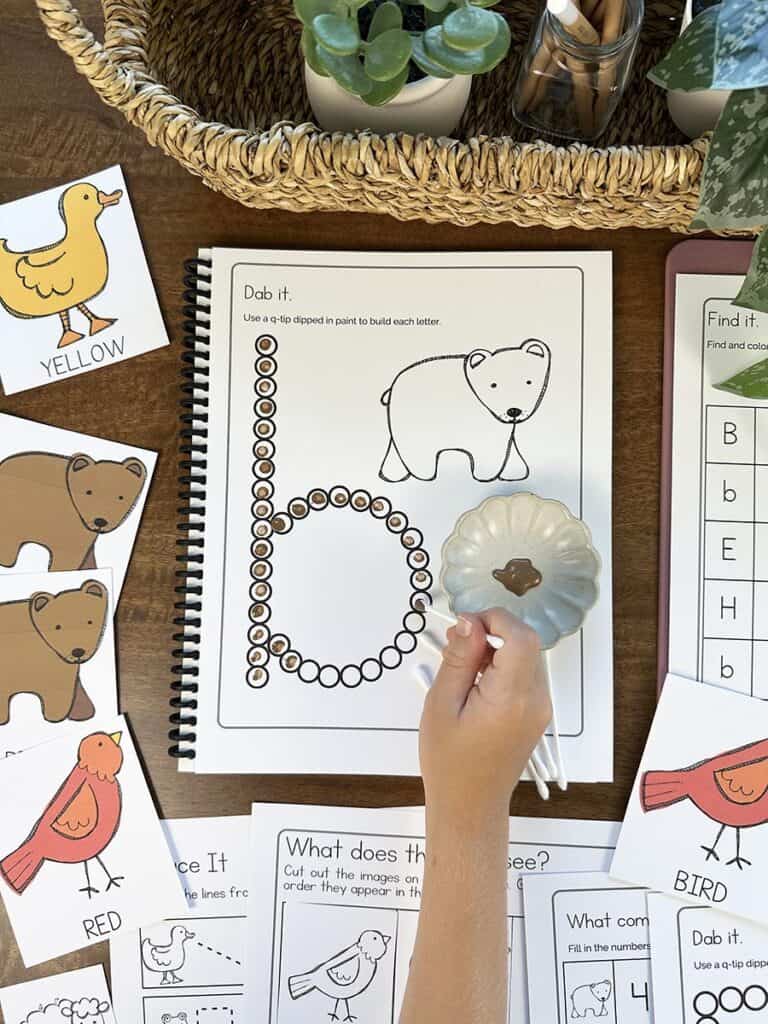
How to Use Book Companions
One of the things I love most about book companions is how flexible they are. You don’t need a strict schedule or fancy setup—just a book your child enjoys and a few simple printables. You can easily fit them into your daily rhythm in a way that feels natural and low-stress.
At home, I’ll sometimes use them after we’ve read a story a few times—my child already knows what to expect, so the activities feel familiar and fun. They’re great for quiet time, morning work, or even keeping little hands busy while I make lunch.
If you’re in a classroom or using a structured homeschool plan, book companions fit well into circle time or small groups. You can use just a page or two at a time or spread the activities out across the week. They also work great in literacy centers as part of a themed unit.
They’re simple, adaptable, and a great way to turn a favorite story into something your child can explore in their own way.
Your Must-Try Book Companion: Brown Bear, Brown Bear
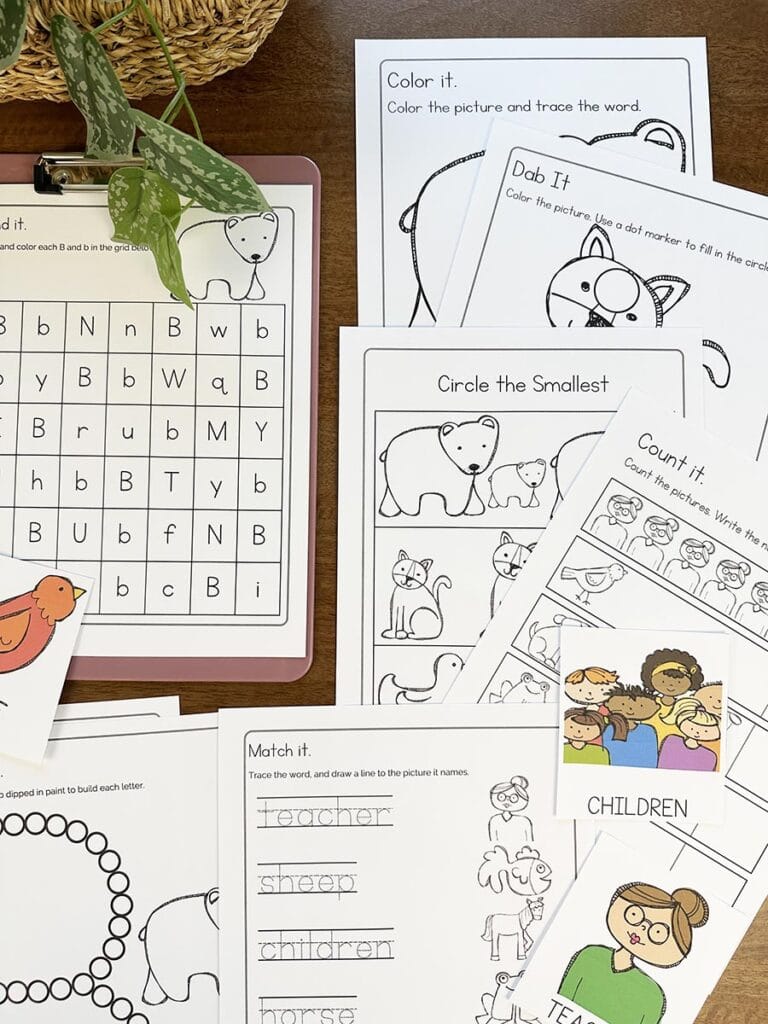
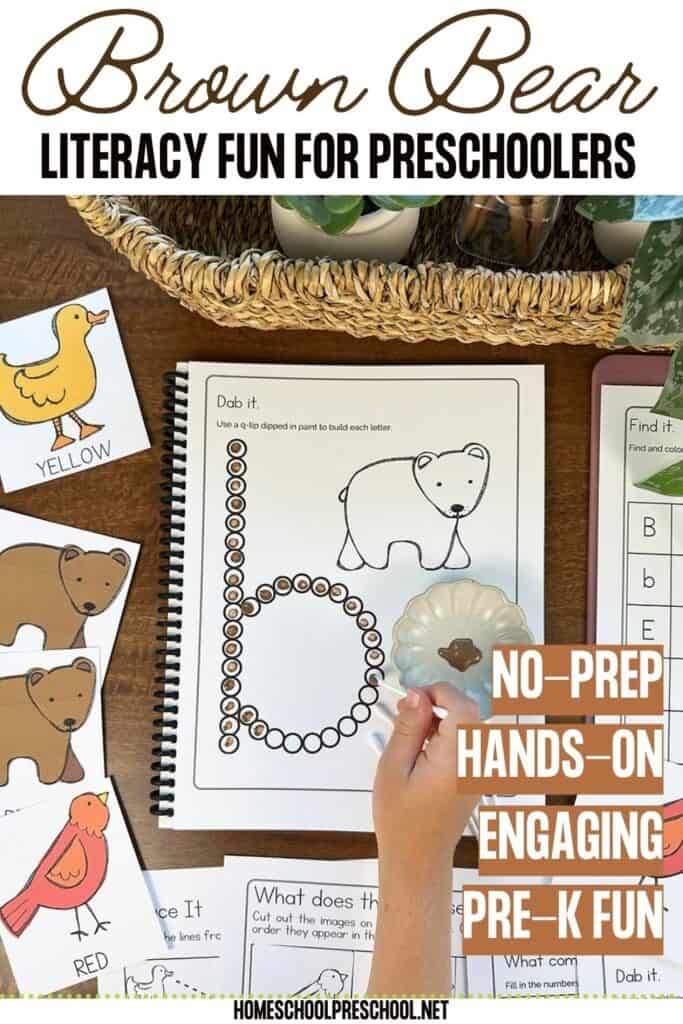
If you’re looking for more than just the basics, this Brown Bear, Brown Bear Book Companion is packed with early literacy support. It’s filled with hands-on, child-friendly activities that build reading skills in a fun, engaging way. With 53 pages of printables, it’s designed specifically for preschoolers ages 3 to 5.
Here’s what’s included:
- Story sequencing and cut-and-paste pages to help little ones retell the story in order
- Color recognition and matching activities that tie directly to the book’s simple pattern
- Vocabulary cards and writing prompts to encourage early reading and writing
- Printable puppets and a story crown to support dramatic play and oral language
- Counting mats, color-by-code, and fine motor tracing pages to strengthen key preschool skills
- Review pages and emergent reader-style sheets to build confidence and familiarity with the text
Everything’s ready to print and use—no prep required.
Tips for Creating a Book Companion Routine
Book companions are easy to fit into your existing routine, making learning feel natural without adding extra pressure. You don’t need to do everything all at once—just a little at a time makes a big impact. Here are some tips that have worked well in our house:
- Choose 1–2 books per month to focus on. Repeating a favorite story over a couple of weeks helps your child soak it in. You’ll be amazed how much more they notice the second (or tenth!) time around.
- Use a folder or binder to keep things organized. I keep pages in sheet protectors—easy to grab during quiet time, transitions, or when our routine changes.
- Create a “literacy basket.” Fill it with the book, puppets, printables, crayons, scissors—whatever you’re using. When everything’s in one spot, it’s so much easier to stay consistent.
- Let your preschooler take the lead. Encourage your child to “read” the story with puppets, retell it using sequencing cards, or pick the next activity themselves. Their confidence will bloom when they feel in charge.
The key is to keep it simple and make it fun. Even just a few minutes a day adds up over time.
Preschool Favorites to Pair with Book Companions
Once you start using book companions, it’s easy to see how many preschool favorites work beautifully with them. If your child loves rereading favorite stories, adding simple printables or props can make storytime more engaging and meaningful.
The Very Hungry Caterpillar
Great for exploring days of the week, food, and life cycles.
→ Try this Very Hungry Caterpillar craft.
Bear Snores On
A cozy winter read with so many opportunities for retelling.
→ Try these Bear Snores On sequencing cards and book companion.
The Mitten
Perfect for winter storytelling and character sequencing.
→ Explore our Mitten worksheets and story sequencing activity here.
Rainbow Fish
A lovely story to use when teaching about kindness and sharing.
→ Check out these Rainbow Fish book activities.
Little Acorn
A gentle introduction to the seasons, trees, and the changes in nature.
→ Use these Little Acorn book activities.
Kids already love these stories—book companions let them explore characters and story order through play, retelling, and hands-on activities.
Book companions are one of the simplest—and most effective—ways to turn everyday story time into meaningful learning. They help preschoolers engage with stories in hands-on ways that support reading skills, build confidence, and keep learning fun.
Book companions are a great way to inspire early readers—whether you’re starting fresh or refreshing your literacy routine.,
You’ll be glad to have these resources ready for your next read-aloud moment.

Tara is the brains behind Homeschool Preschool, where her journey from preschool and public school teacher to homeschooling mom of three fuels her passion for early childhood education. With a blend of expertise and firsthand experience, Tara’s writings offer practical tips and engaging resources to support families in creating meaningful learning adventures at home.