Hands-On Butterfly STEM Journal for Preschoolers

Have your preschoolers spotted butterflies fluttering around the garden lately? A butterfly STEM journal is the perfect way to turn their natural curiosity into an exciting learning adventure!
Observing these beautiful insects up close can spark meaningful questions—like where butterflies go, how they grow, and why their wings are so colorful. It’s a gentle introduction to the world of science, full of wonder and discovery.
Combining hands-on observation with journaling helps preschoolers begin to think like little scientists. When paired with outdoor exploration, it lays the foundation for lifelong learning.
If you’re looking for more fun ways to explore this topic, check out our butterfly science for preschoolers post packed with easy, engaging activities to try this season!
What is STEM for Preschoolers?
STEM stands for science, technology, engineering, and math—but for preschoolers, it’s not about textbooks or tests. It’s about curiosity, discovery, and hands-on fun. STEM in the early years lays the foundation for critical thinking and problem-solving in ways that feel like play.
Science might look like watching caterpillars grow, mixing colors, or planting seeds in the garden. It starts with simple questions like “Why?” and “What happens if…?”
Technology isn’t just screens. It can be as simple as using a magnifying glass to study leaves or exploring how tools work.
Engineering shows up when kids build towers, create ramps, or design something out of blocks or cardboard. It’s all about trial and error and creative thinking.
Math includes everyday activities like counting, sorting, measuring, and noticing patterns.
STEM gives preschoolers the chance to explore, wonder, and learn through doing—and that’s where the real magic happens.
What’s Inside the Butterfly STEM Journal
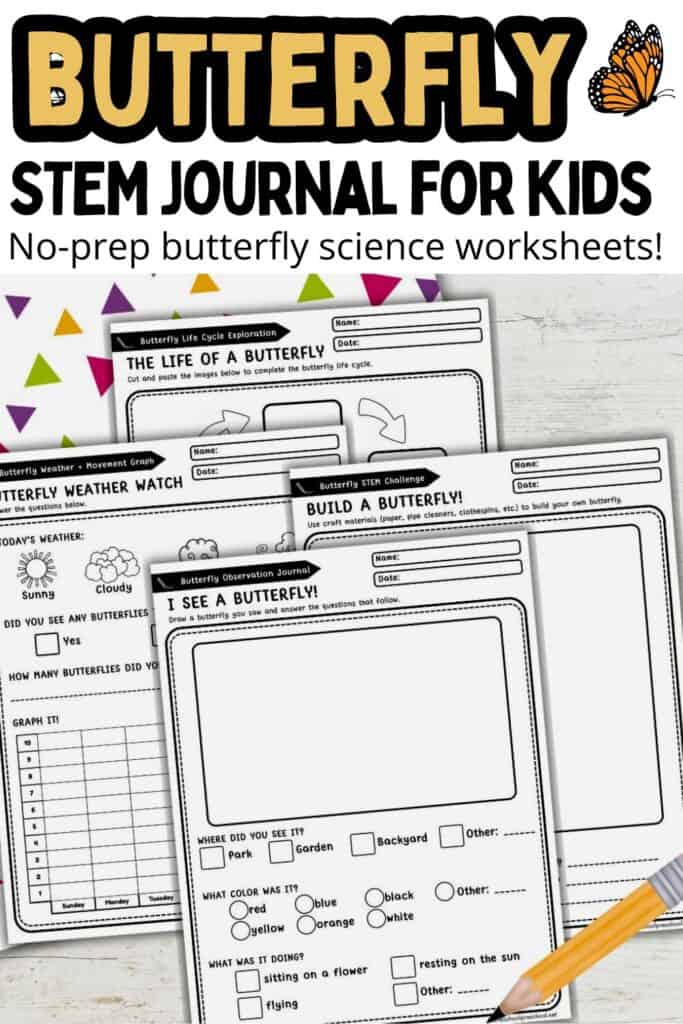
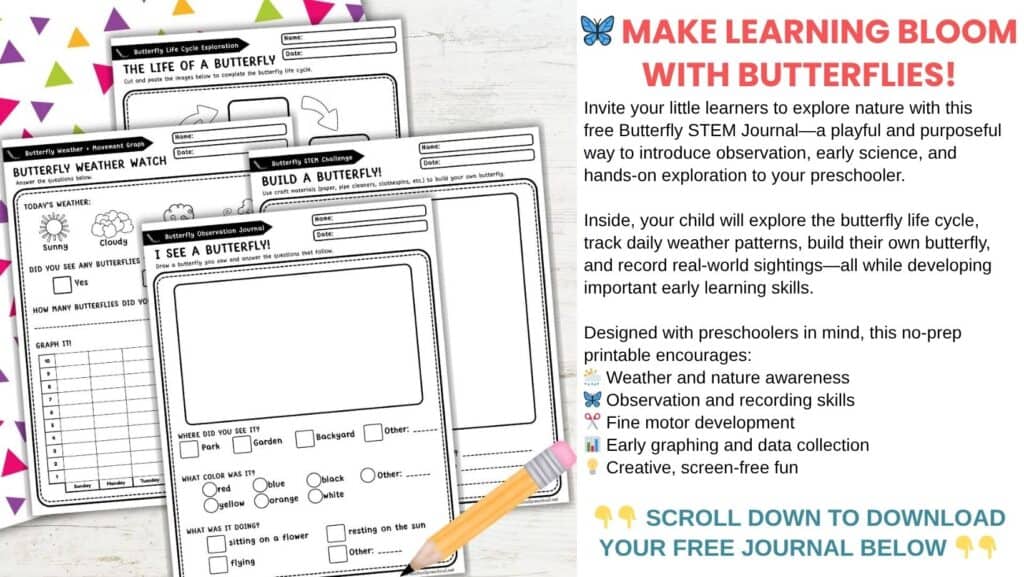
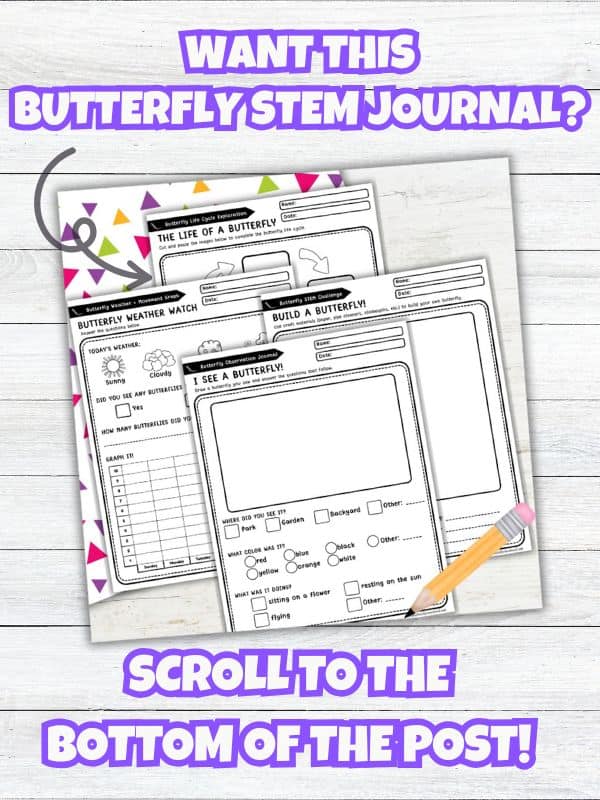
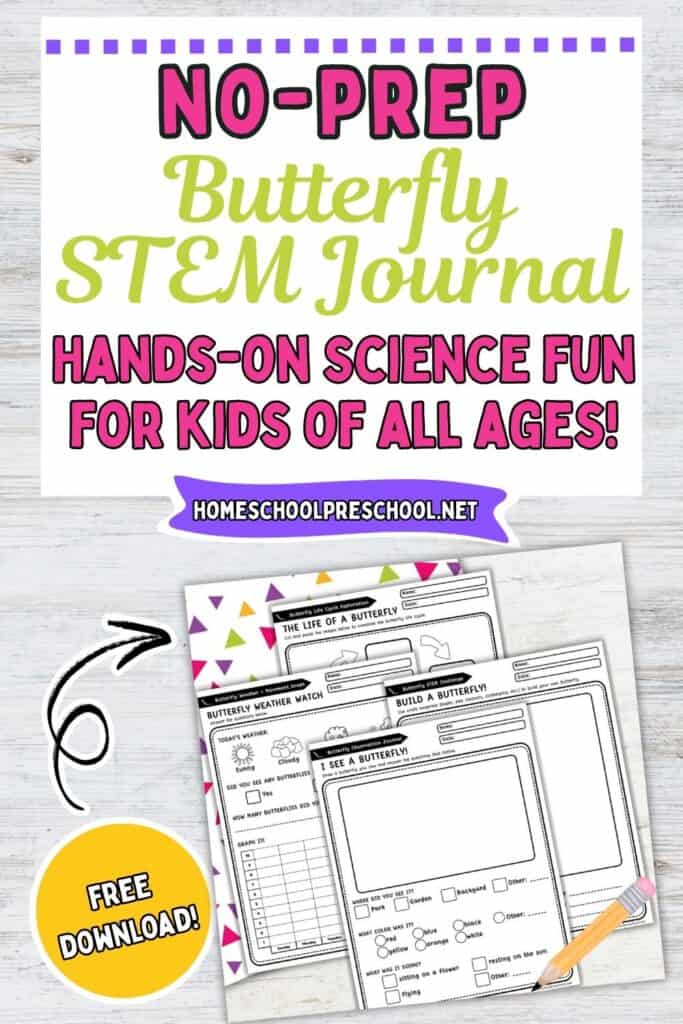
This free printable journal is designed to inspire wonder, spark curiosity, and make science feel like play. Here’s what’s included:
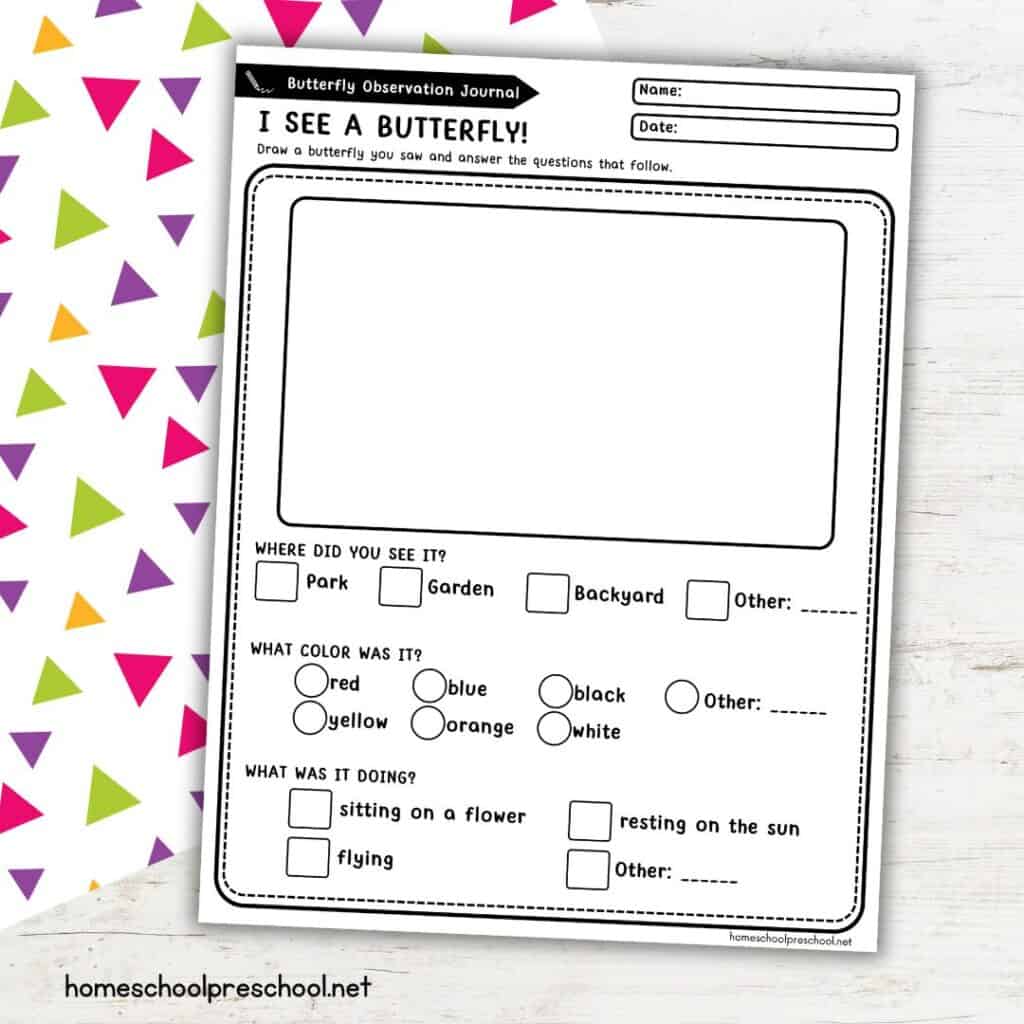
Butterfly Observation Journal Page
Children can draw a butterfly they’ve seen and record where they spotted it, what colors it had, and what it was doing. It’s a great way to slow down and really notice the world around them.
Life Cycle Cut-and-Paste Page
With simple, kid-friendly images, this activity lets little learners cut and paste the stages of a butterfly’s metamorphosis. It brings the life cycle to life in a hands-on, memorable way.
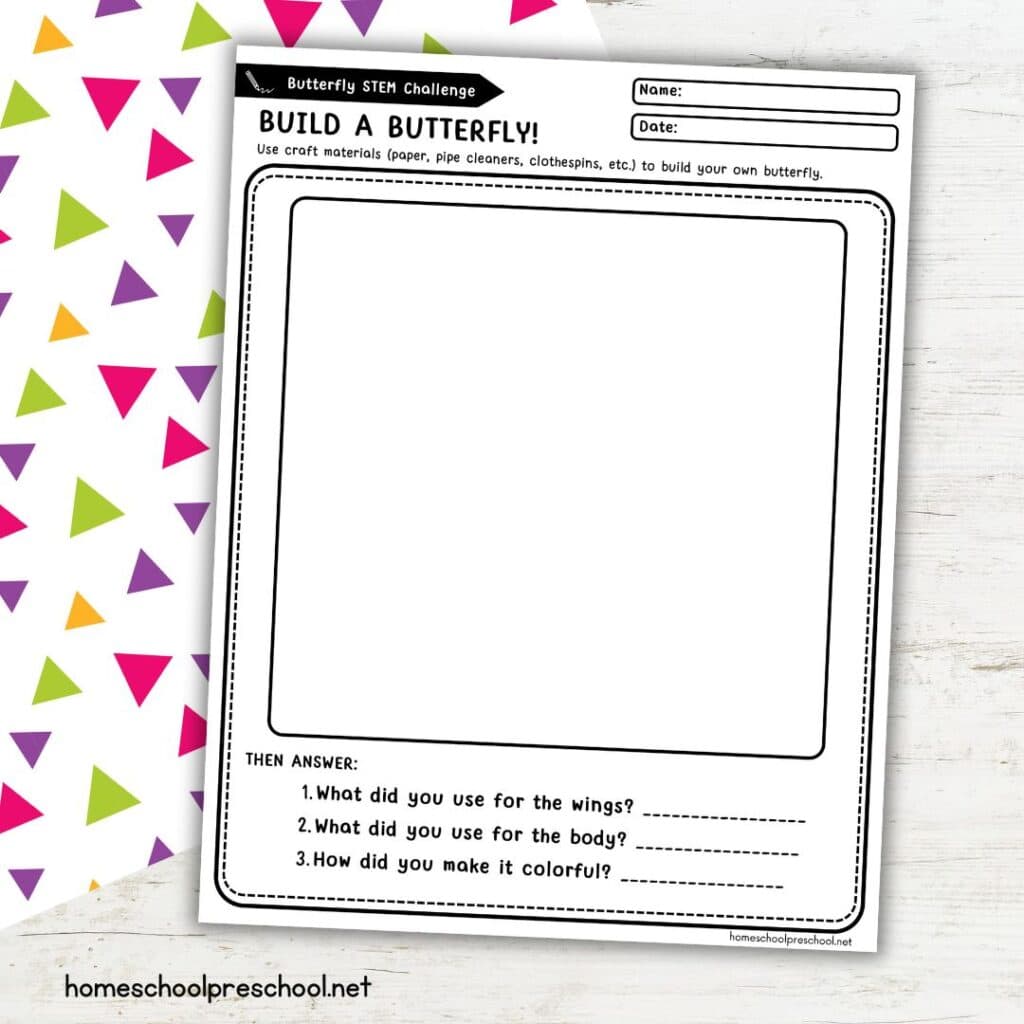
STEM Building Challenge
Using everyday craft supplies, children are invited to build their own butterfly and answer simple design questions about how they created it. This encourages creativity, engineering thinking, and problem solving.
Weather Watch Graphing Page
Kids can track butterfly sightings and weather over the course of a week. They’ll collect data and practice early math skills while making connections between nature and the seasons.
Together, these pages support early observation, critical thinking, and creative expression—all wrapped up in joyful, age-appropriate learning.
How to Use the Journal in Your Homeschool or Classroom
This journal works beautifully as part of a spring or summer butterfly theme. Start with a nature walk or visit to a butterfly garden. Encourage children to bring their journals along and record what they see in real time—or snap a photo to use later when they draw and reflect at home or in the classroom.
For younger children or non-readers, try using stickers, stamps, or drawings in place of written responses. You can also guide them verbally, filling in answers based on their observations and responses. This keeps the experience hands-on and accessible while still encouraging meaningful participation.
Set up the life cycle cut-and-paste page as part of a science or discovery station. Add real photos, books, or life cycle models to spark deeper discussion and reinforce learning through play.
Extend the Learning
Keep the butterfly excitement going with a few simple, engaging add-ons that reinforce what your preschooler is learning through the journal.
Read a few butterfly-themed picture books together. Stories that highlight the butterfly life cycle or showcase real-world facts can spark new questions and deepen understanding.
Set up a butterfly sensory bin filled with items like colored rice, fake flowers, and plastic butterflies. It’s a great way to encourage storytelling, imaginative play, and the development of fine motor skills.
Create a butterfly life cycle tray using figurines, felt pieces, or printable cards. Kids can retell the stages of metamorphosis and even act them out.
FAQ’s About Our Butterfly STEM Journal
This journal is designed with preschoolers in mind, but it can easily be adapted for toddlers or early elementary students with simple modifications.
Nope! Most of the pages can be completed with basic school supplies. For the building challenge, you can use common craft items like paper, glue, pipe cleaners, or clothespins.
Yes, absolutely. You’re welcome to print and use this resource in your own classroom or homeschool group. Just remember to share the link to this post—not the file itself—if others want a copy.
The Butterfly STEM Journal is a simple yet powerful way to bring science to life for your preschoolers. Through observation, hands-on activities, and creative exploration, your child will build important early learning skills while connecting with the world around them.
Whether you’re heading out on a nature walk, studying life cycles, or just looking for a fun way to spend a sunny afternoon, this journal offers a meaningful learning experience you can enjoy together.
Don’t forget to download your free copy above and check out our full collection of butterfly activities for even more ways to explore, play, and learn.


Tara is the brains behind Homeschool Preschool, where her journey from preschool and public school teacher to homeschooling mom of three fuels her passion for early childhood education. With a blend of expertise and firsthand experience, Tara’s writings offer practical tips and engaging resources to support families in creating meaningful learning adventures at home.