How to Create a Simple Preschool Homeschool Routine (That Feels Like a Rhythm, Not a Schedule)

If you’ve been searching for a preschool homeschool routine that actually fits real life, you’re not alone. Most families start by looking for how to start homeschooling preschool and end up buried in sample schedules, wondering how anyone keeps up.
The truth is, homeschooling preschool doesn’t need color-coded charts or hour-by-hour plans. What your child needs most is a calm, consistent rhythm that flows with your family — one that leaves room for connection, curiosity, and rest.
In this post, we’ll trade rigid routines for gentle rhythms and help you sketch a daily flow that feels natural in your home. Because when your days move to your family’s heartbeat, learning happens almost effortlessly.
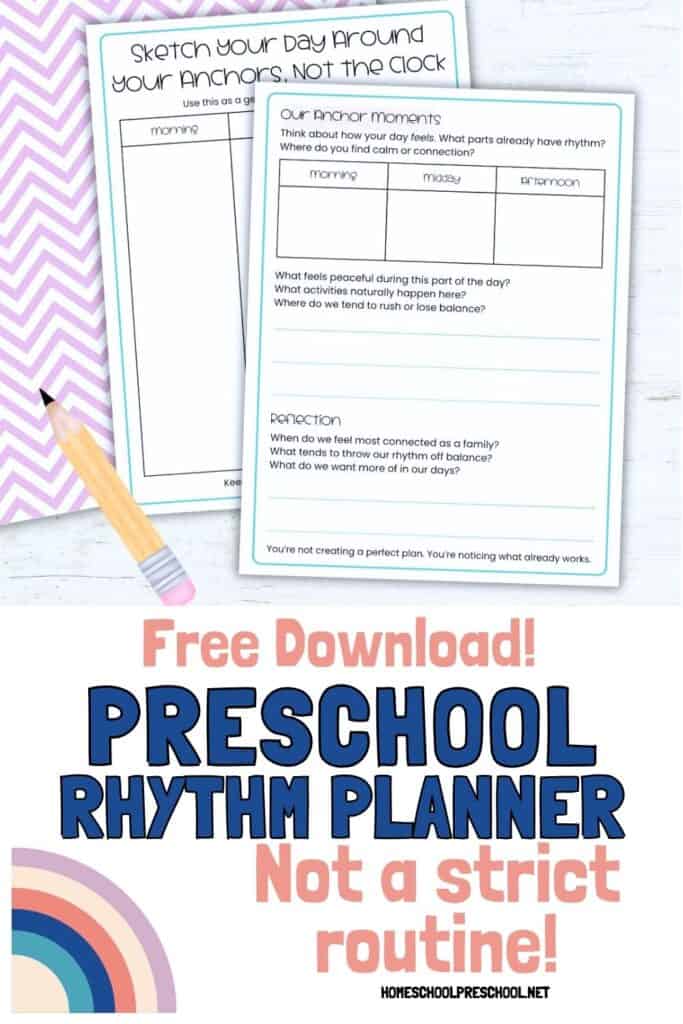
Let’s chat about…
• The difference between a preschool routine and a daily rhythm
• How to find your family’s natural flow (without forcing a schedule)
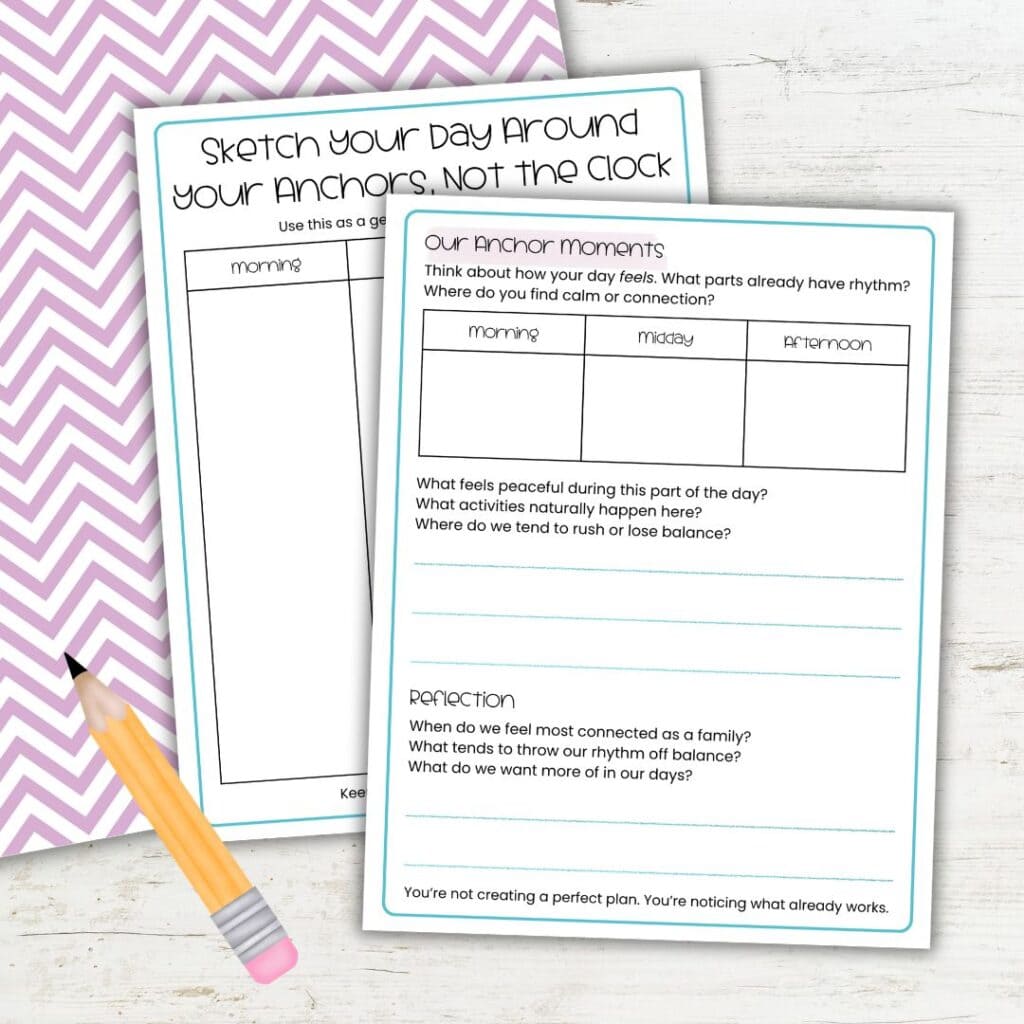
• Simple “anchor moments” that bring calm and connection
• A sample preschool homeschool rhythm you can adapt to any day
• Easy ideas for setting up cozy learning corners using what you already have
The Pressure to “Do It Right”
If you’ve ever searched for a preschool homeschool routine, you’ve probably seen those perfect color-coded charts — every hour neatly labeled for reading, crafts, and snack time. It looks organized, even comforting, until you try it at home.
Real life doesn’t fit into tidy time blocks, especially with little ones who need snacks, snuggles, and space to wander. Most homeschool families quickly realize those picture-perfect routines create more stress than structure.
The truth? Preschool at home doesn’t need to look like school at all. What matters most isn’t sticking to a schedule — it’s finding a rhythm that flows with your family, one that helps your days feel grounded instead of rushed.
Rhythm vs Routine: What’s the Difference?
When most people picture a daily preschool homeschool routine, they imagine something fixed — breakfast at 8, reading at 9, art at 10. That’s a routine: a time-based structure built around the clock.
A rhythm, on the other hand, moves with your family’s natural energy. It’s less about what happens when and more about how the day feels. Think of a routine as a clock ticking, while a rhythm is your family’s heartbeat — steady, flexible, and alive.
One keeps you on schedule; the other keeps you connected. Take a moment to notice which one your days already follow, and which one helps your home breathe a little easier.
Build a Preschool Homeschool Routine That Fits Your Family
If you’ve tried to follow someone else’s schedule and felt like it fell apart by 10 a.m., you’re not doing anything wrong — you just need a rhythm that fits your home. Creating a preschool homeschool routine starts with noticing how your days naturally unfold and building gentle structure around that flow.
Here’s how to design a simple, flexible rhythm that supports both learning and peace of mind.
Find Your Family’s Natural Flow
Before you start sketching a flexible homeschool routine, pause and simply watch your days unfold. Notice when your child is most curious, most playful, or ready to rest. These natural energy shifts reveal the best places to anchor your rhythm.
Maybe mornings start slow with a snuggle and story. Maybe the middle of the day hums with outdoor play or messy art. And maybe afternoons lean quiet — puzzles, chores, or rest.
These “anchor moments” become the steady points your day revolves around. When you build your rhythm around connection instead of the clock, you’ll find a flow that feels peaceful and repeatable without being rigid.
Craft a Gentle Daily Flow
A simple homeschool preschool schedule isn’t about filling every hour — it’s about creating gentle predictability. Choose three or four core anchors that happen most days: breakfast and read-aloud, outdoor play, lunch, and quiet time. Let everything else flex around those touchpoints. When your child knows what comes next, even loosely, they feel secure — and you feel less pressure to “do it all.”
Leave open pockets for spontaneous play, slow mornings, or neighborhood walks. Those unplanned moments often turn into the best learning opportunities. If it helps, sketch a loose homeschool preschool daily routine example:
- Morning: Breakfast + storytime
- Midday: Nature walk or creative play
- Afternoon: Snack + quiet time
- Evening: Family chores or outdoor unwind
Simple. Repeatable. Yours.
Create Cozy Learning Corners (Without a Classroom)
You don’t need a dedicated schoolroom or fancy setup to create a meaningful preschool homeschool setup. Learning at this age happens best in the spaces where life already unfolds — the couch, the kitchen table, the backyard. Start small: a reading basket tucked beside the sofa, a tray for art supplies that slides easily on and off the table, or rotating toy shelves that invite fresh curiosity.
These lightweight setups make it easy to shift from play to learning without rearranging your whole house. The goal isn’t a picture-perfect classroom — it’s a home that gently supports discovery.
Keep It Flexible and Real
Some days will flow easily, and others will unravel before breakfast — that’s normal. A homeschool rhythm isn’t meant to be perfect; it’s meant to serve your family as it grows and shifts. The goal isn’t to control the day but to stay connected through it.
You’ll find your balance more easily when you focus on calm, consistent anchors instead of rigid plans. You’re not behind — you’re building rhythm.


Tara is the brains behind Homeschool Preschool, where her journey from preschool and public school teacher to homeschooling mom of three fuels her passion for early childhood education. With a blend of expertise and firsthand experience, Tara’s writings offer practical tips and engaging resources to support families in creating meaningful learning adventures at home.