
Arctic Animals Color by Number
Looking for engaging arctic animal activities that combine early math skills with art? These free arctic animals color by number worksheets are perfect for teaching preschoolers number recognition while introducing them to fascinating polar wildlife.
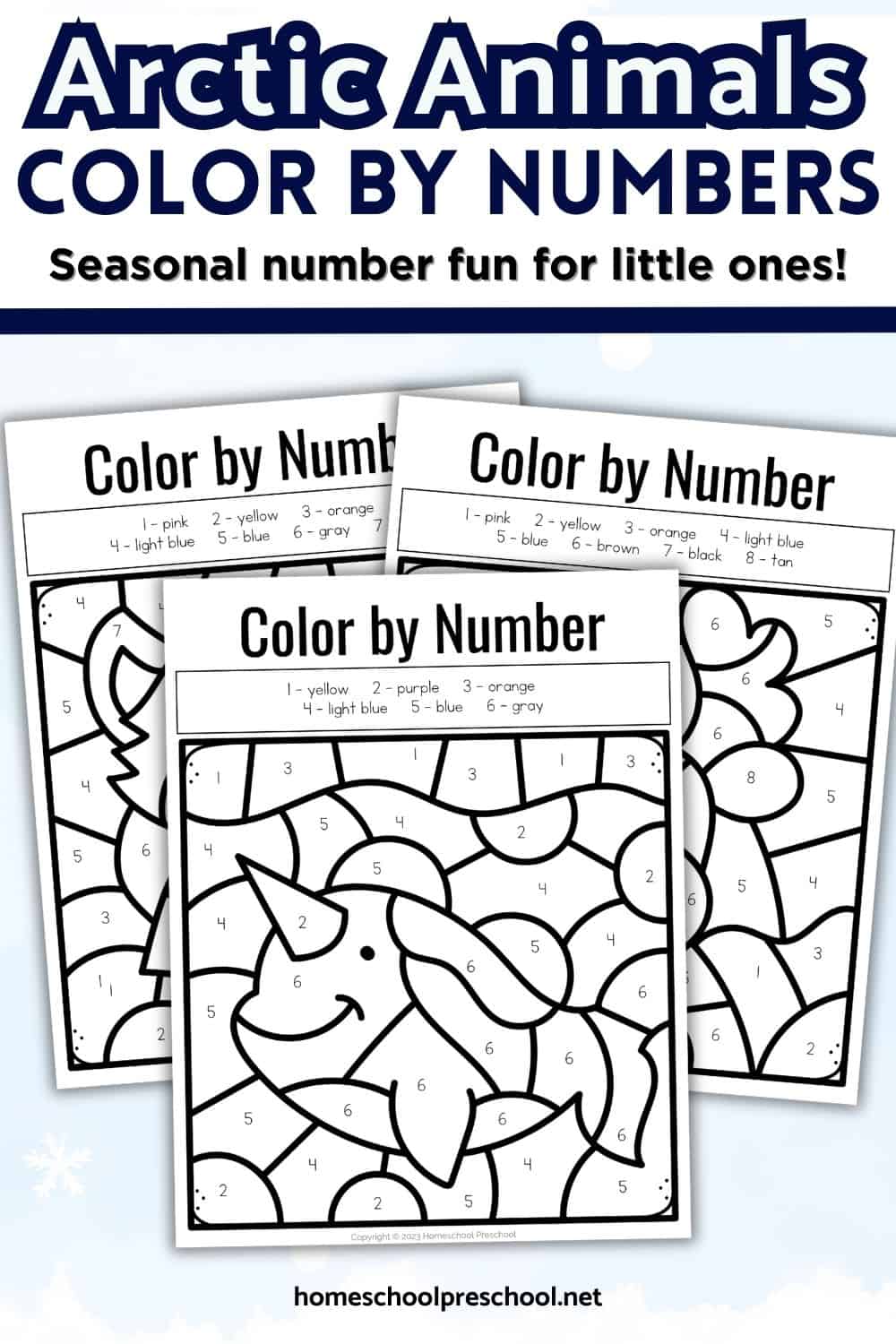
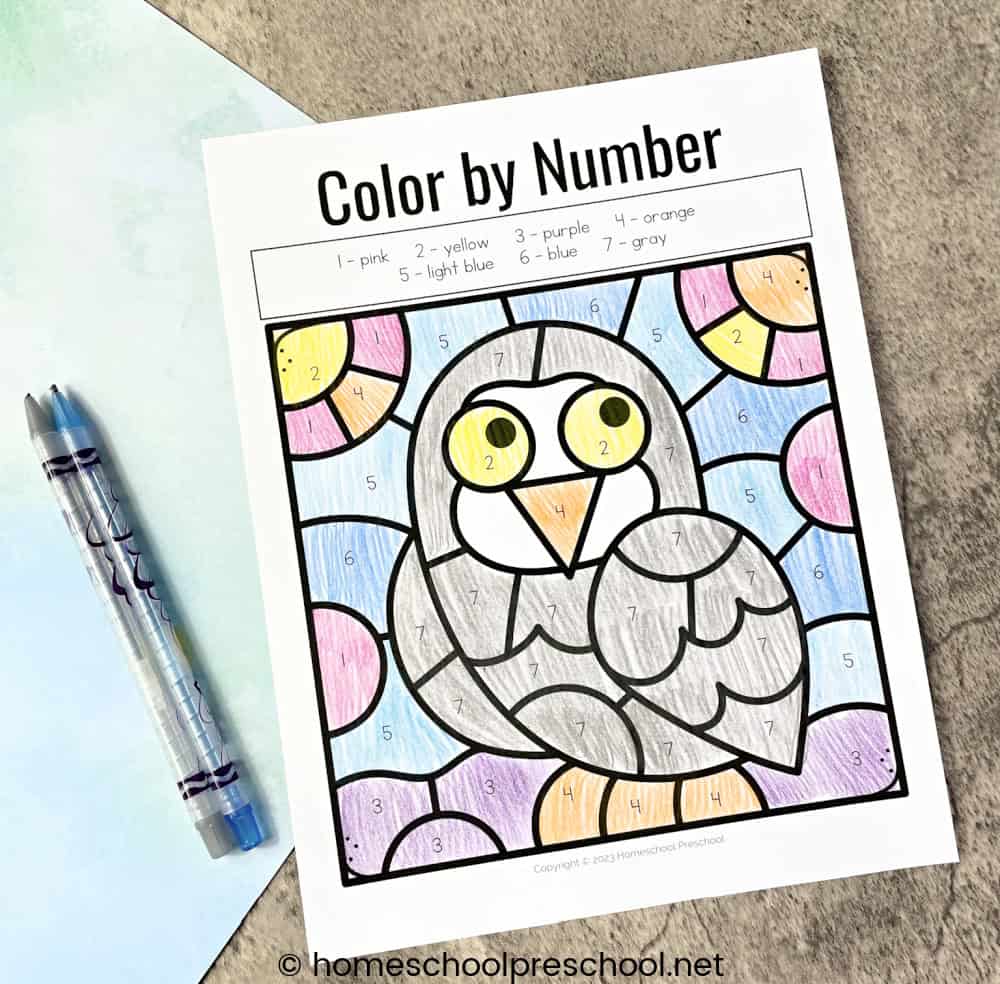
Each color-by-number worksheet features a different arctic animal with simple numbered sections perfect for little hands. As children color polar bears, arctic foxes, snowy owls, narwhals, walruses, puffins, moose, and arctic hares, they’ll practice number recognition, fine motor skills, and learn about animals that live in the coldest places on Earth.
At a Glance
Help your preschooler learn numbers, colors, and arctic wildlife with these free printable color-by-number worksheets featuring polar bears, arctic foxes, snowy owls, narwhals, walruses, puffins, moose, and arctic hares. Perfect for ages 3-5!
What’s Included in These Arctic Animal Coloring Pages
This set of free preschool printables includes 8 color-by-number worksheets featuring:
- Polar Bear – The largest arctic predator with thick white fur
- Arctic Fox – Small and clever with a coat that changes with the seasons
- Snowy Owl – A beautiful white bird of prey that hunts during the day
- Narwhal – The ‘unicorn of the sea’ with its distinctive long tusk
- Walrus – Large marine mammal with impressive tusks and whiskers
- Puffin – Colorful seabird with a distinctive orange beak
- Moose – The largest member of the deer family with massive antlers
- Arctic Hare – Fast-hopping bunny with white winter fur for camouflage
What Are the Educational Benefits of These Worksheets?
These free arctic animal worksheets aren’t just fun. They’re powerful learning tools that help preschoolers develop multiple skills at once:
Number Recognition (1-8)
Children practice identifying numbers 1 through 8 repeatedly as they search for each number on the page, building confidence with early math skills.
Fine Motor Skills Development
Coloring within the numbered sections helps strengthen hand muscles and improves pencil grip—essential for future writing.
Color Word Recognition
The color key helps children connect color words (such as ‘white,’ ‘brown,’ ‘orange,’ and ‘black’) to the actual colors, building early literacy skills.
Focus and Concentration
Completing a color-by-code picture requires sustained attention, helping children build patience and task completion skills.
Arctic Animal Knowledge
Each worksheet provides an opportunity to discuss where these animals live, what they eat, and how they’ve adapted to survive in freezing temperatures.
Preparing the Worksheets
Getting started is simple:
- Download the free PDF at the bottom of this post
- Print on regular printer paper or cardstock for durability
- Gather crayons, colored pencils, or markers
- Choose a worksheet based on your child’s interests (maybe they love owls or want to learn about narwhals!)
Completing the Activity
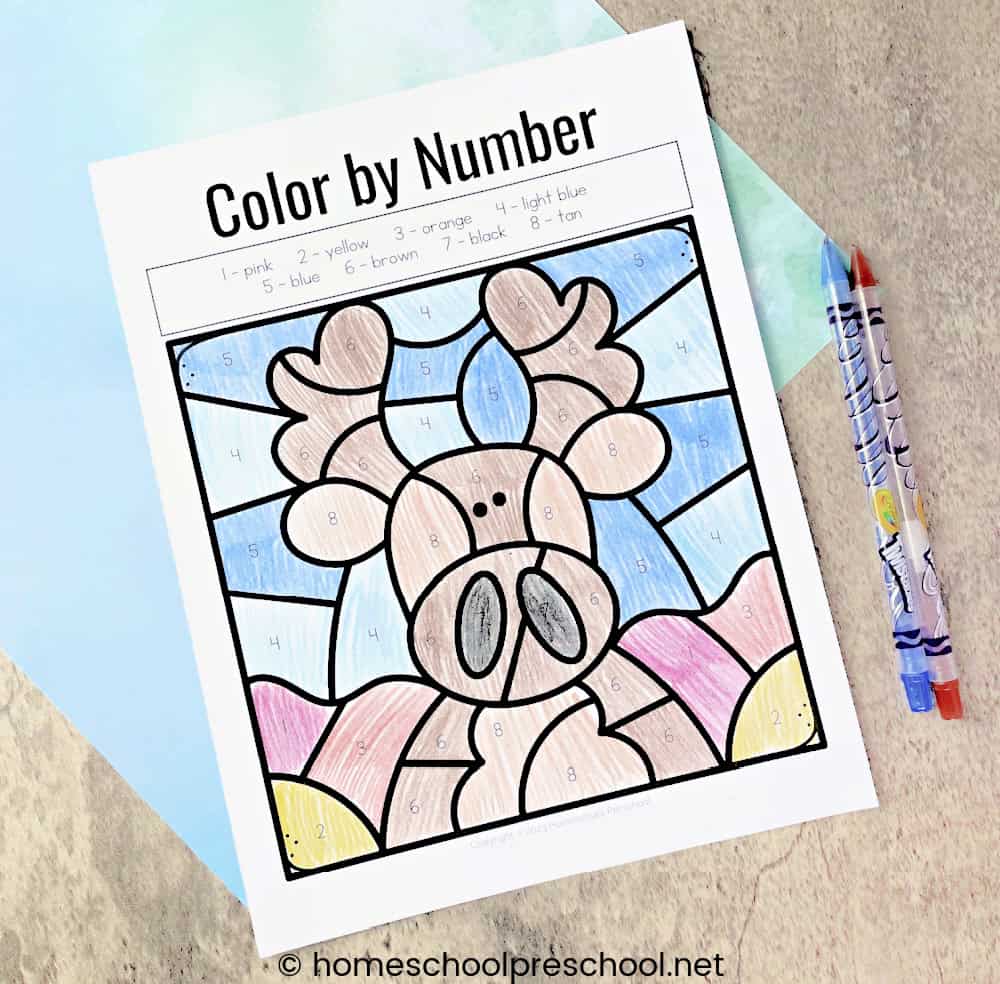
- Show your child the color key at the top of the page
- Help them identify the first number
- Find what color matches that number in the key
- Search the picture for all sections marked with that number
- Color those sections, encouraging them to stay within the lines
- Continue with each number until the arctic animal is complete!
Tips for Different Skill Levels
For younger children (ages 3-4):
- Color the color words in the key so they can match colors without reading
- Start with simpler animals like the narwhal
- Work together, taking turns finding numbers
For older preschoolers (ages 4-5):
- Encourage them to read the color words independently
- Challenge them with more detailed animals like the moose or walrus
- Let them work independently while you supervise
Why Teach Preschoolers About Arctic Animals?
Arctic animals capture children’s imagination with their unique adaptations and beautiful environments. Teaching about winter animals helps children:
- Understand animal adaptations: Thick fur, blubber layers, white camouflage, and seasonal coat changes are fascinating concepts.
- Learn about different habitats: The Arctic tundra, frozen oceans, and snowy forests are dramatically different from most children’s environments.
- Develop empathy for nature: Understanding where animals live builds appreciation for wildlife conservation.
- Practice comparing and contrasting: How are polar bears and arctic foxes similar? How is a snowy owl different from owls near us?
- Build early science knowledge: Concepts like camouflage, predators and prey, and how animals survive extreme cold.
Arctic Animal Extension Activities
Extend the learning beyond coloring with these hands-on activities:
Before Coloring
- Read an Arctic animal picture book together.
- Watch a short video about the animal they’ll color (nature documentaries have great footage!)
- Discuss: Where does this animal live? What does it eat? How does it stay warm?
After Coloring
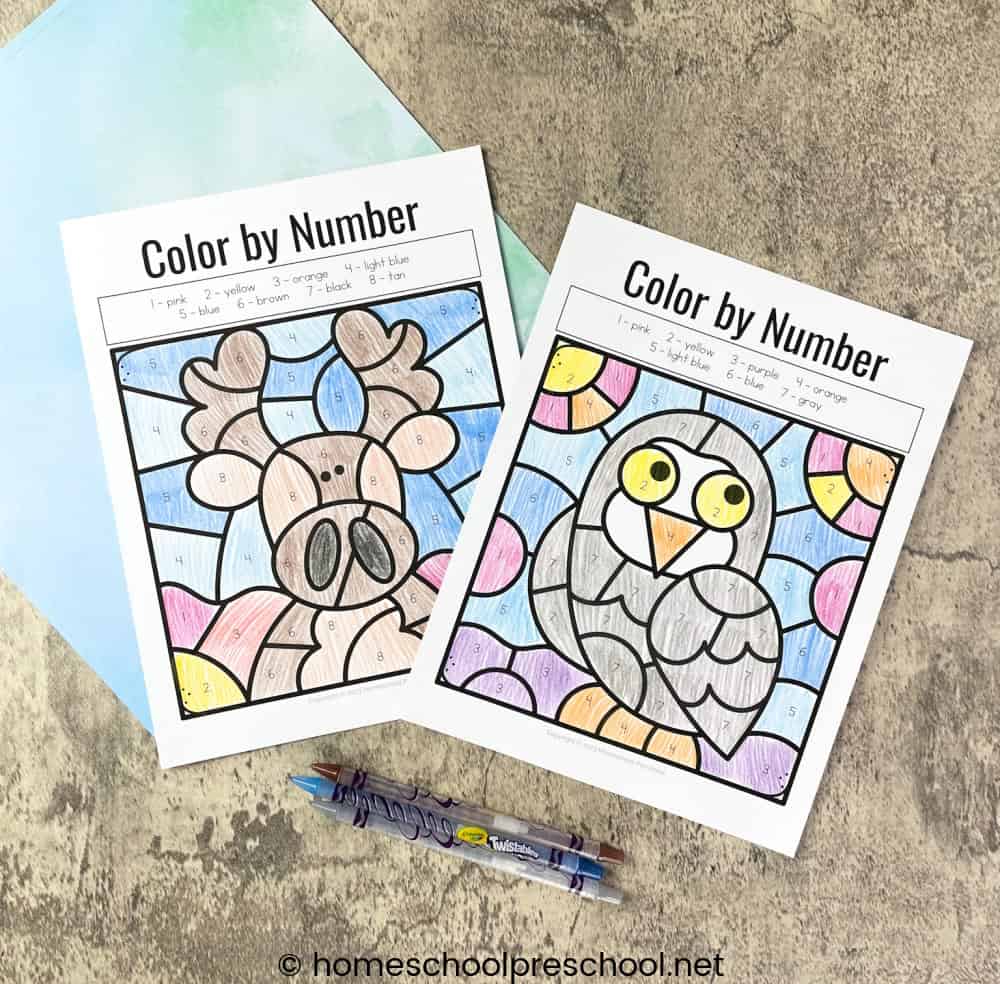
- Label the animal’s body parts (tusks on the walrus, tusk on the narwhal, antlers on the moose)
- Create a simple fact card with 2-3 interesting facts they learned
- Make a display showing all 8 arctic animals together
- Act out how the animal moves (hop like an arctic hare, fly like a snowy owl!)
- Sort the animals into categories: land animals, sea animals, and birds
Fascinating Facts About These Arctic Animals
Share these amazing facts with your child as they color each animal:
- Arctic hares can run up to 40 miles per hour to escape predators like arctic foxes.
- Polar bears have black skin under their white fur to help absorb heat from the sun.
- Arctic foxes change color with the seasons—white in winter, brown in summer, for perfect camouflage.
- Snowy owls hunt during the day, unlike most owls that are nocturnal.
- Narwhals have a tusk that’s actually an extra-long tooth that can grow up to 10 feet long!
- Walruses use their sensitive whiskers to find clams and other food on the dark ocean floor.
- Puffins can hold multiple fish in their beaks at once—the record is 62 fish!
- Moose are excellent swimmers and can dive up to 20 feet underwater to eat aquatic plants.
More Arctic Animals Activities and Resources
Looking for more ways to explore arctic wildlife with your preschooler?
Arctic Animals Picture Books
Pair these coloring pages with wonderful arctic animal books:
- The Lonely Polar Bear – A beautifully illustrated story about a polar bear cub finding friendship after a storm
- I Spy Arctic Animals – Interactive book teaching ABCs with over 100 colorful arctic animals
- Over in the Arctic – A counting rhyme featuring adorable baby Arctic animals and their mothers
Arctic Animal Crafts
- Handprint Arctic Fox Craft – Turn little handprints into adorable foxes
- Walrus Arctic Animal Craft – Create a textured walrus with construction paper
- Arctic Animals Preschool Crafts – Complete collection of polar wildlife crafts
Arctic Animal Preschool Printables
- Winter Animals Worksheets – Expand to all winter wildlife
- Arctic Food Chain Worksheets – Teach about predators and prey
- Arctic Animals Addition Cards – Combine math with animal learning
FAQ’s About These Worksheets
These worksheets are designed for preschoolers ages 3-5 and kindergarteners. The simple numbered sections (1-8) and basic color keys make them perfect for children just learning to recognize numbers. Younger children (3-4) may need help reading color words, while older preschoolers (4-5) can often complete them independently
Yes! Scroll to the bottom of this page, enter your email address, and you’ll receive instant access to download and print all eight arctic animal color-by-number worksheets. You can print them as many times as you need for personal or classroom use.
Yes! Color the color words in the key with the matching crayon or marker before giving the worksheet to your child. This creates a visual guide they can use without needing to read. This also helps with color recognition and word-to-object association.
Ready to Start Your Arctic Adventure?
These free printable Arctic animals color-by-number worksheets offer the perfect blend of education and entertainment for preschoolers. As children bring polar bears, arctic foxes, snowy owls, narwhals, walruses, puffins, moose, and arctic hares to life with color, they’re building essential early learning skills that will serve them well in kindergarten and beyond.
With eight different animals to choose from, your child can explore the diversity of arctic wildlife while practicing numbers 1-8, developing fine motor skills, and learning fascinating facts about how animals survive in the coldest places on Earth.
Download your free Arctic animals color-by-number worksheets below, and watch your preschooler’s face light up as they discover the amazing animals that live in the world’s coldest places!

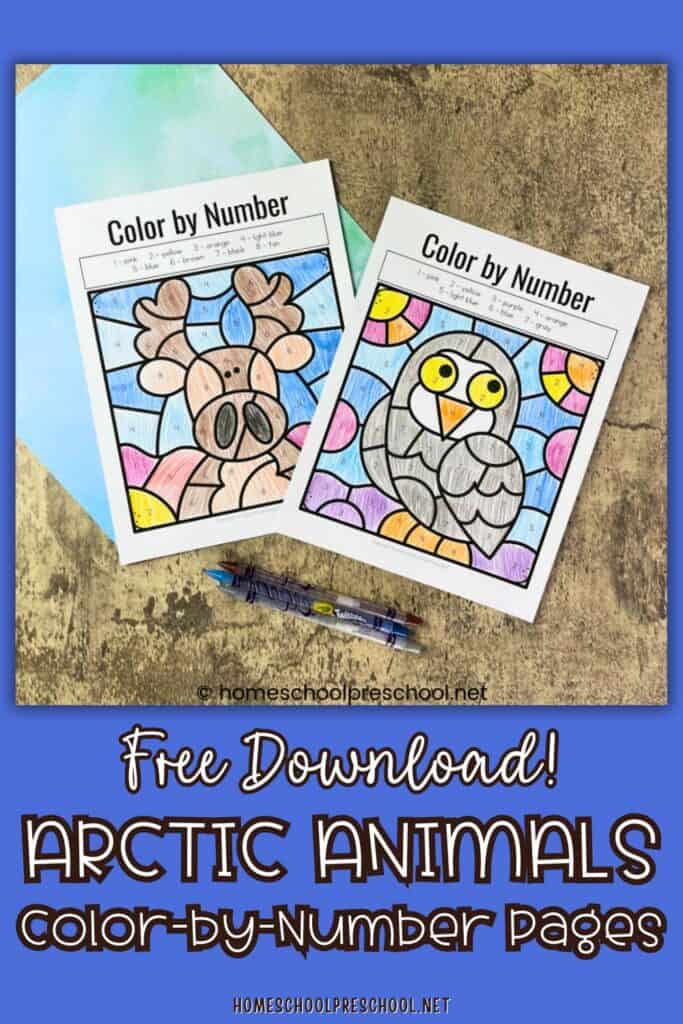
Pin this post to save these free arctic animal printables for later!

Tara is the brains behind Homeschool Preschool, where her journey from preschool and public school teacher to homeschooling mom of three fuels her passion for early childhood education. With a blend of expertise and firsthand experience, Tara’s writings offer practical tips and engaging resources to support families in creating meaningful learning adventures at home.

I love these printables
I’m so happy to hear that! Hope you have fun using them! ????
Color by number attic animals please
To grab the Color by Number Attic Animals printable, just scroll to the bottom of the page and enter your info to unlock the freebie. Happy coloring! ????✨