Flower Lesson Plan for Preschool
Nothing says spring like a flower lesson plan for preschool! Flowers aren’t just pretty—they’re a perfect gateway to hands-on discovery, making them a favorite in preschool lesson plans. Through simple activities involving planting, petals, and colors, young learners explore science, develop fine motor skills, and strengthen their early literacy and math foundations. Plus, working with real flowers, books, and crafts keeps little ones engaged and curious.
Why is this important? Preschoolers thrive when learning is connected to the world around them. Flowers spark wonder, invite questions, and encourage observation—key ingredients in early childhood education.
Whether you’re teaching at home or in a classroom, this 5-day plan will help your preschoolers grow in every way. Ready to dig into a week full of stories, seeds, and sweet surprises? Let’s make learning blossom—what will your little learners discover first?
This engaging preschool flower theme lesson plan seamlessly integrates science, literacy, math, and motor skills into a colorful and comprehensive week. Designed for young learners ages 3–5, each day introduces a new concept through books, crafts, and hands-on exploration.
By connecting early learning to nature, this theme encourages curiosity, builds foundational skills, and brings joy to your daily preschool routine.
Why teach a preschool flower theme?
Flowers are a natural fit for early childhood learning. They’re colorful, familiar, and tied to seasons, making them perfect for sparking curiosity. A flower theme offers rich opportunities to introduce science concepts like plant parts, growth cycles, and what living things need to thrive.
But it doesn’t stop there—children also build vocabulary, explore colors and patterns, and develop fine motor skills through related crafts and activities.
By integrating books, sensory play, and real-life observation, a flower theme helps children connect learning to the world around them. It’s a hands-on, meaningful way to nurture both academic and social-emotional growth.
Teaching about flowers encourages observation, care for nature, and a deeper appreciation for the beauty of everyday life—key lessons that last long after the week ends.
What Kids Will Learn
A flower theme in preschool isn’t just about blooms—it’s about planting the seeds of foundational learning. As children explore flowers, they gain early science knowledge, such as understanding how plants grow and what they need to survive. These real-world connections foster observation and inquiry skills, essential components of early critical thinking.
Through themed books, crafts, and sensory play, kids strengthen fine motor coordination, language development, and early math concepts like counting petals or sorting by color and size. They also engage in cooperative play, follow directions, and express creativity—all vital to their social-emotional development.
Incorporating a flower theme into your preschool curriculum helps build a well-rounded educational foundation. It supports cross-curricular learning and encourages children to explore, ask questions, and connect with nature—skills and attitudes that support lifelong learning.



Supplies You’ll Need
To make the most of your flower-themed week, gather a variety of hands-on materials ahead of time. Many of these can be found around the house, at craft stores, or even outside. Here’s a helpful list to get you started:
Basic Craft Supplies:
- Construction paper (variety of colors)
- Glue sticks and liquid glue
- Safety scissors
- Markers, crayons, and washable paints
- Coffee filters
- Tissue paper
- Pipe cleaners
- Cupcake liners
- Paper plates and craft sticks
Science & Sensory Materials:
- Real flowers (for dissection and observation)
- Potting soil
- Seeds (zinnias, marigolds, or sunflowers are great choices)
- Small cups or pots
- Watering cans or small pitchers
- Magnifying glasses
Fine Motor Tools:
- Child-safe tweezers
- Spray bottles
- Scoops and funnels
Printable & Reusable Resources (Optional):
- Flower part diagrams
- Patterning cards
- Counting mats or games
Having these items on hand will make each day’s lesson smoother and more engaging for your preschooler.
How to Incorporate the Topic into Daily Lessons
Share strategies on how parents can seamlessly integrate the topic into their daily homeschool lessons. Provide examples or sample schedules that demonstrate practical ways to include these activities as part of a regular learning routine.
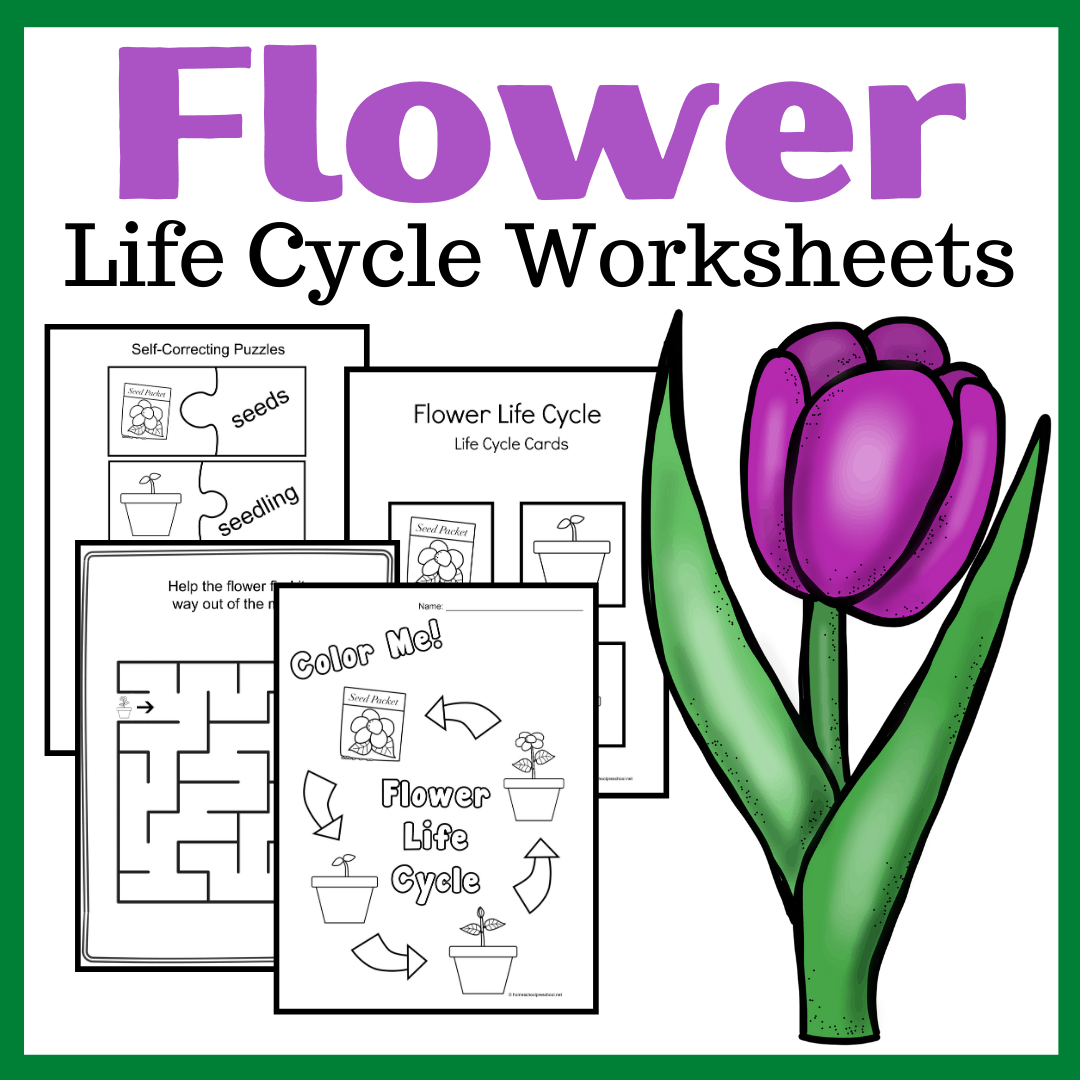
Activities to Include in Your Flower Theme
A flower theme offers a wealth of hands-on activities that support learning across multiple developmental areas. Here’s a variety of engaging ideas to round out your week:
Flower Dissection
Let children carefully explore real flowers by pulling them apart to identify petals, stems, leaves, and seeds. Use magnifying glasses to examine each part and discuss their functions.
Planting Seeds
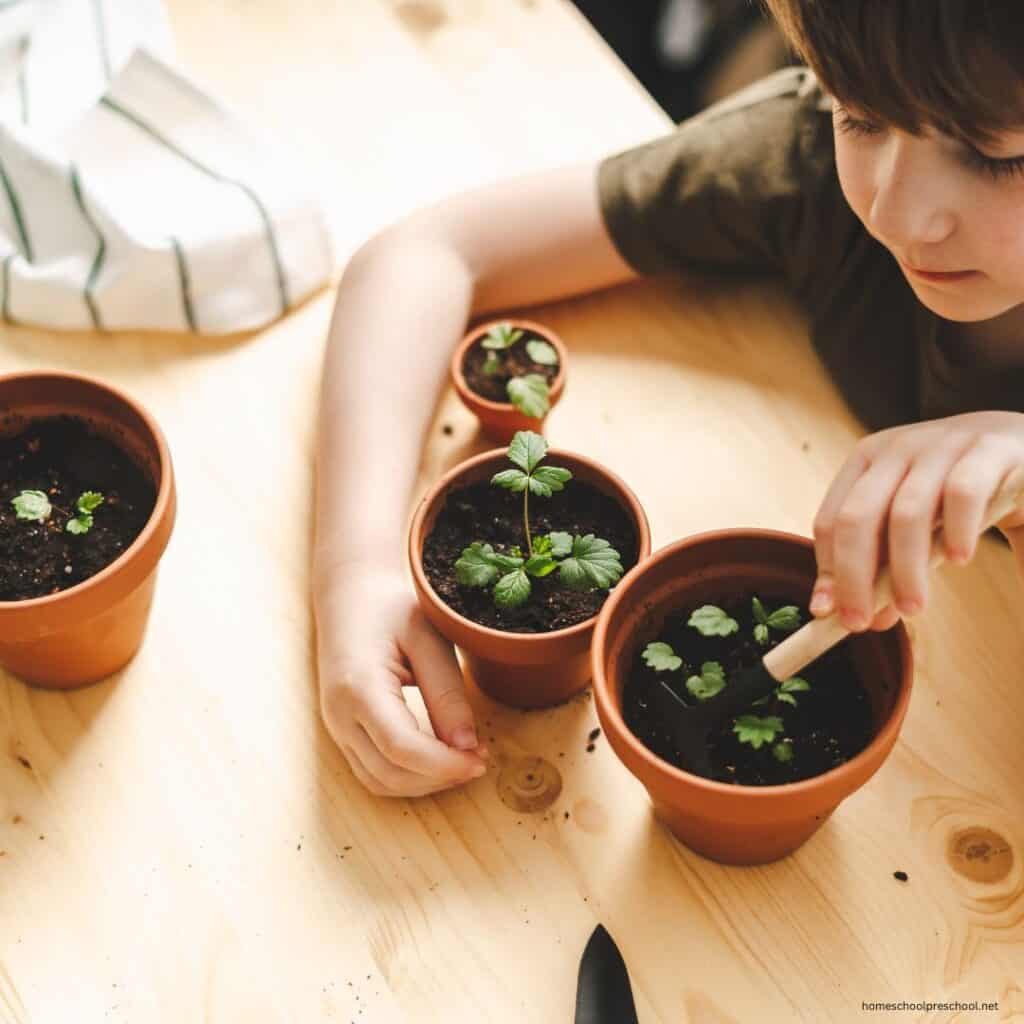
Provide small pots, soil, and flower seeds. Let children dig, plant, and water their seeds while talking about what plants need to grow. This activity encourages responsibility and patience.
Coffee Filter Flowers
Use washable markers and spray bottles to decorate coffee filters. Watch as the colors blend to create beautiful petals, then attach pipe cleaners for stems.
Flower Sorting and Counting
Sort flower buttons, paper cutouts, or foam shapes by color, size, or petal count. Incorporate math by creating simple graphs or counting games.
Petal Pattern Necklaces
Offer flower-shaped beads or paper petals and string for kids to create patterned necklaces. This combines fine motor practice with early math skills.
Storytime with Themed Books
Read a new flower-related book each day and use storytime as a launchpad for discussion, retelling, or art inspired by the story.
- Books About Sunflowers
- Preschool Books About Flowers
- Nonfiction Books About Flowers
- Books About Flowers for Kindergarten
Outdoor Flower Hunt
Take a nature walk to look for different flowers. Bring a clipboard and simple checklist or drawing pad for kids to record what they find.a
Flower Movement Game
Create colored flower cutouts and spread them out on the floor. Call out colors or numbers and have children jump, hop, or skip to the matching flower.
These activities not only bring the flower theme to life but also integrate early learning in ways that are joyful, meaningful, and developmentally appropriate.
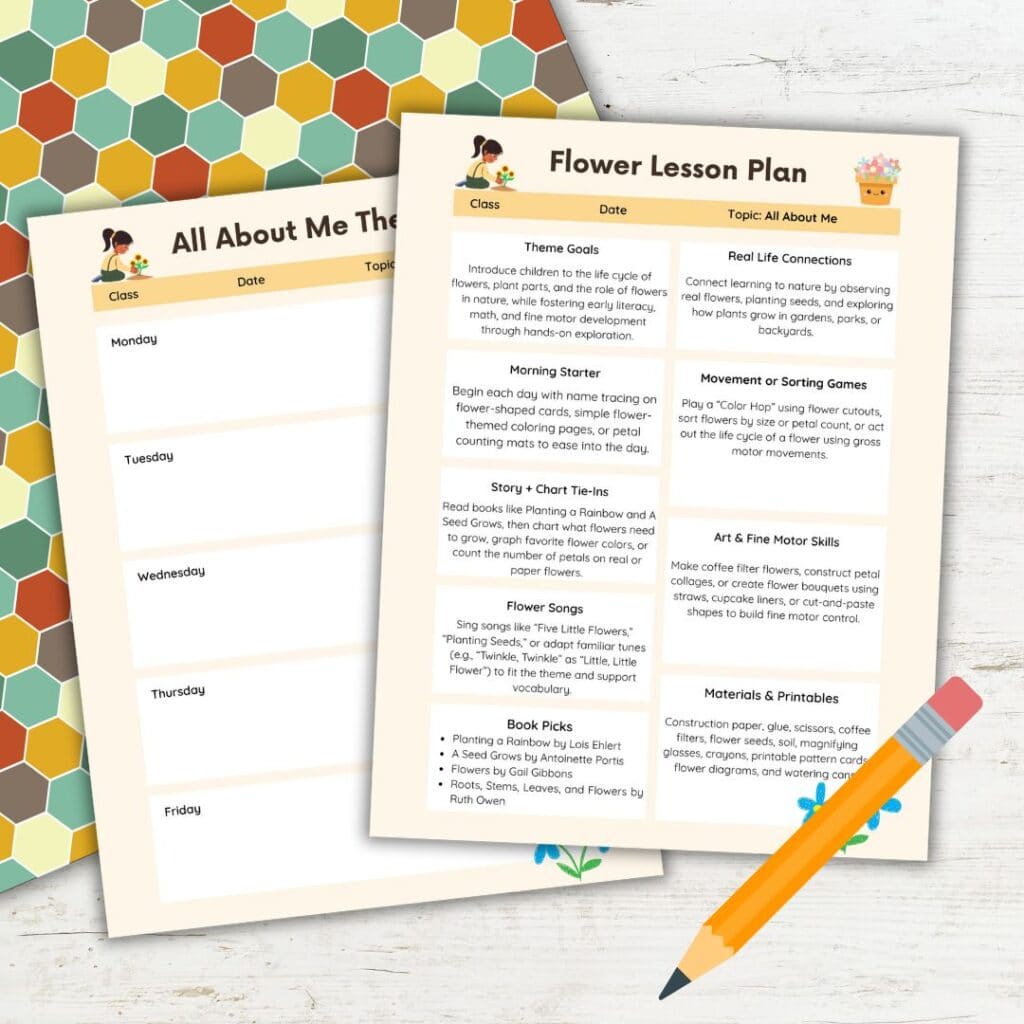
5-Day Flower-Themed Preschool Schedule
This sample weekly schedule ties together daily themes, learning goals, and engaging activities to help you structure your preschool week. Each day includes a letter, a number, a story, a craft, a movement activity, or a fine motor activity, along with an optional extension to complete your flower theme.

Day 1: Introduction to Flowers
Kick off your flower week by introducing the letter F and number 1. Read Planting a Rainbow by Lois Ehlert to spark curiosity, then let kids create colorful tissue paper flower collages. Practice fine motor skills by cutting out flower shapes and pretending to plant them. Wrap up with a flower matching game to reinforce new vocabulary and visual recognition.
- Letter F Preschool Worksheets
- Planting a Rainbow by Lois Ehlert
- Tissue Paper Flower Art Activity
- Flower Scissor Skills Practice
- Flower Memory Game for Kids
Day 2: Parts of a Flower
Focus on the letter P and number 2 while exploring the anatomy of a flower. Read The Reason for a Flower by Ruth Heller, then craft a simple flower diagram using construction paper. Dissect a real flower to observe and name each part, and extend the lesson with a labeling worksheet to build early science literacy.
- Letter P Worksheets
- Parts of a Flower Worksheet
- The Reason for a Flower by Ruth Heller
- Parts of a Flower Craft
- Flower Dissection Activity
Day 3: Flower Colors and Patterns
Today’s focus is the letter C and number 3. Read Rainbows in Bloom by Darroch & Michael Putnam, then create vibrant coffee filter flowers using markers and water. Use flower cutouts or manipulatives to create and identify color patterns. Add in a fun movement game where kids hop to flowers by color or number to reinforce the day’s concepts.
- Letter C Worksheets
- Number 3 Worksheet
- Rainbows in Bloom by Darroch & Michael Putnam
- Easy Coffee Filter Flowers for Preschoolers
Day 4: How Flowers Grow
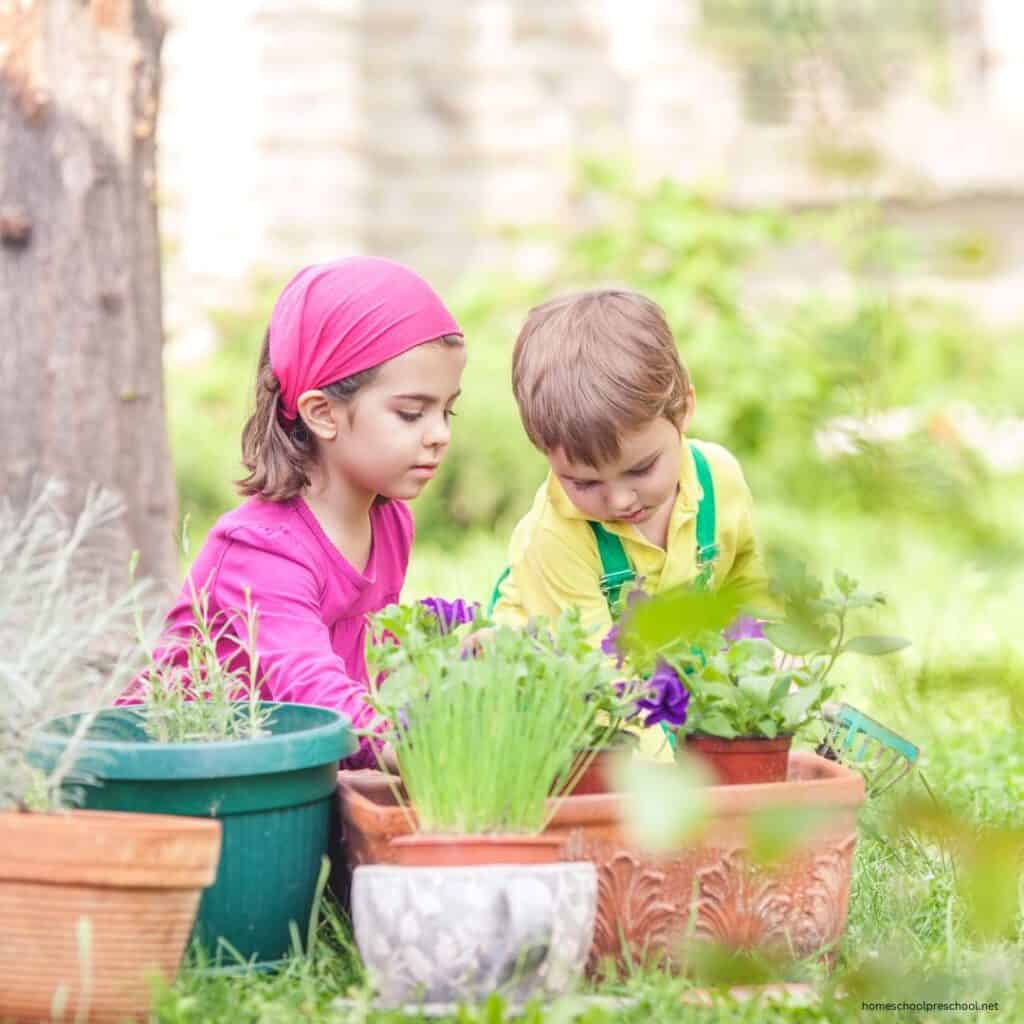
Introduce the letter G and number 4 with Lola Plants a Garden by Anna McQuinn. Discuss what flowers need to grow, then decorate and fill cups with soil to plant seeds. Practice fine motor skills at a watering station and talk about responsibility and care. An optional plant growth chart printable helps kids visualize the plant life cycle over time.
- Letter G Worksheets
- Lola Plants a Garden by Anna McQuinn
- Planting Seeds with Preschoolers
- Water Pouring Activity for Toddlers
Day 5: Flower Celebration
Celebrate the week with the letter B and number 5. Read Mrs. Spitzer’s Garden by Edith Pattou and make cheerful flower bouquets using cupcake liners and straws. Set up a flower scavenger hunt to review colors, numbers, and vocabulary. Finish with a fun recap activity or group craft to reflect on all the flower facts learned this week.
This sample week keeps learning fun and focused, offering balance between creativity, academics, and movement, all with the joyful theme of flowers.
Picture Books About Flowers
Books bring the flower theme to life with vibrant illustrations and simple, engaging stories. These carefully chosen titles support key concepts in science, literacy, and emotional growth, making them perfect companions to your week of flower activities.


FAQ’s About Using This Flower Lesson Plan
This plan is designed for preschoolers ages 3–5 and can be easily adapted for mixed-age groups.
Each day’s activities are designed to take approximately one hour, but you can adjust the duration based on your child’s interest and schedule.
Yes! All activities can be conducted indoors, and flower exploration can be done with store-bought flowers or photos if needed.
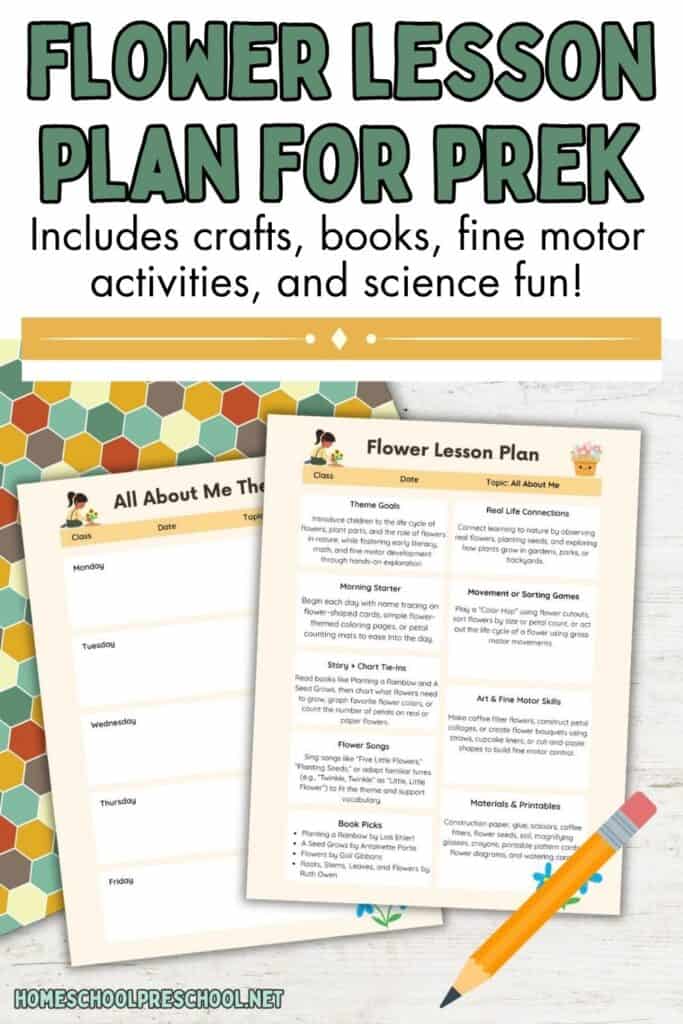
A flower theme is more than just a celebration of spring—it’s a meaningful way to spark curiosity, build essential skills, and connect your preschooler to the world around them. Through stories, crafts, science, and play, this week-long lesson plan helps young learners explore important concepts in a joyful and hands-on way.
Whether you’re teaching at home or in a classroom, the beauty of flowers offers countless opportunities for discovery and growth. Keep the learning going by observing seasonal changes, planting a mini garden, or revisiting your favorite flower books. With just a little planning, you can make early learning bloom all year long.


Tara is the brains behind Homeschool Preschool, where her journey from preschool and public school teacher to homeschooling mom of three fuels her passion for early childhood education. With a blend of expertise and firsthand experience, Tara’s writings offer practical tips and engaging resources to support families in creating meaningful learning adventures at home.