
I Spy Letters Alphabet Worksheets
If you’re looking for I Spy letters worksheets that build real letter recognition skills while keeping children engaged, this printable set gives you structured practice in a simple, focused format.
As both a teacher and homeschool mom, I’ve found that young learners thrive when skill-building is short, intentional, and paired with stories and hands-on play. A quick letter hunt followed by tracing gives children just enough practice.
These free printable alphabet worksheets give you structured practice without overwhelming your day.
What You’ll Get
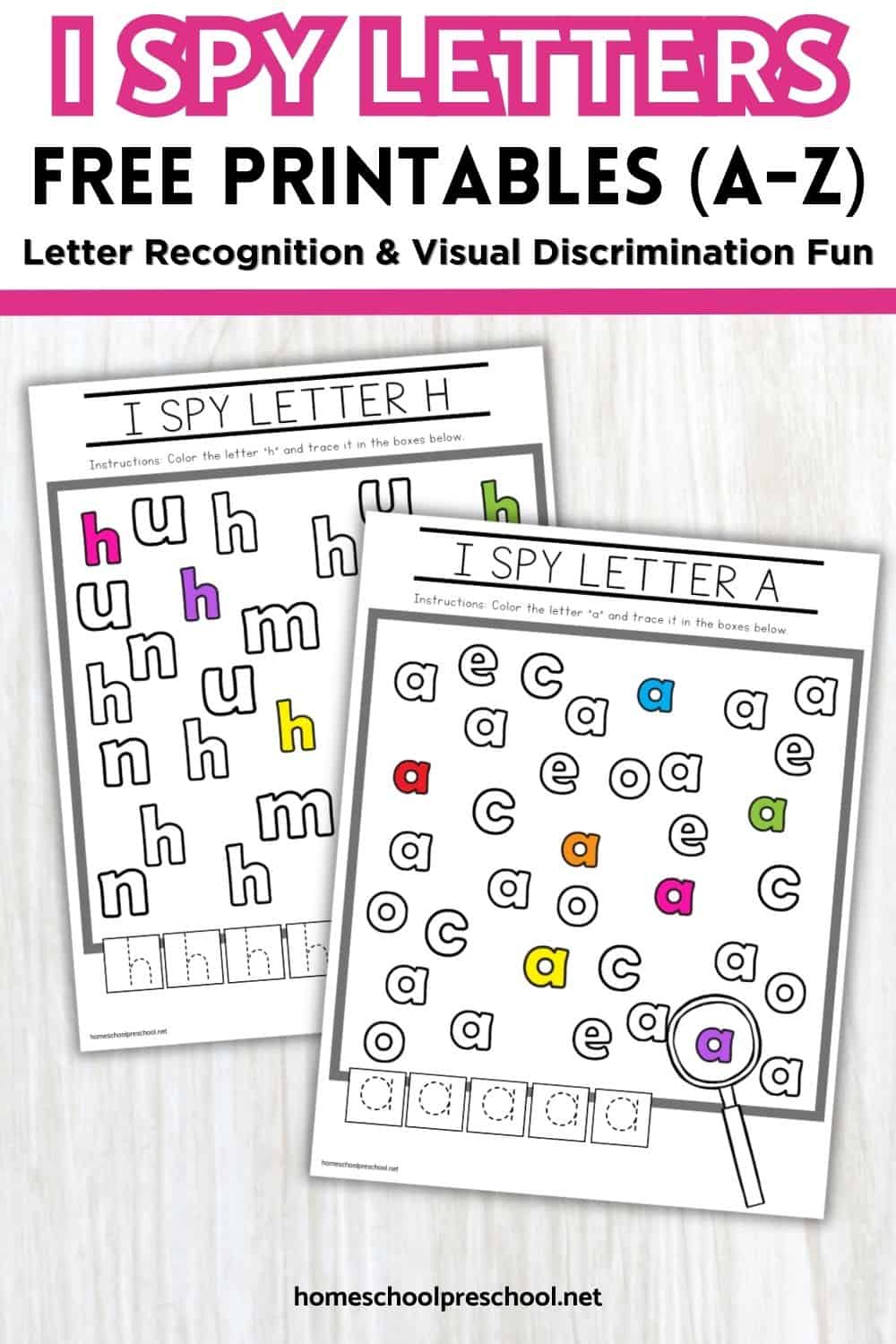
• 26 letter-specific I Spy worksheets
• Works for ages 3-5
• No prep required
Try this next: Uppercase I Spy Letters Printable
What’s Included in These I Spy Letters Worksheets
This printable set includes:
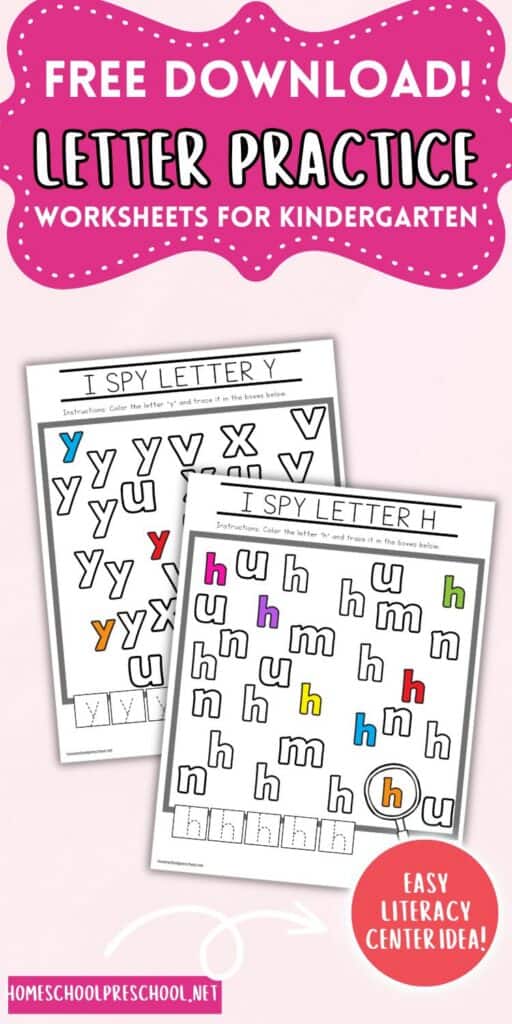
- 26 letter-specific pages (A–Z)
- One lowercase letter focus per page
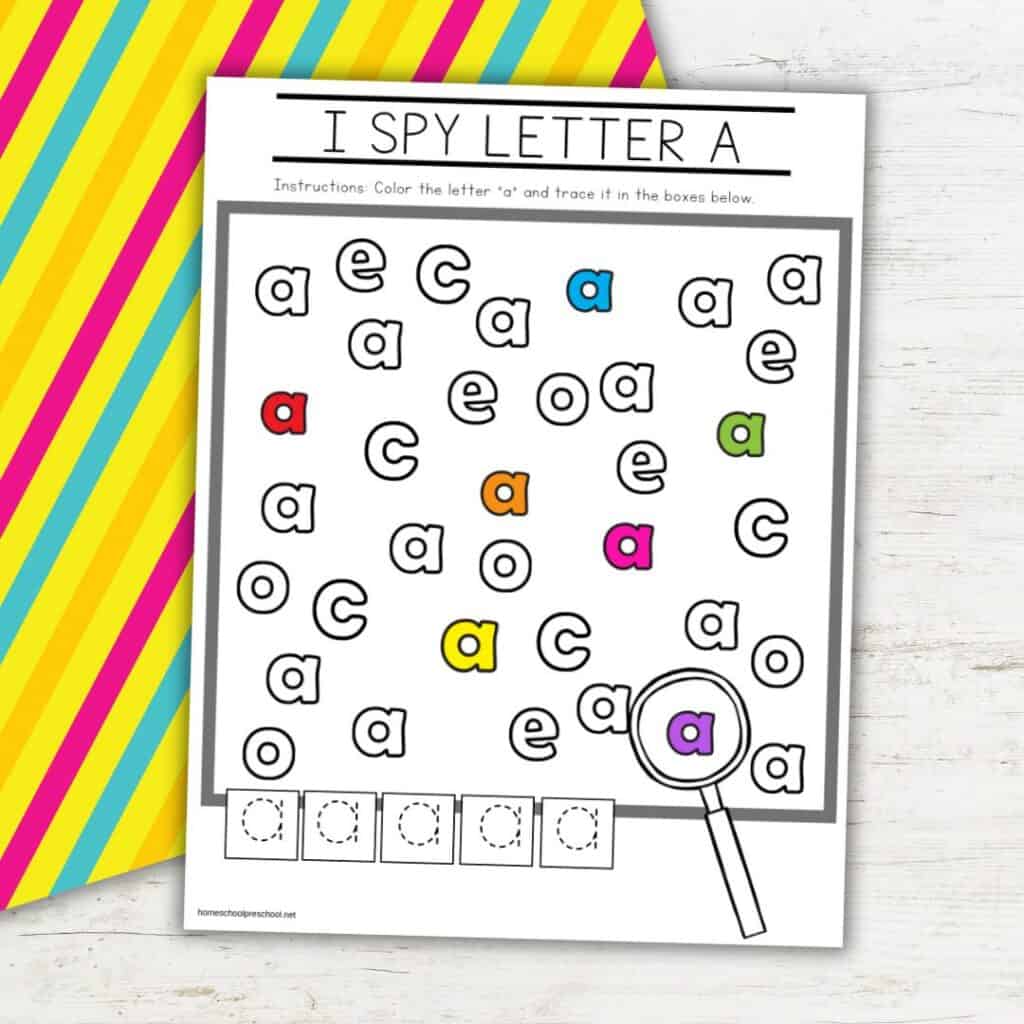
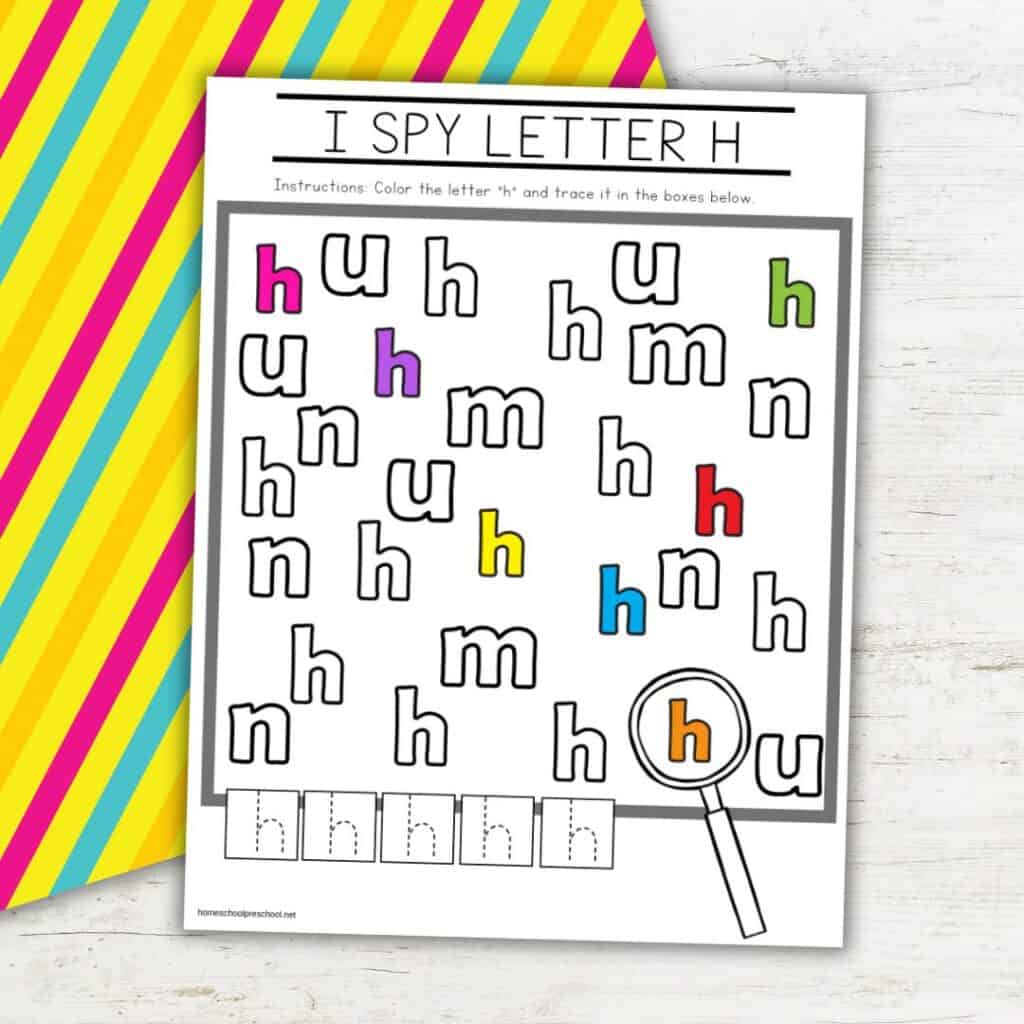
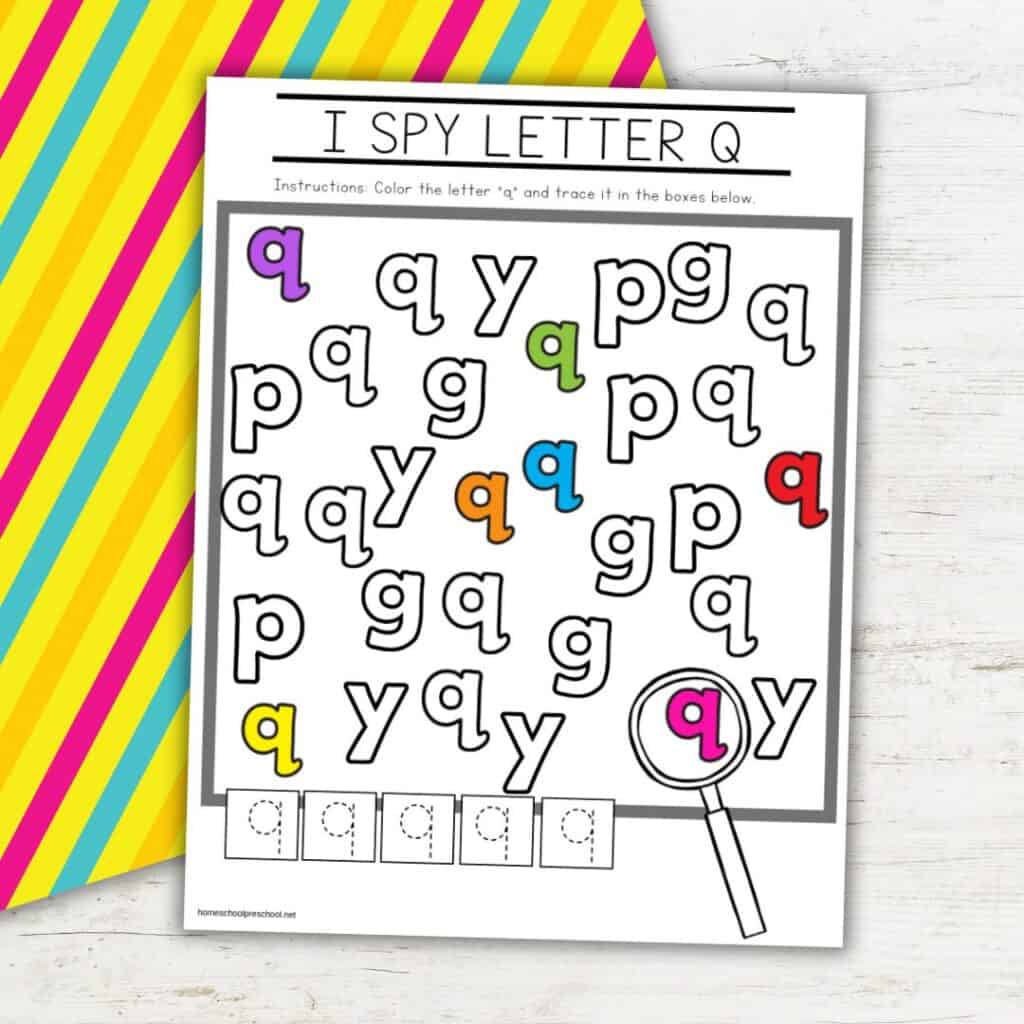
- A large visual search box filled with mixed lowercase letters
- 5 tracing boxes at the bottom of each page
- Clear instructions for coloring and tracing
Each page invites children to:
- Find and color the target lowercase letter in the search box.
- Trace the letter five times for handwriting reinforcement.
It’s visual discrimination and early handwriting practice combined in one simple sheet.
What Will Kids Learn with These I Spy Alphabet Pages?
- Lowercase letter recognition
- Visual discrimination (b/d, p/q, m/n awareness)
- Visual scanning and tracking
- Fine motor development
- Pencil control
- Early handwriting formation
These are foundational literacy skills that support future reading and writing fluency.
How to Use the I Spy Letters Worksheets
Materials Needed
- Printed letter page
- Crayons, colored pencils, or markers
- Optional: highlighter, dot markers, or small crayons for grip support


Step-by-Step Use
- Introduce the letter.
- Say the letter name.
- Practice the sound.
- Air-write it together.
- Model how to scan.
- Show how to look left to right.
- Circle or color the first one together.
- Independent search.
- Children color every matching lowercase letter in the box.
- Encourage slow, careful scanning.
- Trace the letter.
- Complete the five tracing boxes at the bottom.
- Emphasize correct starting point and direction.
Keep it focused and brief. Accuracy matters more than speed.
How to Differentiate
Preschool and kindergarten learners vary widely in readiness. Here’s how to adjust.
Make It Easier
- Cover half the search box to reduce visual overload.
- Highlight one correct letter before starting.
- Complete the page together in a small group.
- Use dot markers instead of crayons for easier control.
Make It More Challenging
- Have students count and record how many letters they found.
- Ask them to say the letter sound each time they color one.
- Add uppercase letter identification verbally.
- Follow up by writing the letter independently on blank paper.
Sensory & OT-Friendly Tips
- Use short crayons or golf pencils to promote proper grip.
- Place the worksheet on a vertical surface for shoulder stability.
- Offer movement breaks between search and tracing.
- Allow students to outline the letter with their finger before tracing.
These small adjustments make the activity accessible across classrooms, therapy sessions, and home settings.
Use It Intentionally
Worksheets are most effective when they’re purposeful.
- Keep practice to 5–10 minutes.
- Stop before frustration.
- Pair with a read-aloud featuring the target letter.
- Follow with hands-on play (magnetic letters, playdough letters, alphabet sensory bin).
A short, focused alphabet hunt inside a simple daily routine can strengthen recognition more effectively than long, scattered practice.
This isn’t busywork—it’s intentional skill-building.
Why I Spy Letter Hunts Work
Before children can read fluently, they must clearly see the difference between similar letters.
These pages mix visually similar distractors (like b/d, p/q, m/n), which strengthens discrimination skills while reinforcing the target letter.
The added tracing component connects visual recognition with motor memory—an important step toward confident handwriting.
Ready to Use These I Spy Letters Worksheets?
If you’re looking for simple, structured alphabet practice that builds real letter recognition skills, this printable set makes it easy.
With 26 lowercase letter hunt pages (A–Z), your preschooler or kindergartener can practice visual discrimination and tracing in just a few focused minutes a day.
???? Click here to download the I Spy Letters worksheets and start building confident letter recognition today.

Alphabet learning doesn’t require complicated materials or lengthy lessons.
A single, well-designed I Spy letters worksheet used intentionally can build recognition, strengthen fine motor skills, and support early reading readiness in just a few minutes a day.
Keep it simple. Keep it structured. Keep it consistent.
That’s where real progress happens.

Tara is the brains behind Homeschool Preschool, where her journey from preschool and public school teacher to homeschooling mom of three fuels her passion for early childhood education. With a blend of expertise and firsthand experience, Tara’s writings offer practical tips and engaging resources to support families in creating meaningful learning adventures at home.
good for kids
They really are, aren’t they!
Thank you so much for the I Spy letters. The kids will love this.
These I Spy Letters worksheets are such a fun way to help kids learn the alphabet! I love that they’re printable too, making it easy to use at home. Can’t wait to try these with my little ones!
Thank you so much! I’m thrilled you’re excited to use them — hope your little ones have a blast spotting those letters!
Thank you
You’re very welcome! ????
Excited for this!
That’s awesome! Hope you have a great time with it! ????
This is awesome!
So glad you think so! Enjoy! ????????
Thank you
Kids love your I Spy
That’s wonderful to hear! I’m so glad the kids are enjoying it!
How do I get the I Spy letter printables?
Just scroll down the page, enter your email address, and you’ll unlock the free I Spy letter printables! ????
Would like worksheets.
You can grab the worksheets by scrolling down and entering your email to unlock them—enjoy! ????
Excited to try this
That’s awesome! I hope you have a great experience with it. If you have any questions or need assistance, feel free to reach out! ????
They will love this
Thanks for the resource 🙂
Thanks for the resources! Will be great for my grandaughter!
Do you have the I Spy Letter worksheets in uppercase letters was well?
Yes! Here is the link: https://homeschool.imarkdev.com/uppercase-i-spy-letters-printable/