Life Cycle of a Flower Worksheet for Preschool
Looking for an easy-to-use life cycle of a flower worksheet for preschool kids that’s perfect for seasonal lessons? This printable bundle is just right for homeschool parents and preschool teachers who want a fun way to teach about plants.
It includes hands-on activities that help little learners understand how a flower grows—from seed to bloom. These preschool life cycle activities are great for spring or summer themes and are simple enough to use anytime. Just print the pages and you’re ready to go!
These free worksheets make earth sciences visual and easy for young kids. They’re a great fit for home or classroom use.
Life Cycle of a Flower Worksheet for Preschool
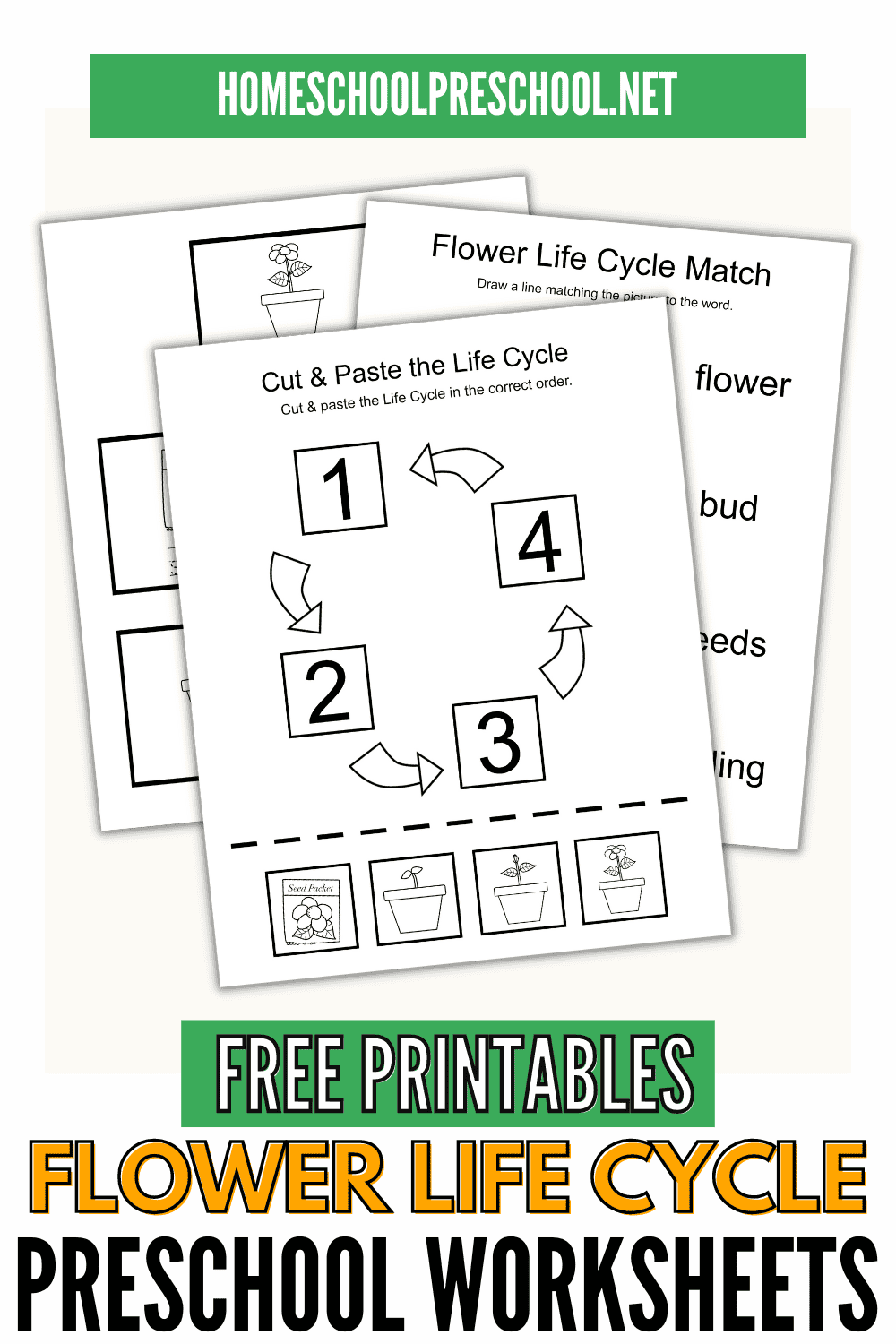
This set of flower life cycle worksheets for preschoolers is a simple and fun way to teach early science skills. Kids will learn about the stages of a flower’s growth while practicing vocabulary, sequencing, fine motor skills, and visual recognition. These hands-on and age-appropriate activities make science lessons easy to understand and enjoyable for young learners.
Here’s what’s included:
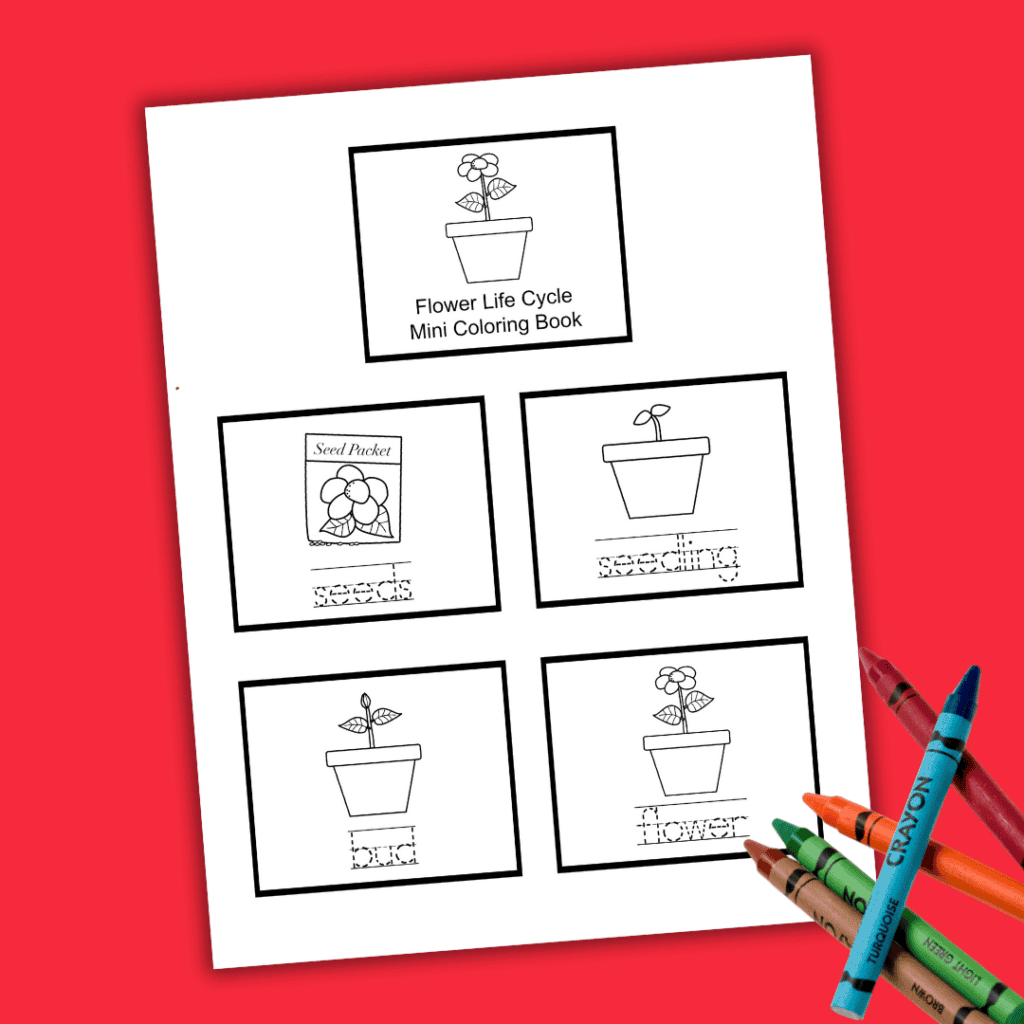
- Printable pages featuring each stage of a flower’s life cycle
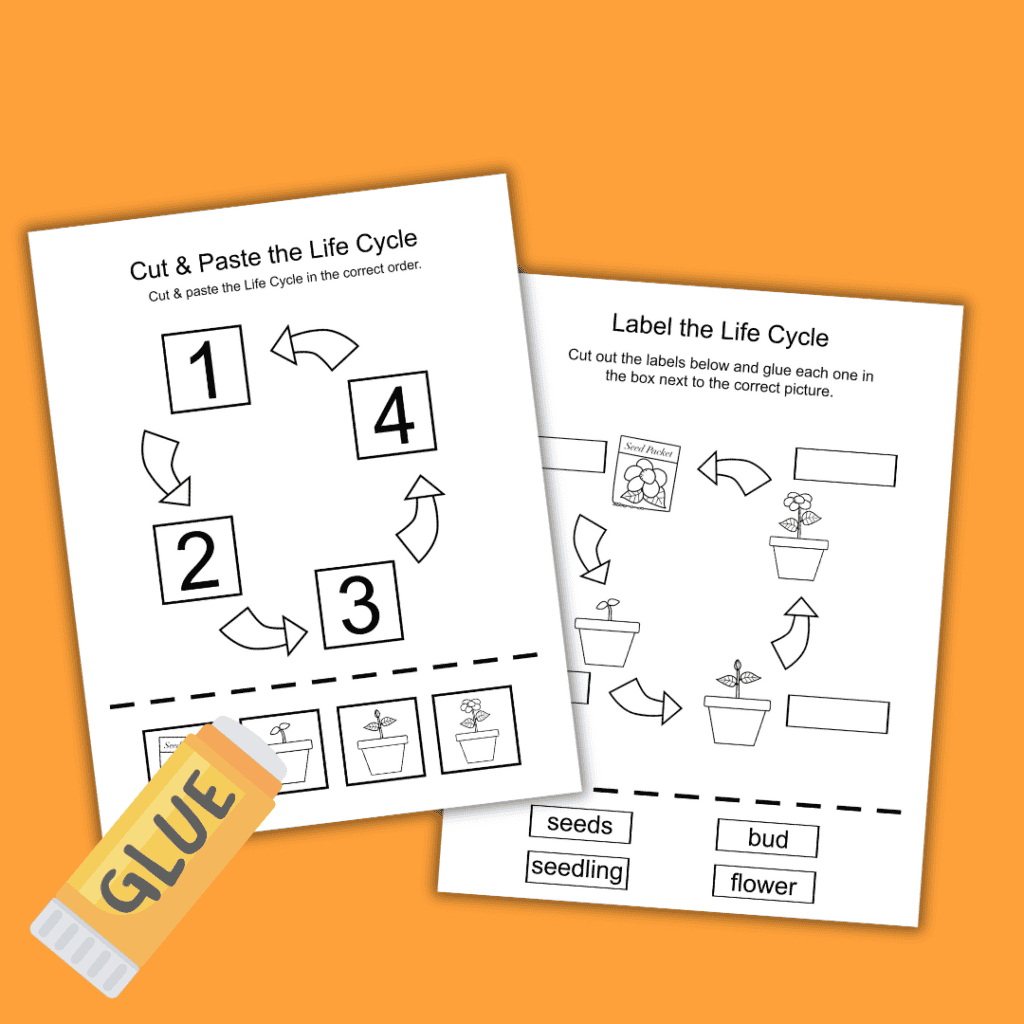
- Cut-and-paste sequencing activity
- Coloring sections for creative learning
- Easy-to-follow instructions for both home and classroom use
These flower printables turn a basic science topic into something kids can explore with their hands and eyes. The activities are interactive, which helps keep preschoolers engaged while they learn.
Whether you’re planning a spring theme or a nature study, this pack is an excellent mix of fun and learning rolled into one!
What can kids learn from this activity?
Kids can learn how a flower grows step by step, from a tiny seed to a blooming plant. They’ll practice putting events in order, which builds sequencing skills. This engaging activity also helps with science vocabulary like “seed,” “sprout,” and “bloom.”
Plus, using scissors, glue, and crayons supports fine motor development. It’s a great mix of hands-on learning and early science concepts.
What is the life cycle of a flower?
The life cycle of a flower begins with a seed planted in the soil. With water and sunlight, the seed starts to grow into a seedling, a tiny new plant. As it gets bigger, the seedling develops a small green bud. That bud slowly opens up and becomes a full-grown flower. Once the flower is fully open, it can make new seeds, and the cycle starts again. T
This process helps kids understand how plants grow and change. It also introduces essential words like seed, seedling, bud, and flower in a simple, hands-on way.
How can I use the plant life cycle worksheet with preschoolers?
Use these plant worksheets during spring or nature-themed lessons. Start by talking about the words seed, seedling, bud, and flower, using the pictures to help explain each one.
Let your preschool and kindergarten kids color the pages, then guide them as they cut and paste the stages in order. You can also talk about what plants need to grow, like water, soil, and sunlight. These worksheets are great for circle time, small groups, or even as a quiet, independent activity.
Flower Activities for Preschool
Looking for more ways to bring the flower life cycle to life? Here are some easy, hands-on ideas that homeschool parents and teachers can use along with the life cycle of a plant worksheet. These simple activities help reinforce the concepts and make learning even more fun for preschoolers.
Books About Flowers
Books are a great way to build on what kids learn through hands-on activities. They can help explain new ideas and introduce fun flower facts. Here are some great read-aloud options for your flower life cycle lessons.
Look! Flowers! – Look! Flowers! They’re beautiful to see. Turn the page and you’ll find out how amazing they can be.
Mrs. Peanuckle’s Flower Alphabet – From the aster to the zinnia, Mrs. Peanuckle introduces very young children to 26 types of flowers from across the globe. For each one, she offers a single defining characteristic, some of them very surprising.
The Reason for a Flower – The reason for a flower is to manufacture seeds, but Ruth Heller shares a lot more about parts of plants and their functions in her trademark rhythmic style.
Flower Crafts for Preschoolers
Flower-themed crafts are a fun way to reinforce what kids learn about plant life cycles. These simple projects allow preschoolers to be creative while practicing fine motor skills. Below are a few flower activity ideas that pair perfectly with the worksheet pack.
- Easy Coffee Filter Flowers for Preschoolers
- Fingerprint Flower Pot Project
- Fingerprint Flowers
- Spring Flower Craft
- Crumpled Paper Sunflower Preschool Craft
Flower Worksheets
If your kids enjoyed these flower life cycle worksheets, they’ll love these other printables too. Each one supports early learning in a fun and simple way. Check out the links below for more hands-on resources to add to your lessons.
- Life Cycle of a Flower Hat
- Sunflower Life Cycle Activity
- Flower Color by Number Printables
- Flower Color Matching Worksheet
- Printable Flower Coloring Pages
- Parts of a Flower
FAQs: Flower Life Cycle Activities for Preschoolers
They’re perfect for preschoolers, usually ages 3–5. The activities are simple, hands-on, and just right for little learners.
Just the basics! You’ll need crayons, scissors, and glue. Optional: real flower parts or seeds for added fun.
You can use them in both! They’re great for homeschool and traditional preschool settings.
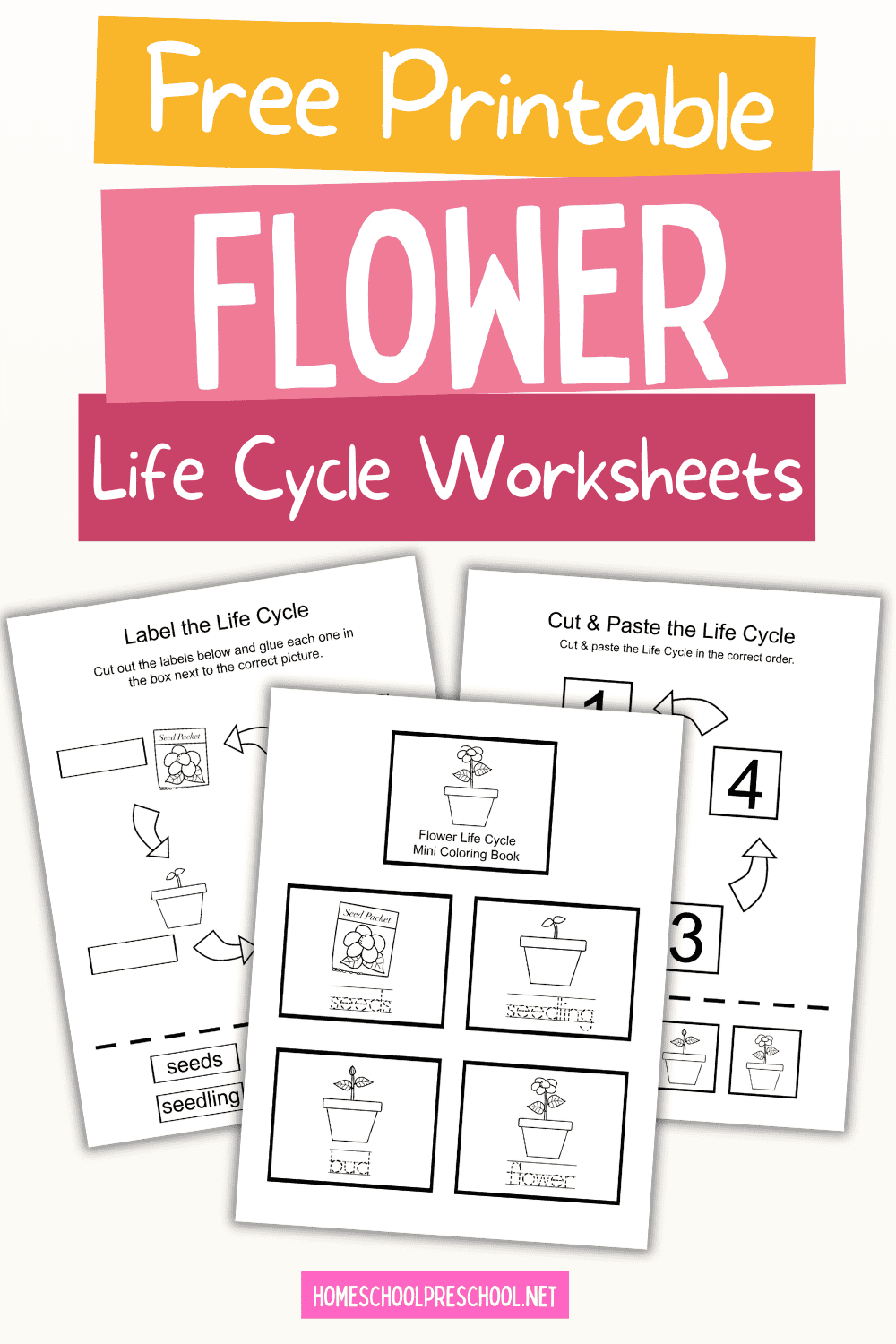
These life cycle of a flower worksheets make it easy to teach science in a fun, hands-on way. Kids get to build vocabulary, practice fine motor skills, and understand how flowers grow.
The free printables are simple enough for young learners but give them a strong foundation in early science concepts. With cut-and-paste pages, coloring sections, and sequencing tasks, there’s something for every learning style.
This worksheet set is also flexible—you can use it during a spring theme, a garden unit, or just for fun. It encourages curiosity about nature and helps kids connect what they see outside to what they learn inside. It’s a great way to make science feel authentic and exciting for preschoolers.


Tara is the brains behind Homeschool Preschool, where her journey from preschool and public school teacher to homeschooling mom of three fuels her passion for early childhood education. With a blend of expertise and firsthand experience, Tara’s writings offer practical tips and engaging resources to support families in creating meaningful learning adventures at home.
So helpful
I love the Freebies!
Hi there! ???? Thanks so much for your interest in the freebie! To grab the printables you’re after, scroll down to the bottom of the post. If you’re already on my email list, sign in to access them. If not, no worries— sign-up is super quick, and you’ll be all set to download in no time. Enjoy the printables and happy learning! ✨
Thanks for sharing with me
You are very welcome!
Aloha Tara,
I love the fun and amazing lessons that you have. I am a special education teacher and I want to share your activities with my class. Currently, with the pandemic, we are forced to teach from home. I will be using your activities with my class but it will be posted in my classroom in the school that I work at the school website will that be okay. It is only for my class I will not be posting for commercial use. Please let me know if that is okay to do.
Mahalo,
Lynnette