
Preschool Life Cycle of a Sunflower
If you’re looking for a fun way to teach the preschool life cycle of a sunflower, you’re in the right place. Preschoolers are naturally curious, and there’s something magical about watching a tiny seed turn into a bright, blooming flower.
Life cycles are such a hands-on way to explore science—and sunflower preschool activities are always a hit! Sunflowers are simple, visual, and easy for little ones to understand, making them perfect for early learners.
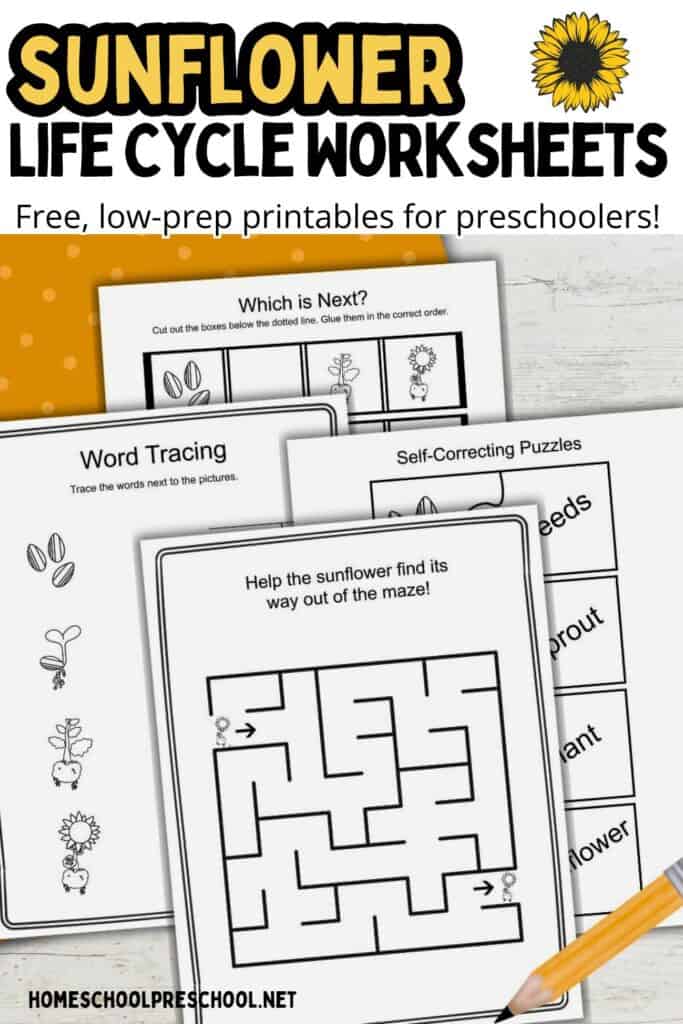
In this post, I’m sharing a free printable activity pack that guides kids through each stage of the sunflower’s growth, featuring puzzles, tracing, sequencing, and more. It’s everything you need for a playful and educational plant life cycle lesson!
Why Teach the Sunflower Life Cycle to Preschoolers?
Preschoolers love to see how things grow and change—it’s part of how they make sense of the world! Learning about the life cycle of a sunflower taps into that natural curiosity and helps kids become little scientists through observation and discovery.
Along the way, they develop essential skills such as vocabulary, sequencing, and fine motor control (hello, scissors and glue!). Plus, life cycle activities lay the foundation for early science concepts, including growth, change, and living things.
The best part? Sunflower themes fit beautifully into your spring, summer, or back-to-school plans. Whether you’re planting seeds in the garden or simply exploring nature-themed learning, it’s the perfect topic for preschoolers.
Overview of the Life Cycle of a Sunflower
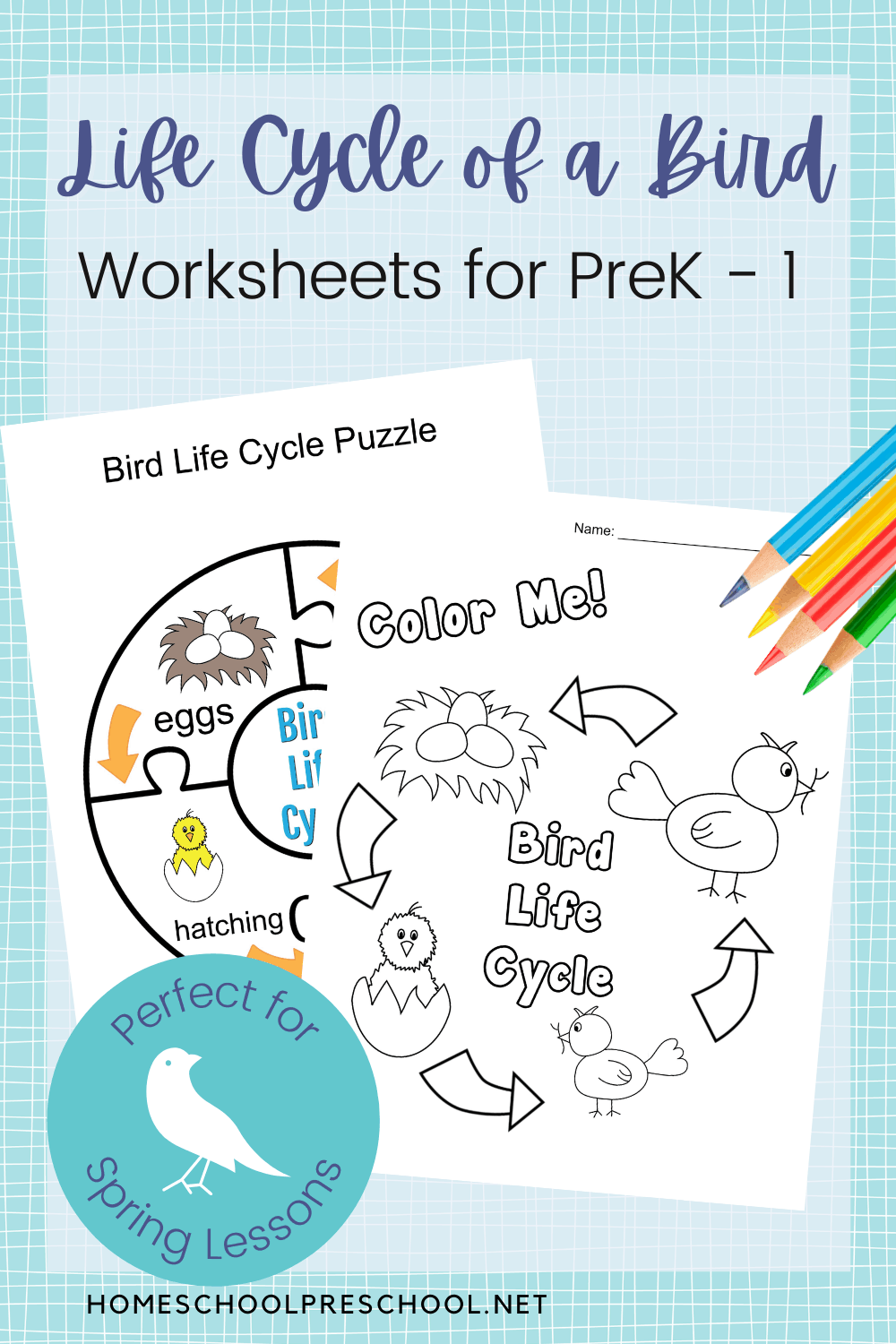
The sunflower life cycle has four simple stages: seed, sprout, plant, and sunflower. Each one is easy to understand.
We start with a tiny seed. It goes into the soil and waits for water and sunlight to help it grow.
Next comes the sprout. This is when the seed begins to grow roots and a little green stem appears.
Then we see the plant. Leaves grow bigger, and the stem stretches toward the sun.
Finally, we have a full-grown sunflower! It stands tall and shows off its bright yellow petals and large seed-filled center.
Preschoolers love watching each stage. It’s fun, easy to remember, and helps them learn how living things grow and change.
Free Sunflower Life Cycle Printable Pack
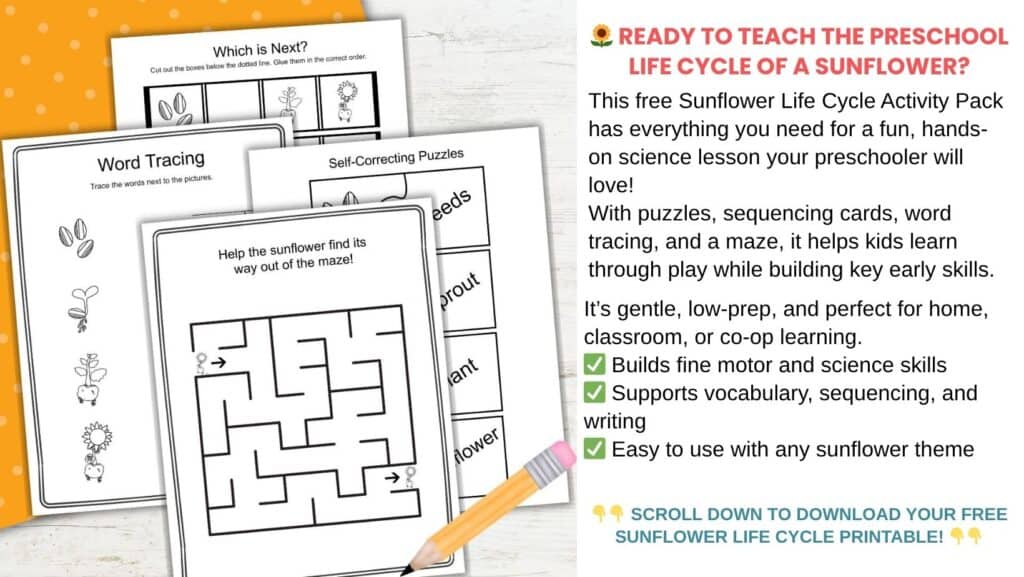
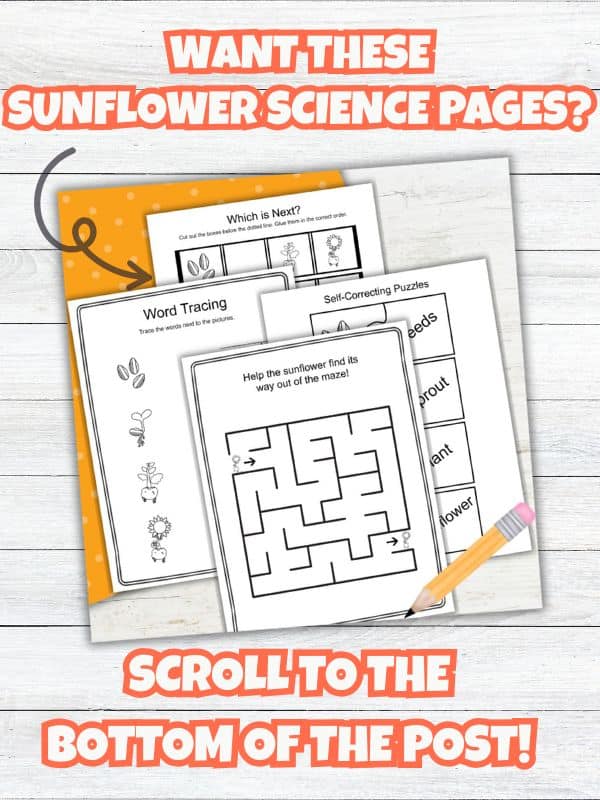
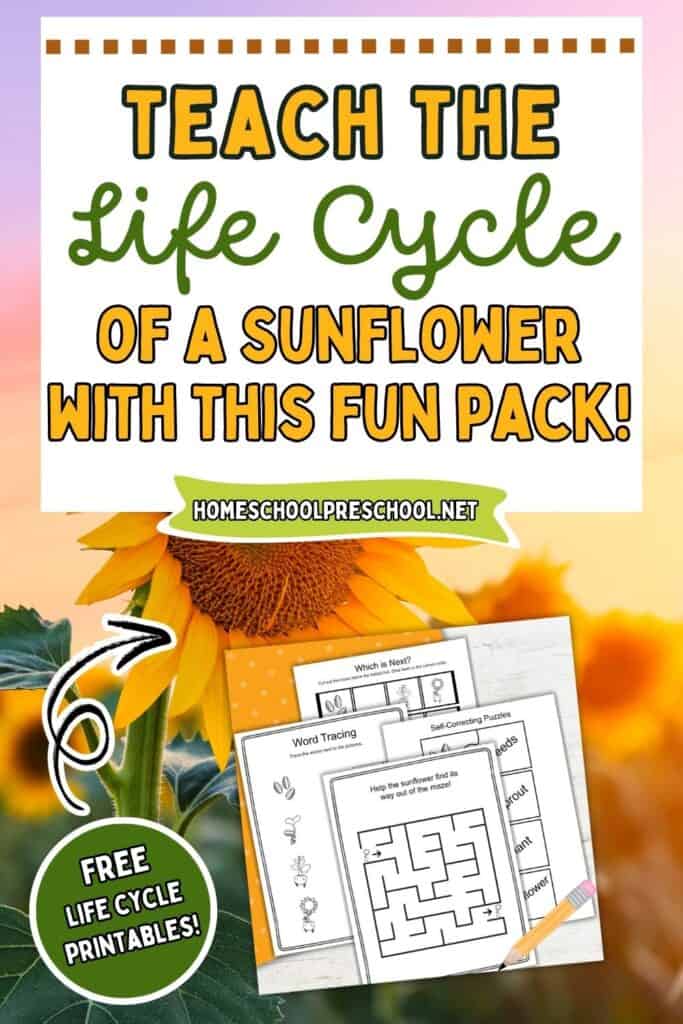
This free Sunflower Life Cycle Activity Pack gives preschoolers multiple ways to explore each stage of the sunflower’s growth.
It’s hands-on, simple to prep, and perfect for home or classroom use. Let’s take a closer look at what’s included.
Self-Correcting Puzzles
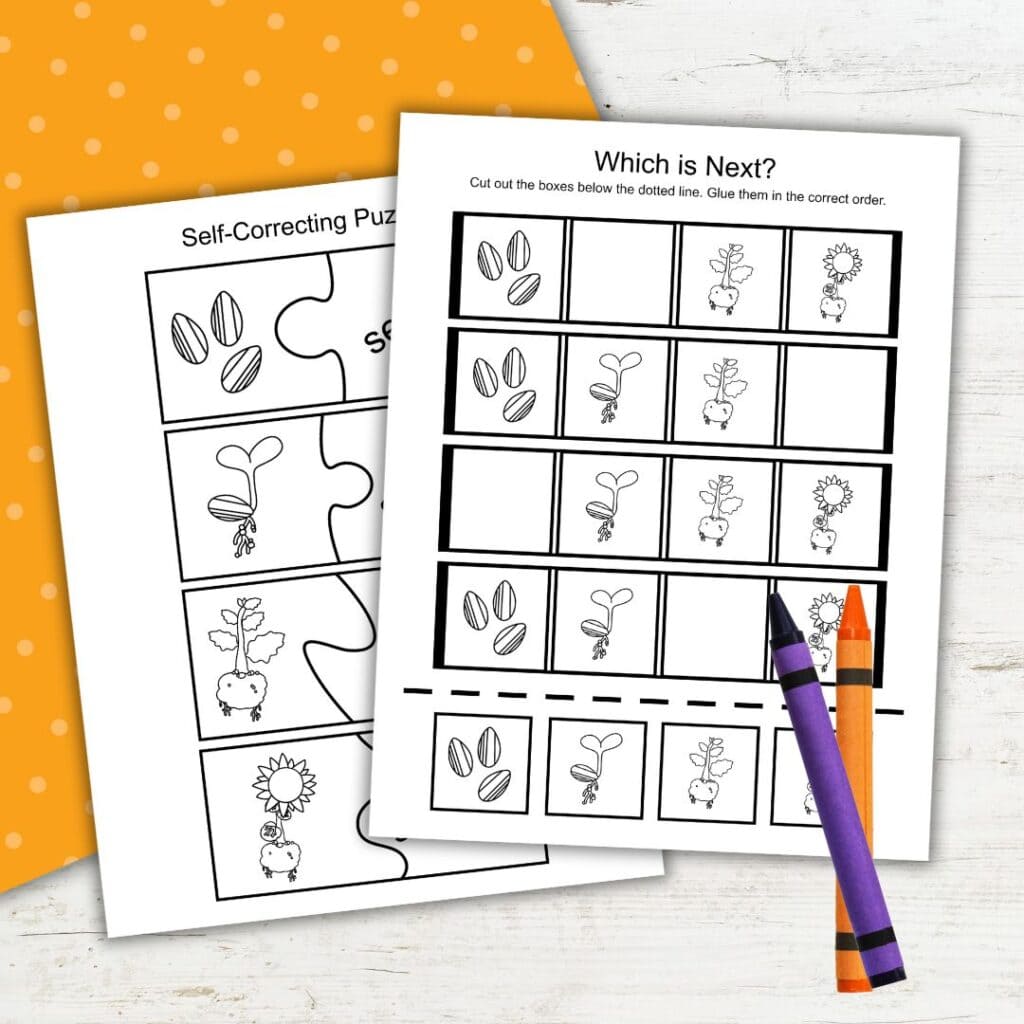
Preschoolers match each stage of the sunflower life cycle to its correct label. The pieces are easy to handle and align.
This activity encourages visual discrimination and vocabulary growth. Kids also build confidence by checking their own work as they play.
Sequencing Activity – “Which is Next?”
Children cut out life cycle images and glue them in the correct order. The visuals guide them step by step.
This supports sequencing skills, logical thinking, and understanding of how plants grow and change over time.
Word Tracing Page
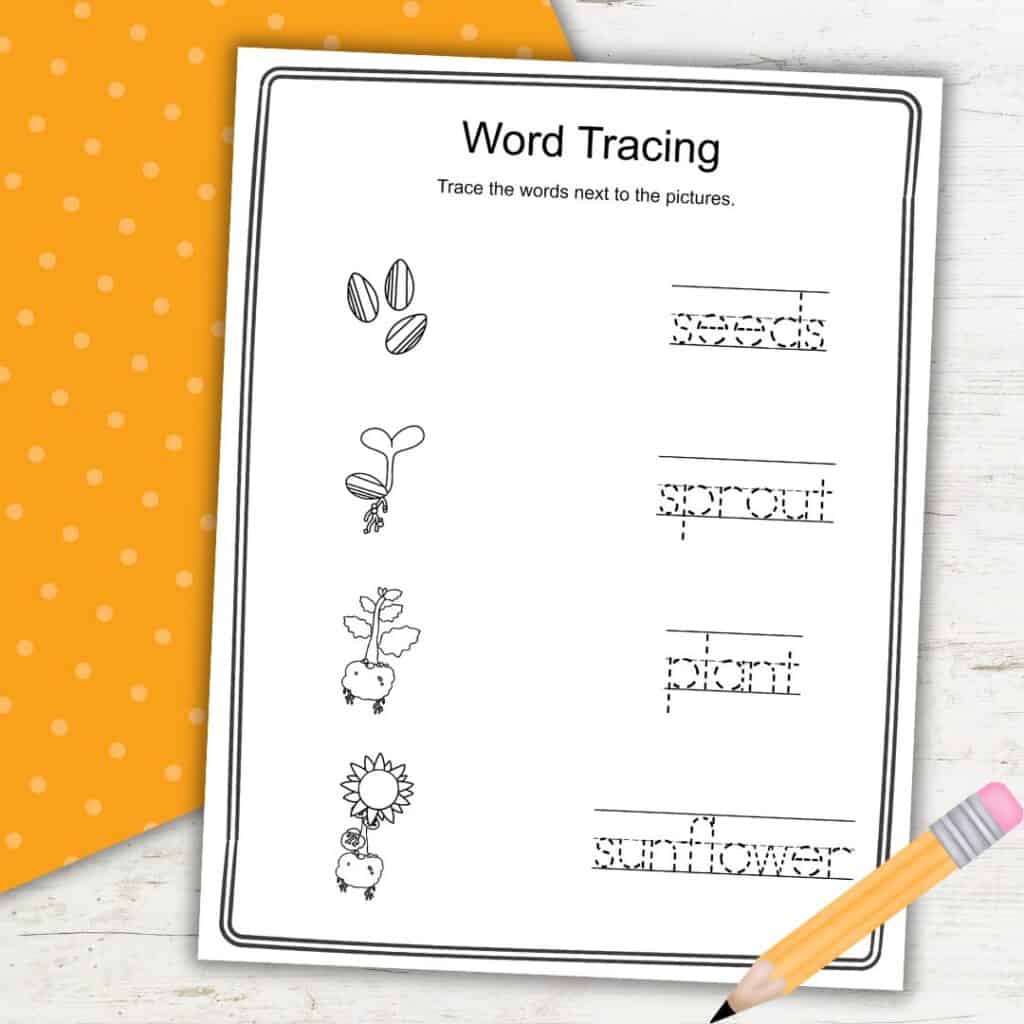
This page gives kids the chance to trace the words: seeds, sprout, plant, and sunflower.
It’s perfect for fine motor practice and early literacy. Kids can see the word, say it, and then write it.
Sunflower Maze
The sunflower maze is a playful way to build problem-solving skills. It also strengthens hand-eye coordination and pencil control.
Make it fun by saying, “Can your sunflower find the sun?” Add a story element to boost creativity.
Tips for Using These Activities
Print the pages on cardstock to make them sturdier and better suited for repeated use with little preschool hands. Laminating the puzzle pieces helps them last longer and makes them ideal for morning tubs or small-group centers.
Add real sunflower seeds or plant a few in a cup or garden space to bring the learning to life. Children enjoy watching the real-life sunflower cycle after completing the printable version. These activities work well in spring, summer, or as part of a back-to-school science unit.
Pair them with a favorite book, such as From Seed to Sunflower, to connect science with reading in a meaningful way.
Download Your Free Sunflower Life Cycle Pack
Ready to dive into sunflower life cycle fun? Click the link below to download your free printable activity pack today. It’s quick to print and easy to prep—perfect for home, classroom, or co-op learning settings.
These activities fit beautifully into your spring, summer, or back-to-school themes. Whether you’re a parent, teacher, or homeschooler, you’ll love how simple and engaging this resource is. Grab your copy now and watch your preschooler explore science with curiosity and joy.
Related Posts & Extensions
If your preschooler loved this sunflower activity, be sure to check out more plant- and nature-themed ideas on the blog. Try our flower counting worksheets, garden-themed finish-the-pattern worksheets, or spring sensory bins for hands-on learning.
Pair these printables with books like Planting a Rainbow or How a Seed Grows. Add a craft, like a paper plate sunflower or a seed collage, to reinforce the life cycle stages. You can also plant sunflower seeds outdoors and observe changes together over time.
Don’t forget to share your child’s creations! Tag us on Instagram or Facebook so we can cheer them on.
Teaching the sunflower life cycle is a fun and meaningful way to explore science with preschoolers. With simple visuals and hands-on printables, kids stay engaged and excited about learning.
Whether you’re homeschooling, teaching in a classroom, or just exploring for fun, this pack is a great fit. Use it to spark conversations, build skills, and create memorable learning moments. Little ones grow fast—watching them learn about how things grow is extra special.


Tara is the brains behind Homeschool Preschool, where her journey from preschool and public school teacher to homeschooling mom of three fuels her passion for early childhood education. With a blend of expertise and firsthand experience, Tara’s writings offer practical tips and engaging resources to support families in creating meaningful learning adventures at home.
Thank You!
Catherine
Great work