Tarantula Life Cycle Diagram
Looking for a fun way to teach your little ones about spiders? This tarantula life cycle diagram is a great hands-on activity that will help preschoolers explore science in a simple, not-so-scary way! Whether you’re a homeschool parent or a classroom teacher, these life cycle activities for preschool are just right for curious minds.
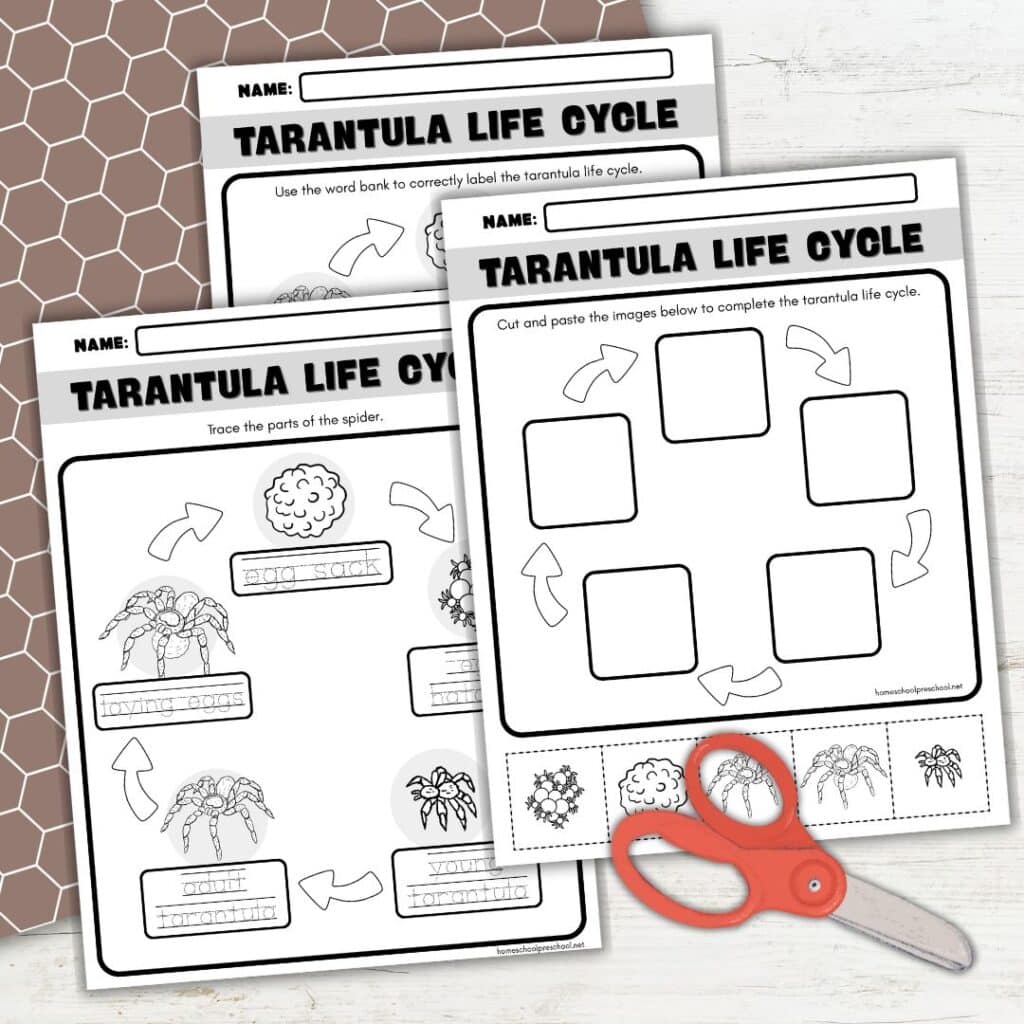
With cut-and-paste pages, tracing, and labeling fun, your kids will stay engaged while learning how a tarantula grows—from tiny eggs to a full-grown spider. It’s an easy way to bring science to life without needing anything fancy—just print and go!
This printable pack is perfect for quiet time, small groups, or even a spider-themed unit study. Let’s make learning about nature feel exciting, not overwhelming!
So, if you’re ready for a not-too-creepy-crawly adventure, this activity pack is a great place to start. It’s fun, simple, and just the right mix of learning and play.
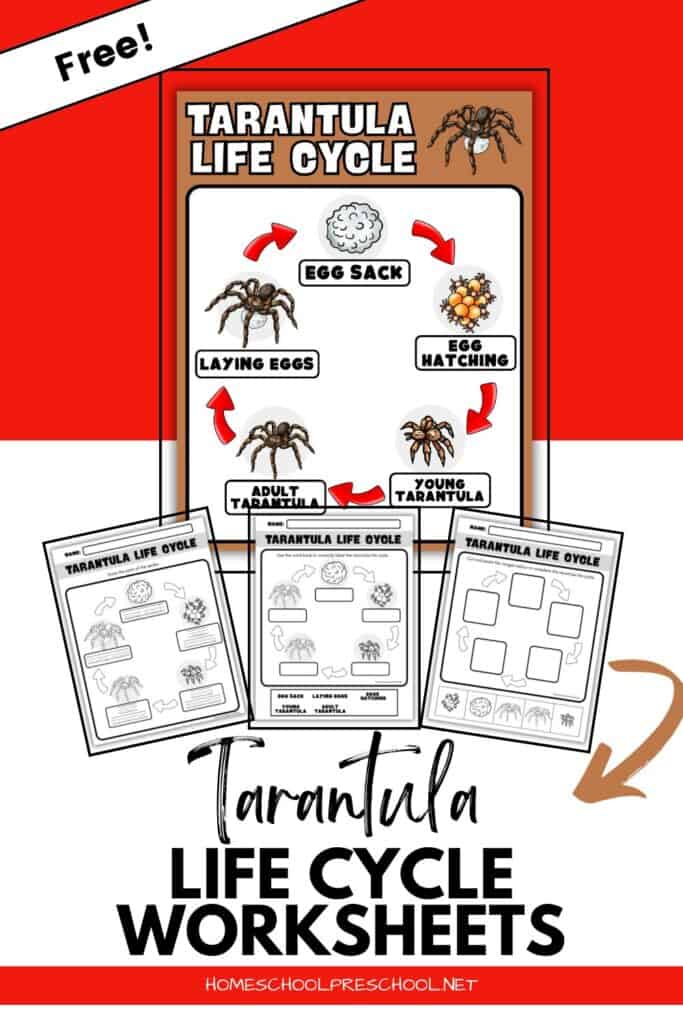
Tarantula Life Cycle Diagram
These tarantula life cycle activities for preschoolers are a wonderful way to introduce science concepts in a fun, age-appropriate way. As kids work through the pages, they’ll practice early science skills like sequencing, labeling, and vocabulary building. They’ll also strengthen fine motor skills through tracing and cutting—so much learning packed into one little set!
Here’s what’s included in the pack:
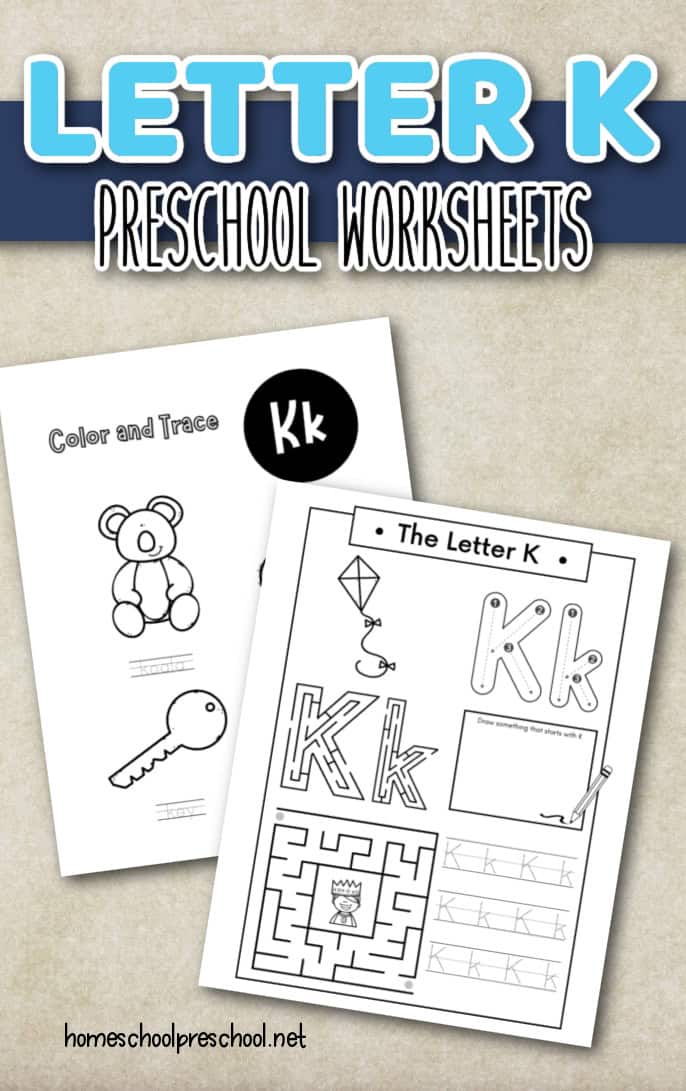
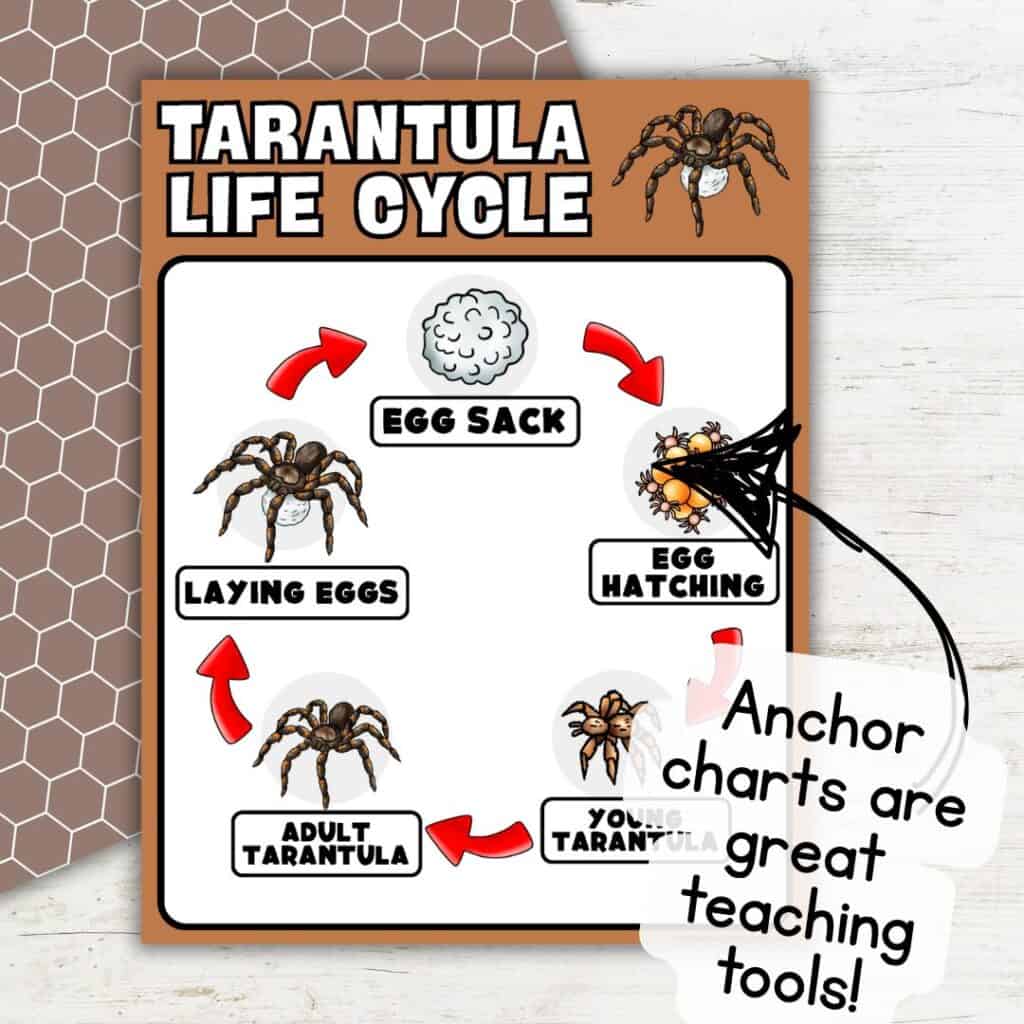
- A simple tarantula life cycle diagram to help kids understand each stage
- A cut-and-paste activity for sequencing the life cycle
- A labeling page with a word bank for vocabulary practice
- A spider tracing page for fine motor development
These hands-on worksheets turn science into an exciting adventure—no stress, just learning and fun!
With these engaging printables, kids won’t even realize how much they’re learning. They’re perfect for preschoolers who love animals, bugs, or just getting their hands busy while they explore the world around them!
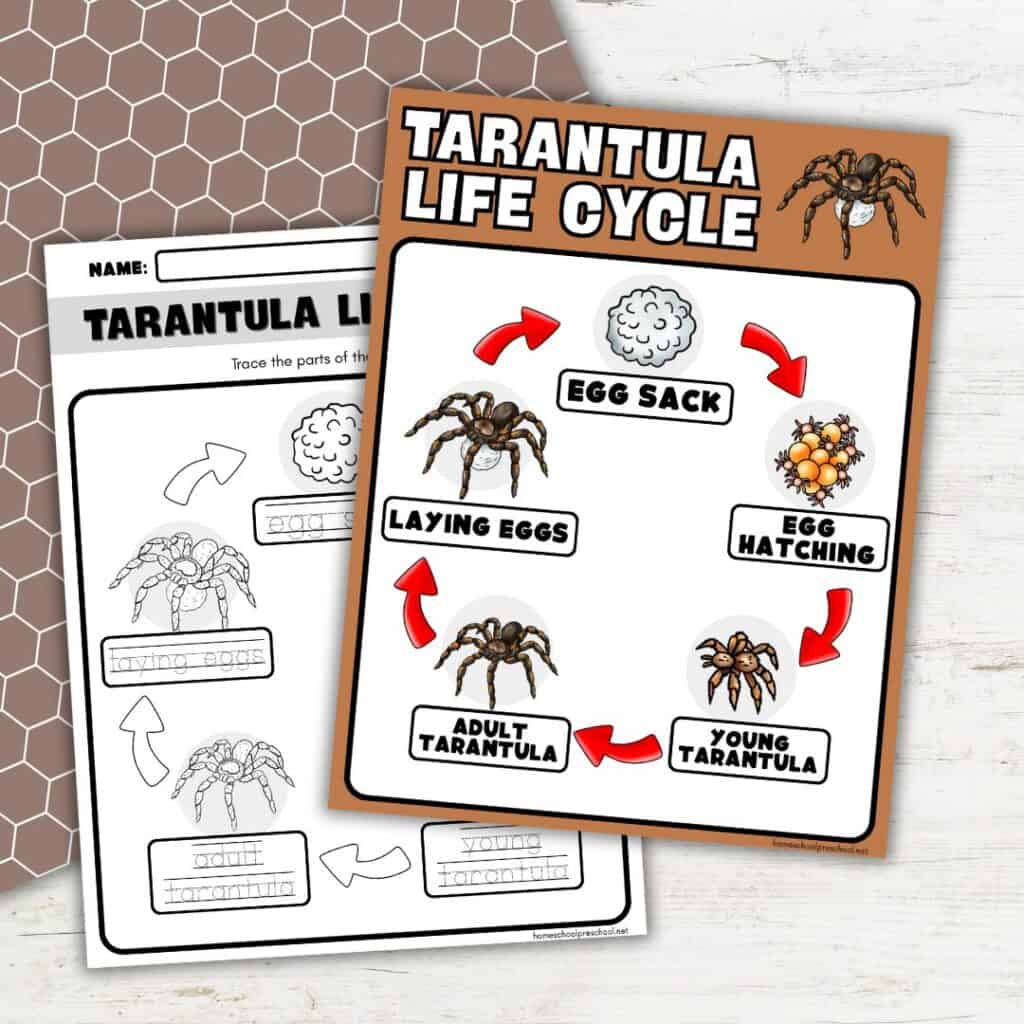
What are the stages in the tarantula life cycle?
The tarantula life cycle has a few simple stages that are easy for young kids to understand. It starts when the female tarantula lays her eggs in an egg sack. After some time, the eggs begin hatching, and tiny baby spiders, called spiderlings, start to emerge.
These little spiderlings grow into young tarantulas, slowly getting bigger and stronger. Eventually, they become adult tarantulas, ready to live on their own. When they’re fully grown, the female tarantulas can begin laying eggs, and the life cycle starts all over again.
It’s a fascinating process that shows how even creepy crawlies like tarantulas go through big changes as they grow!
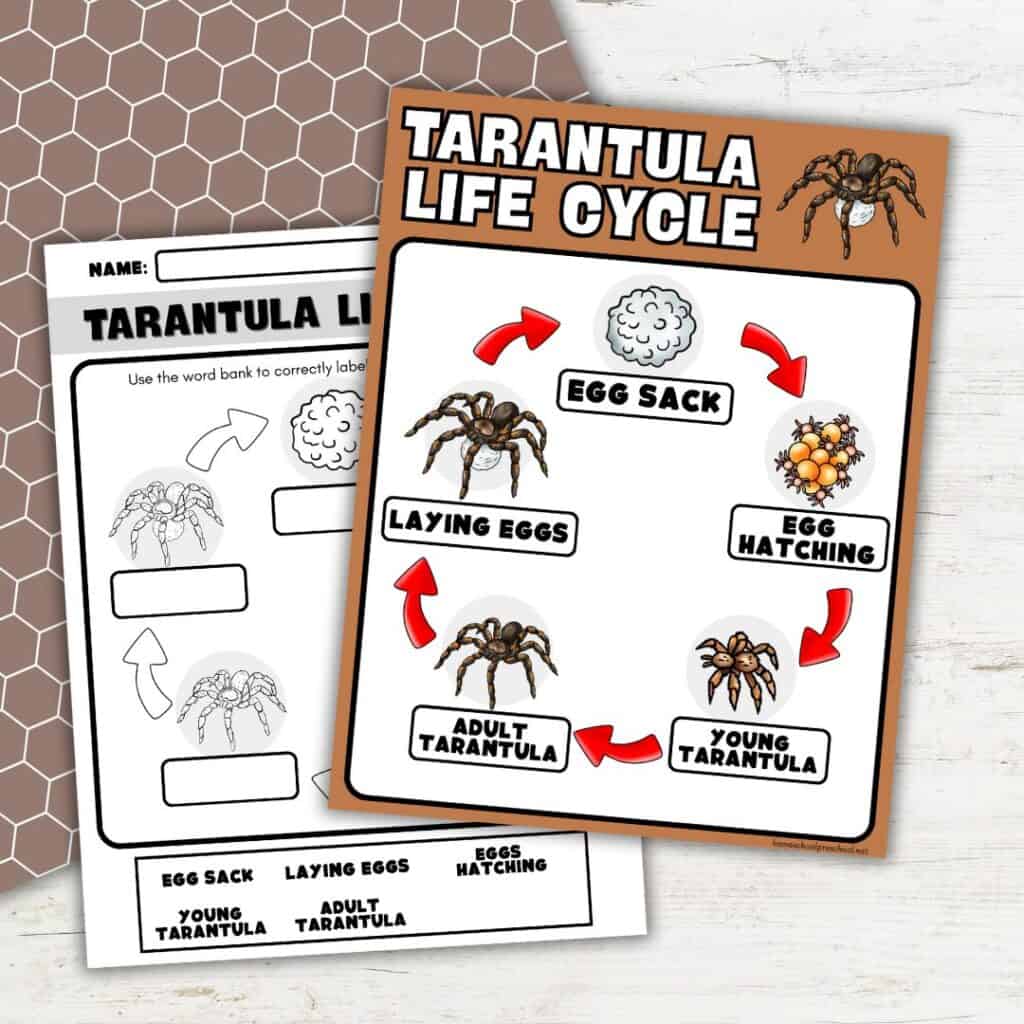
Why is sequencing important in early science education?
Sequencing is an important part of early science education because it helps young children understand how things change and grow over time. It teaches them to look for patterns, put events in order, and think logically. These skills are the building blocks for understanding more complex science ideas later on.
Ready to keep the learning going? Be sure to check out more fun and simple life cycle sequencing activities for preschoolers!
- Bat Life Cycle Diagram
- Dragonfly Life Cycle Worksheets
- Frog Life Cycle Activity
- Life Cycle of a Bird Free Printable
- Watermelon Life Cycle Worksheet
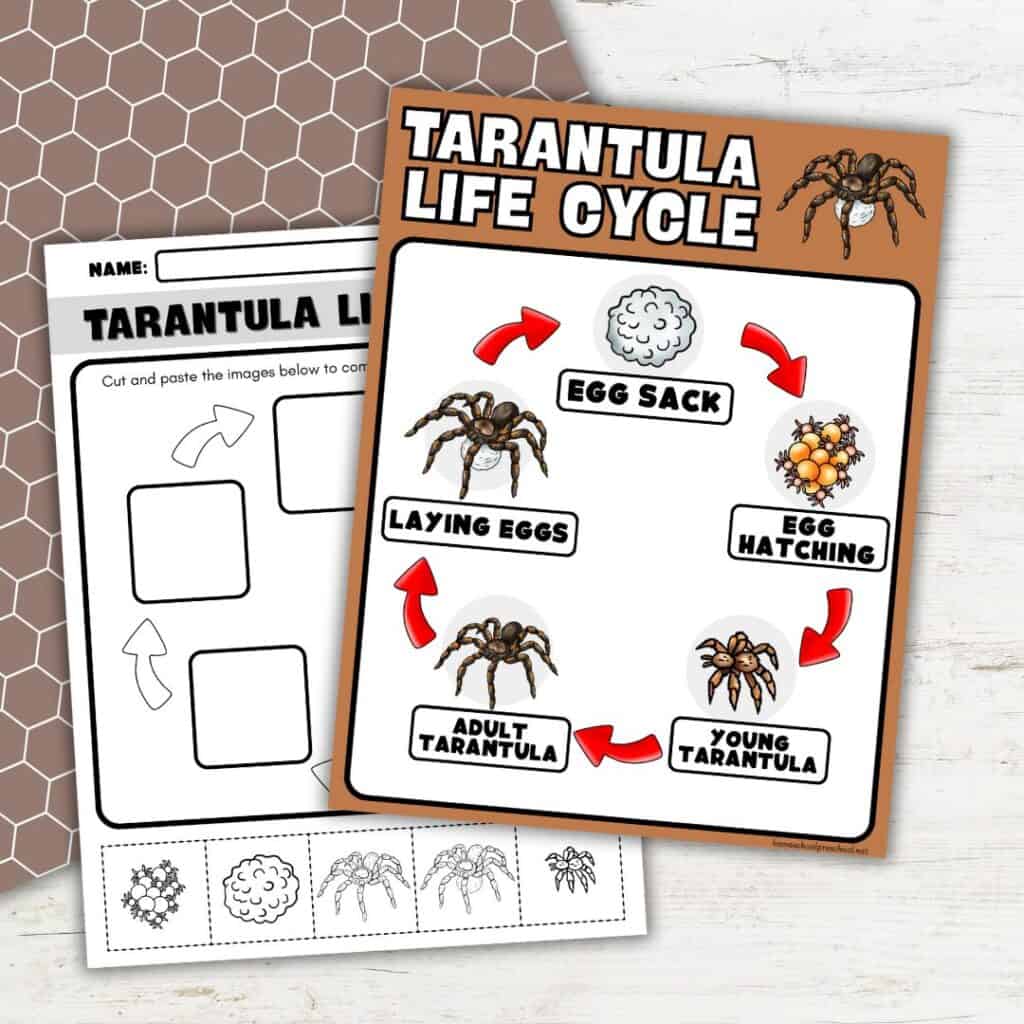
Developing Scientific Vocabulary
These tarantula life cycle worksheets are a great way to build science vocabulary in a fun, hands-on way. As kids cut, paste, trace, and label each stage, they learn important words like egg sack, hatching, young tarantula, and adult tarantula. Seeing the words alongside pictures helps kids make strong connections between what they see and what they say.
It’s a gentle, playful way to introduce big science words to little learners!

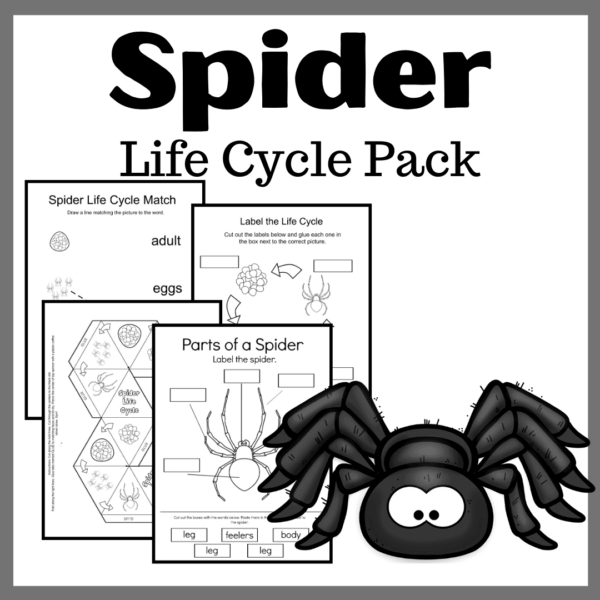

Spider Ideas for Kids
If your kids are excited about spiders, why not keep the learning going with some extra fun? This is the perfect time to add a few spider-themed activities to your lessons. Below, you’ll find simple and engaging ideas that homeschool parents and teachers can use to go along with the tarantula life cycle pack. Let’s turn this into a full-on spider adventure!
Spider Books for Kids
Books are excellent way to bring the world of spiders to life for little learners. Whether your kids are curious or a bit hesitant, there’s a story that can capture their attention. Here are some fun and friendly spider books to complement your life cycle lessons!


Spider!: Eek—a spider! But instead of running away, this brave little book helps kids shout their fear right out. With fun, bold illustrations and playful text, it teaches children that sometimes being loud and silly can make scary things feel a little less scary.
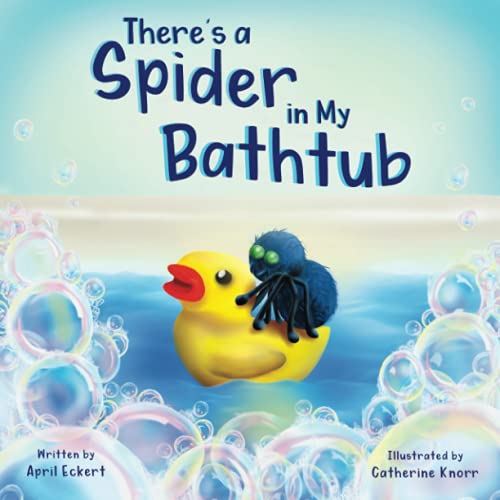
There’s a Spider in My Bathtub: What’s that in the tub? A spider, of course—just hanging out and causing a bubbly stir! This silly and sweet story helps little ones laugh at creepy crawly surprises with a big dose of fun and imagination.
The Itsy Bitsy Spider: The itsy bitsy spider climbs up once again in this baby-friendly twist on a classic rhyme! With bright, gentle pictures and safe-to-chew pages, this book is perfect for tiny hands (and mouths!). It’s a sweet and sturdy way to enjoy storytime—again and again.
Spider Crafts for Kids
Crafts are a fun way to reinforce learning while letting kids get creative with their hands. After exploring the tarantula life cycle, try adding a few spider-themed crafts to your day. Below are some simple and silly spider crafts that pair perfectly with this activity pack!
- Bottlecap Spider Craft for Kids
- Preschool Spider Craft
- Spider Paper Plate Craft
- Spider Preschool Craft
- Salt Painted Spider Web Craft


Spider Printables for Kids
Want even more ways to learn about spiders? These spider printables for kids are a great way to build on what you’ve already started. They’re perfect for reinforcing key ideas and practicing early learning skills.
- Color by Number Spider
- Counting Spider Eyes Spider Math Activity
- Counting Spiders Worksheets
- Itsy Bitsy Spider Printable
- Itsy Bitsy Spider Sequencing Activity
FAQs About Tarantula Life Cycle Diagram Worksheets
A: This activity is just right for preschoolers and kindergartners—usually ages 3 to 6. The worksheets are simple, with clear pictures and easy instructions. If your little one is just starting to learn about science or life cycles, this is a great place to begin!
A: Nope, nothing fancy! Just grab some scissors, glue, crayons or markers, and a pencil. Everything else you need is included in the printable pack—just print and go!
A: Totally understandable! These activities use friendly, non-scary illustrations to help kids learn without feeling nervous. You can also read a silly spider book or do a fun craft first to ease into the topic gently.
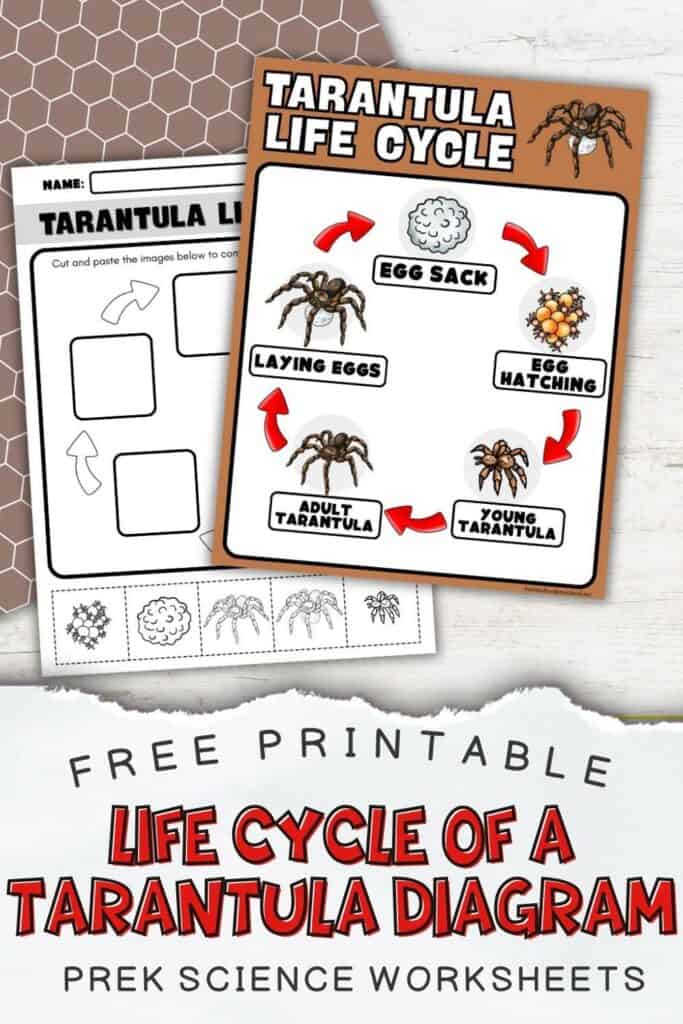
Learning about the life cycle of a tarantula might sound a little spooky at first, but with the right tools, it becomes a fun and exciting adventure for little learners! These simple, hands-on printables make it easy to introduce big science ideas in a gentle, age-appropriate way. Whether you’re teaching at home or in the classroom, this activity pack is a great way to build skills while keeping kids curious and engaged.
So go ahead—print out the pages, gather a few supplies, and watch your kids light up as they explore the amazing world of spiders. Happy learning!


Tara is the brains behind Homeschool Preschool, where her journey from preschool and public school teacher to homeschooling mom of three fuels her passion for early childhood education. With a blend of expertise and firsthand experience, Tara’s writings offer practical tips and engaging resources to support families in creating meaningful learning adventures at home.