5 Common Mistakes to Avoid When Teaching the Alphabet
When it comes to early literacy, there are 5 common mistakes to avoid when teaching the alphabet—and chances are, you might not even realize you’re making them. Whether you’re using fun alphabet and letter activities at home or in the classroom, it’s easy to overlook simple things that can slow down your child’s progress.
As a longtime early childhood educator, I’ve seen how just a few small shifts in how we introduce letters can lead to big wins for young learners. In this post, I’ll walk you through five common pitfalls and show you how to avoid them so you can help your child build a strong, confident foundation in reading.
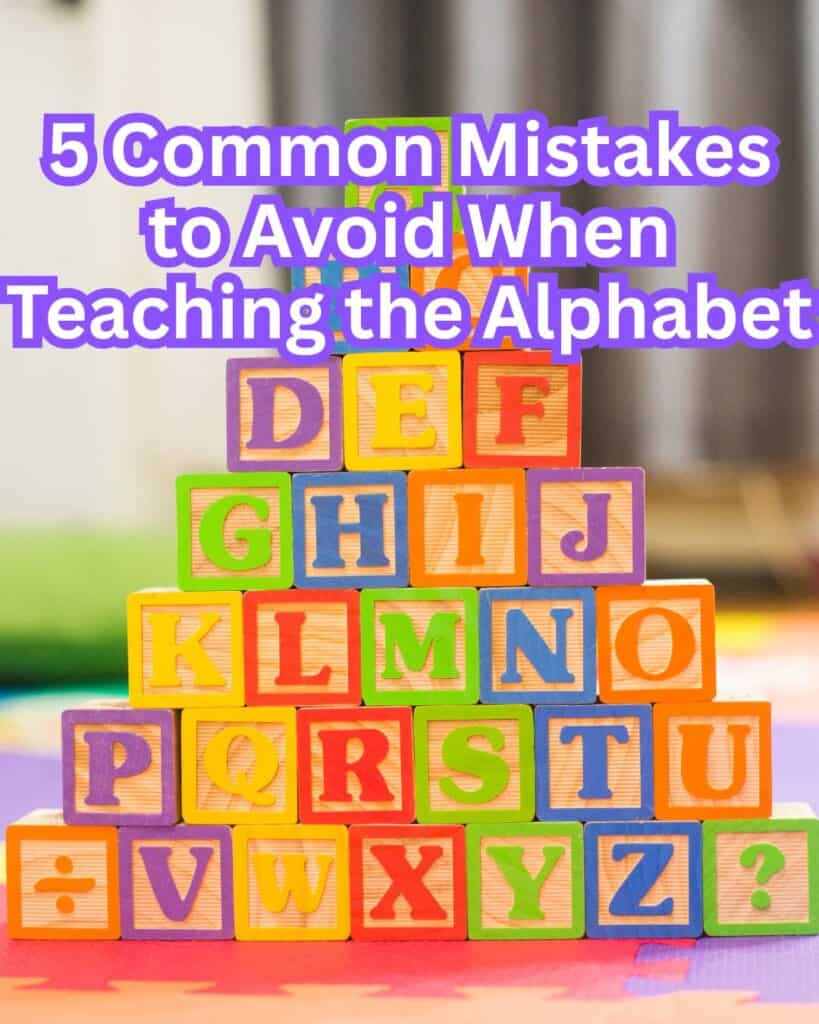
5 Common Mistakes to Avoid When Teaching the Alphabet
Let’s take a closer look at what might be getting in the way of your child’s alphabet success. By understanding these common mistakes, you’ll be better equipped to support your little learner with confidence and ease. Here’s what to watch out for as you dive into alphabet instruction.
Mistake #1: Starting Too Early or Too Fast
It’s so exciting to start teaching your little one the alphabet, but jumping in too early or moving too quickly can backfire. When a child isn’t developmentally ready for formal instruction, they may become overwhelmed, frustrated, or even start resisting learning altogether. And that’s the opposite of what we want!
The truth is, readiness matters more than age. While some children show interest in letters as early as age three, others may not be fully ready until they’re four or even five—and that’s perfectly okay. Pushing before they’re ready can create negative associations with learning that are difficult to overcome.
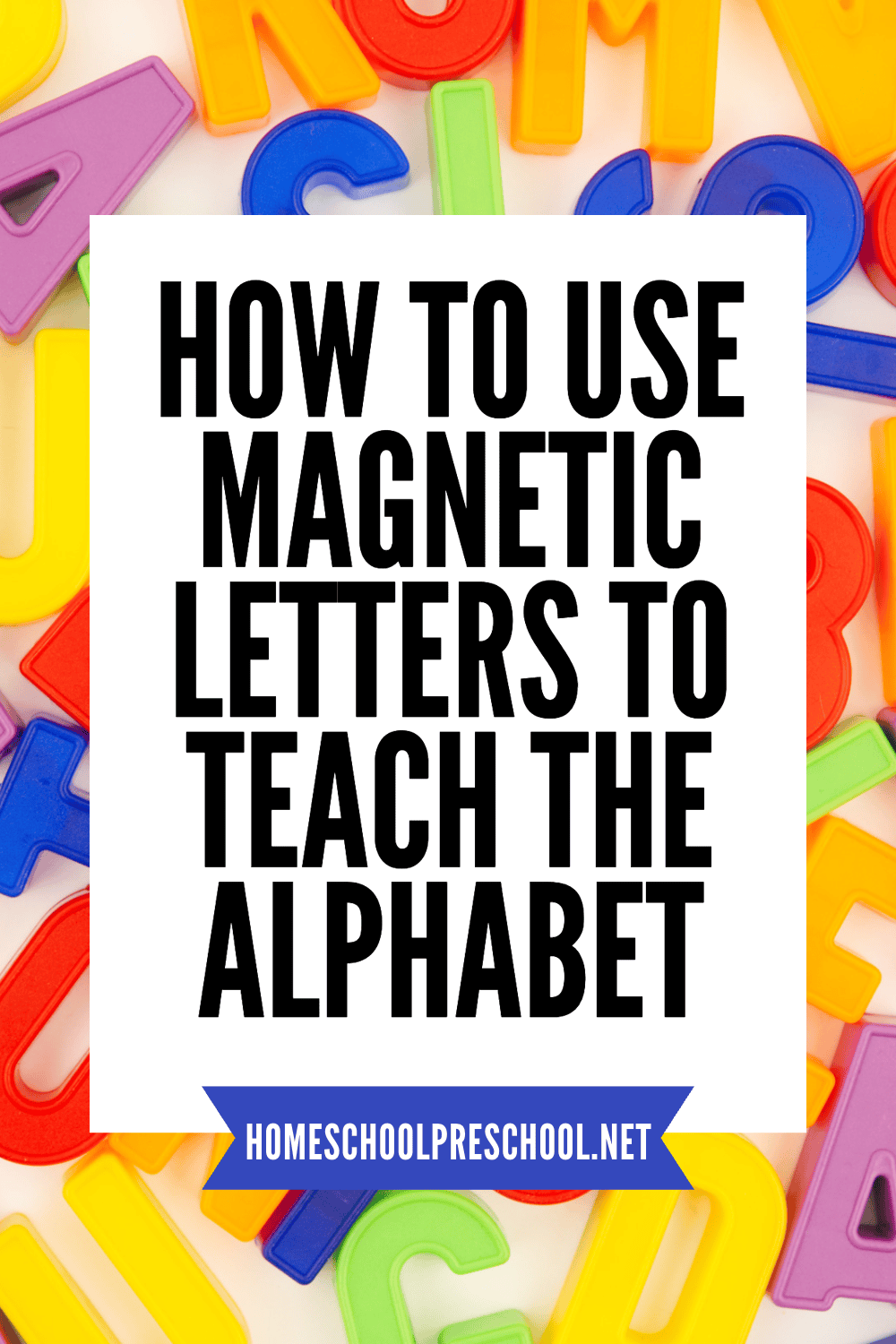
Instead, focus on playful exposure. Sing the ABC song together, read alphabet books, play with letter magnets, or go on a letter hunt around the house. These gentle, hands-on experiences lay the groundwork for future learning in a way that feels fun and pressure-free.
Mistake #2: Focusing Only on Letter Names (Not Sounds)
It’s common to start with letter names—after all, singing the ABC song is a childhood classic! But if we focus only on names without also teaching the sounds those letters make, we risk confusing young learners when it’s time to start reading.
Understanding letter sounds is a crucial part of phonemic awareness, which forms the foundation for decoding words and developing strong reading skills. According to early literacy experts at the National Center on Improving Literacy, learning the connection between letters and their corresponding sounds is one of the most effective strategies for beginning readers.
So what’s the best approach? Teach letter names and sounds together right from the start. For example, when introducing the letter B, say: “This is the letter B. B says /b/, like in ball.” Reinforce it with multi-sensory activities, such as clapping, tracing sandpaper letters, or using alphabet songs that emphasize both the name and the sound.
???? Want to build your child’s phonemic awareness? Try this letter sound game for hands-on fun!
Mistake #3: Teaching Letters in Alphabetical Order
It might feel natural to teach letters from A to Z—after all, that’s the order we sing them in! But following the alphabetical sequence isn’t the most effective way for young children to learn letters and sounds.
Some letters are easier to pronounce, easier to recognize, or appear more often in early vocabulary than others. For example, the letter M (as in mom) is usually much more familiar to a preschooler than the letter Q. Teaching letters in a random A–Z order can make learning feel harder and less relevant.
A better approach? Use a research-backed sequence like SATPIN, which introduces frequently used and phonetically distinct letters first. Or try grouping letters by theme—such as animals, food, or names—to make them more meaningful and memorable. If you’re not sure where to begin, here’s a helpful breakdown of what order to teach the alphabet to preschoolers based on both research and real-world experience.
Mistake #4: Using Worksheets as the Primary Tool
Worksheets can be a helpful part of teaching the alphabet, but they’re not meant to be the only part. It’s easy to fall into the trap of printing off page after page, especially when you’re short on time or want to see some “proof” of learning. But for very young learners, too much seatwork can quickly lead to boredom or burnout.
In my own experience, I’ve found that kids learn best through movement, play, and hands-on interaction. That’s when the magic happens—when they’re singing the ABCs while jumping on letter cards, finding hidden letters in a sensory bin, or playing a matching game with magnetic tiles. These moments spark curiosity and help children truly connect with what they’re learning.
Worksheets still have their place! I like to use them as a gentle follow-up to more active play—something quiet to reinforce a concept after we’ve explored it in a fun and engaging way. A quick letter tracing sheet or cut-and-paste activity can be the perfect way to wrap up a lesson.
????️ Looking for playful ways to pair printables with hands-on learning? Try these animal alphabet letter crafts for a creative twist or explore our alphabet playdough mats to combine fine motor fun with letter practice!
Mistake #5: Ignoring Individual Learning Styles
Every child is wonderfully unique—and that includes how they learn. One of the most common missteps I see is using a one-size-fits-all approach when teaching the alphabet. But what works beautifully for one child might completely miss the mark for another.
Some kids are visual learners who need to see letters in books or on flashcards. Others are auditory learners, who pick up information best through songs and repetition. And many young children are kinesthetic learners, meaning they need to move, touch, and explore with their hands to truly grasp a concept.
The key is to observe how your child naturally engages with the world. Do they light up during story time? Maybe they love singing or dancing? Do they prefer puzzles or hands-on crafts? Once you notice their learning style, you can tailor your approach—whether it’s using tactile letters, alphabet movement games, catchy songs, or even an educational app used in moderation.
FAQs About Teaching the Alphabet
Most children begin recognizing letters between the ages of 3 and 5, but every child develops at their own pace. Focus on playful exposure rather than strict timelines.
Signs of readiness include interest in books, asking about letters, or recognizing familiar signs or names. If your child enjoys alphabet songs or points out letters in their environment, it’s a great time to start!
Instead of going A to Z, start with high-utility letters like S, A, T, P, I, and N. You can also group letters by theme or use a research-backed sequence that supports early sound blending.
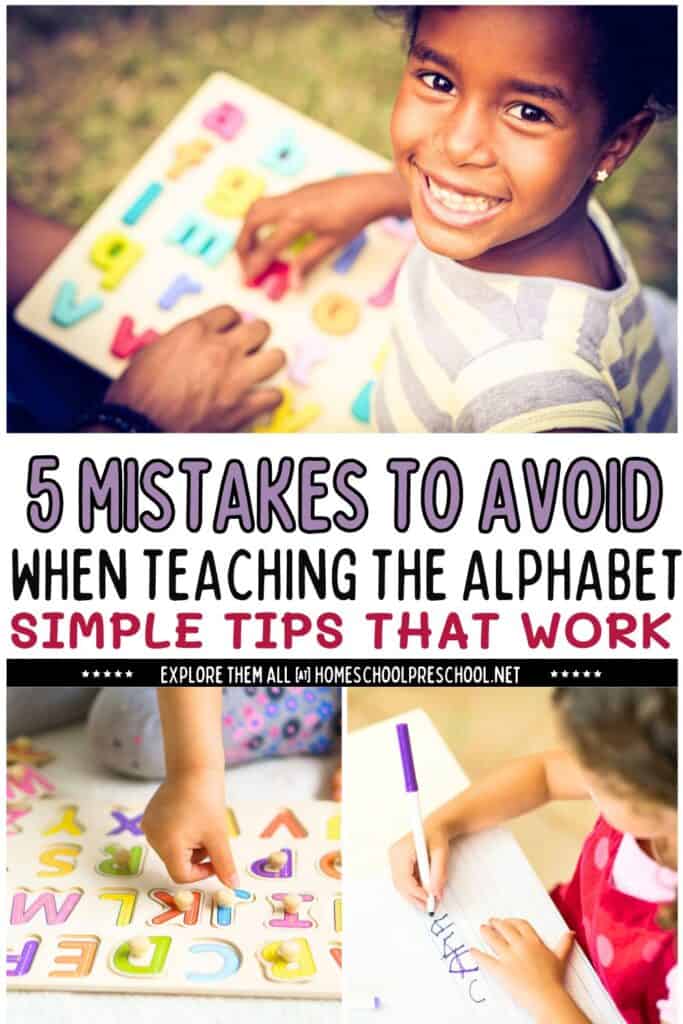
Learning the alphabet is a journey, not a race. Every child learns at their own pace, and that’s something to celebrate, not stress over. With a bit of patience, flexibility, and a lot of playful learning, your child will grow in confidence and curiosity at every step.
I’ll never forget one little boy I worked with who had zero interest in letter worksheets—but the moment we brought out a sensory bin full of letter tiles and animal figures, he lit up. Within a few weeks, he was pointing out letters at the grocery store and “reading” signs during car rides. All it took was shifting our approach to meet his learning style.

Tara is the brains behind Homeschool Preschool, where her journey from preschool and public school teacher to homeschooling mom of three fuels her passion for early childhood education. With a blend of expertise and firsthand experience, Tara’s writings offer practical tips and engaging resources to support families in creating meaningful learning adventures at home.