The Very Busy Spider Sequencing Pictures
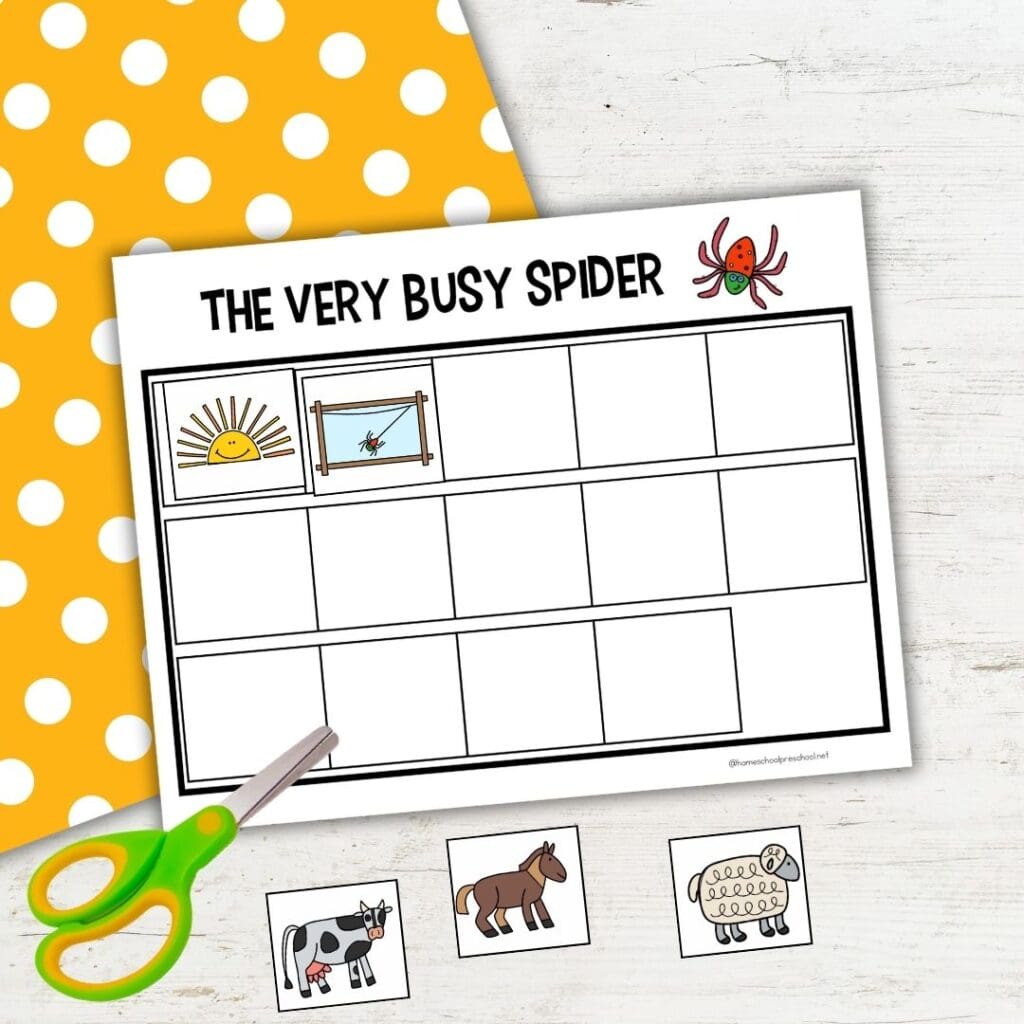
Looking for a fun way to teach sequencing? These The Very Busy Spider sequencing pictures help kids retell the story! Story sequencing helps preschoolers understand order, build comprehension, and strengthen memory. This printable activity makes it easy for little learners to practice these skills while having fun.
Using story sequencing cards, kids will put the events of The Very Busy Spider in order. This hands-on activity helps preschoolers recognize patterns in storytelling. It also builds language skills as they talk about what happens first, next, and last. Whether you’re a teacher or a parent, this activity is a great way to reinforce story structure in a simple way.
This sequencing activity is a perfect companion to the book. It’s engaging, easy to prep, and great for building literacy skills. Let’s take a look at how it works!
The Very Busy Spider Sequencing Pictures
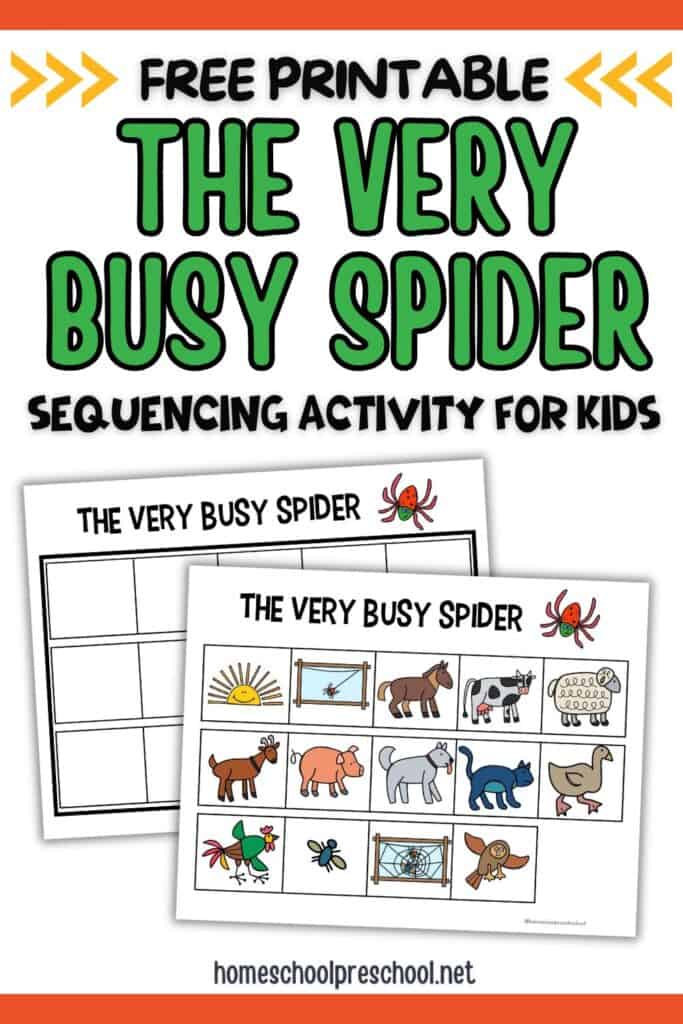
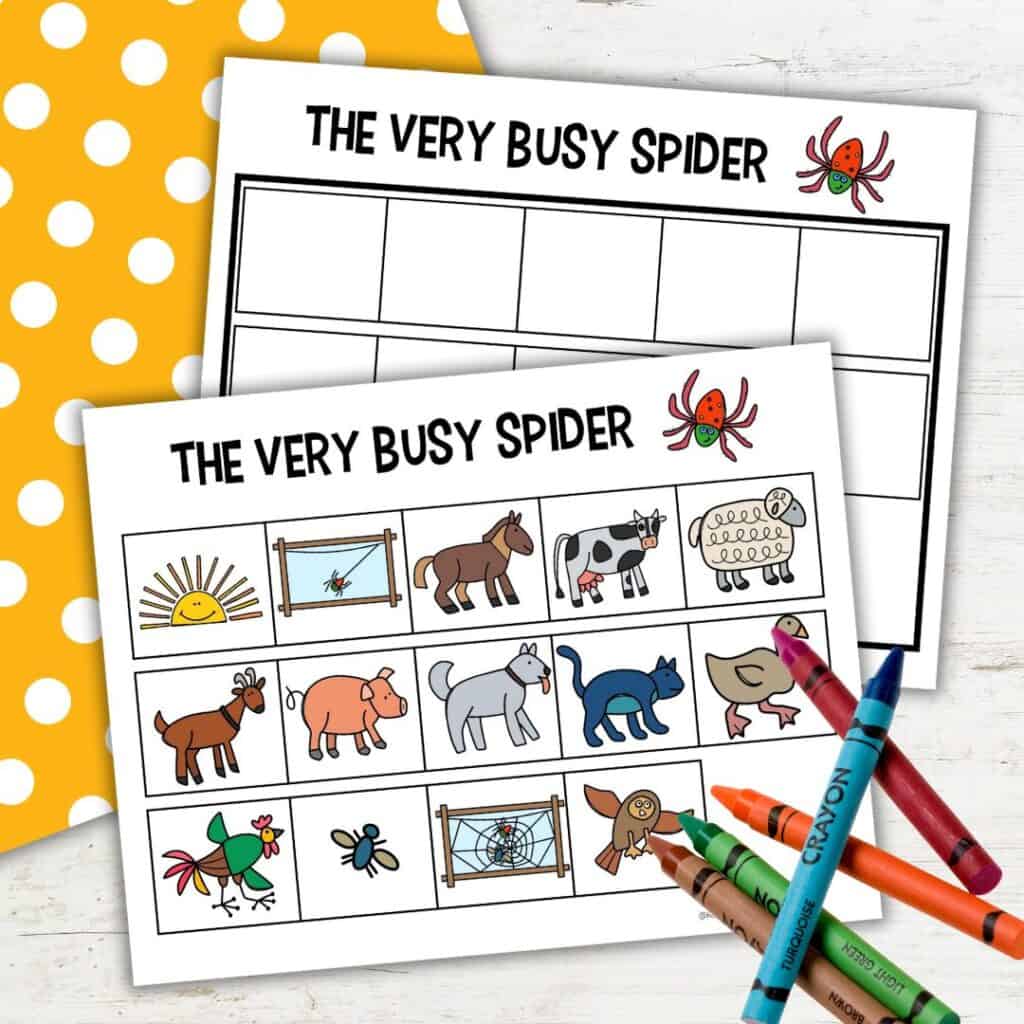
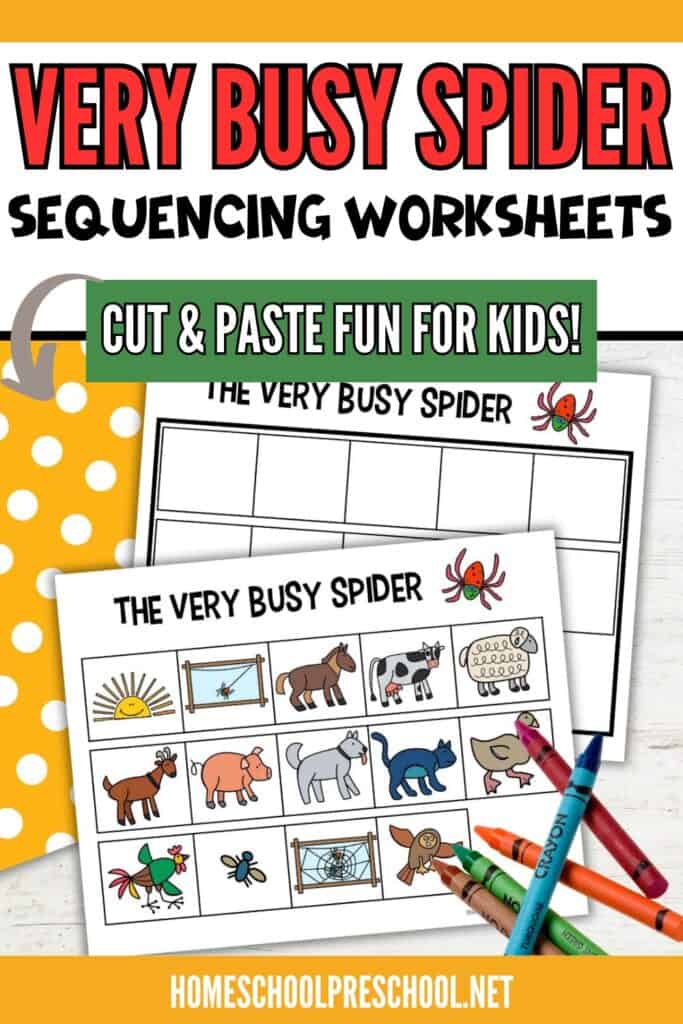
These story sequencing activities help young learners practice story sequencing, comprehension, and recall skills. With these story sequencing cards, kids will put the events of The Very Busy Spider in order, reinforcing their understanding of beginning, middle, and end. This fun, hands-on activity also builds language skills as children describe what happens in the story.
What’s Included:
- Printable sequencing cards featuring key events from The Very Busy Spider
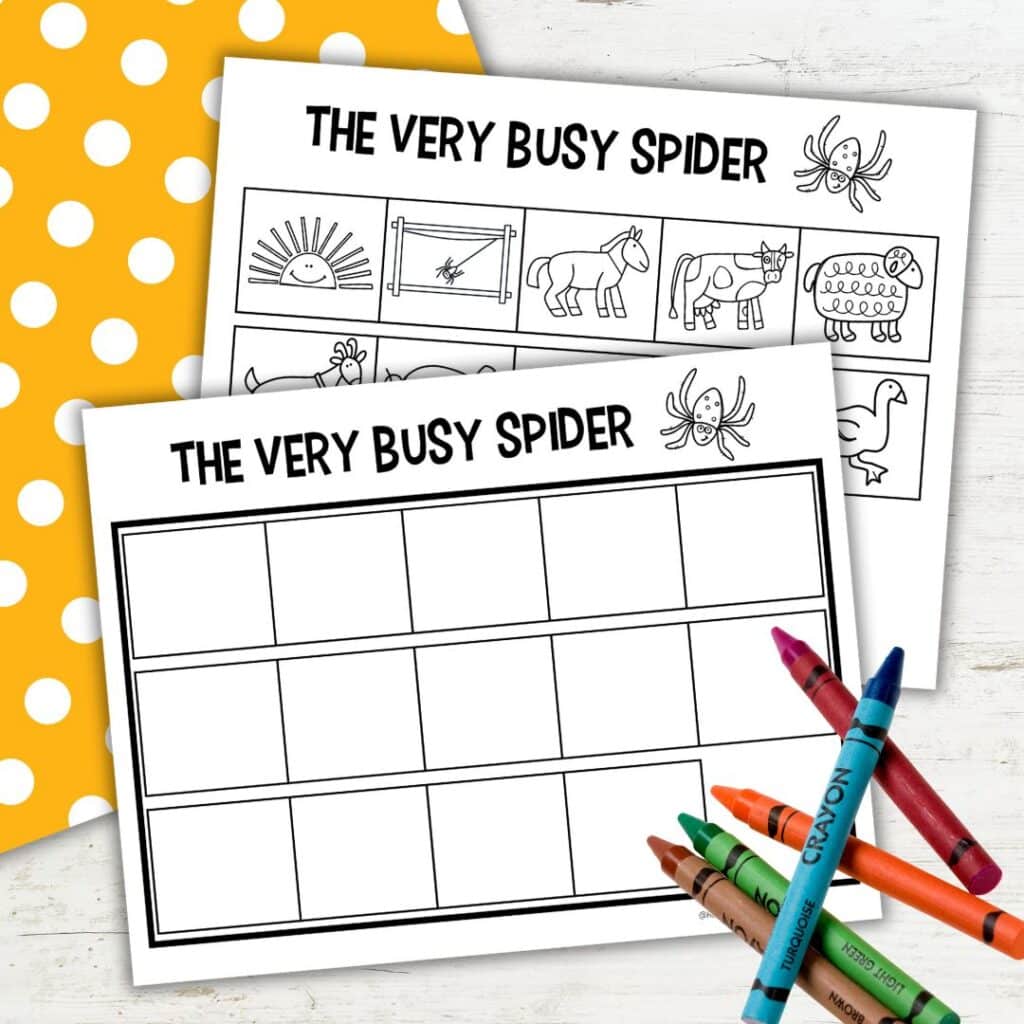
- A cut-and-paste worksheet for sequencing practice
- Full-color and black-and-white versions for flexible printing options
- Simple instructions for easy use at home or in the classroom
These printables make learning fun by turning story retelling into an interactive experience. Kids will love engaging with a favorite book while developing essential literacy skills. Perfect for preschool and kindergarten learners, this activity combines education and enjoyment in one easy-to-use set.
What can kids learn from this activity?
Kids learn important early literacy skills with this activity. Sequencing helps them understand story structure by identifying the beginning, middle, and end. It also strengthens comprehension as they recall and organize key events.
Retelling the story in order builds memory and encourages language development. Plus, cutting and pasting the pictures improves fine motor skills.




What is The Very Busy Spider about?
The Very Busy Spider is about a spider who spends her day spinning a web. Different farm animals invite her to play as she works, but she stays focused on her task. By the end of the story, she finishes her web and catches a fly.
The book teaches patience, perseverance, and the importance of hard work. With simple text and repetitive patterns, it’s an excellent story for young learners.
What is story sequencing an important skill for little ones?
Story sequencing helps kids understand how events happen in order. It strengthens comprehension by teaching them to recognize beginnings, middles, and endings.
Retelling a story in sequence builds memory and critical thinking skills. It also improves language development as kids describe events using words like first, next, and last. Practicing sequencing prepares children for reading and writing success.
Story Sequencing Activities for Kids
Story sequencing activities help kids develop comprehension, memory, and storytelling skills. Hands-on activities make learning sequence fun and engaging. From cut-and-paste worksheets to hands-on retelling games, there are many ways to practice. These activities build a strong foundation for reading and writing. Explore more sequencing activities on my site for even more learning fun!
- Pirates Love Underpants Story Sequencing
- If You Give a Cat a Cupcake Story Sequencing Cards
- Growing Vegetable Soup Story Sequencing Cards
- The Mitten Story Sequence
- Very Hungry Caterpillar Sequencing
Spider Activities for Preschoolers
Spider-themed activities are a great way to extend the learning fun. Hands-on crafts, games, and science activities help kids explore spiders in new ways. These ideas will complement the sequencing activity and keep little learners engaged. Try these fun spider-themed ideas to bring the story to life!
Spider Books
Reading more books about spiders can deepen kids’ understanding and make learning even more exciting. Stories about spiders teach facts, build vocabulary, and spark curiosity. Check out these great books to pair with your sequencing activity!
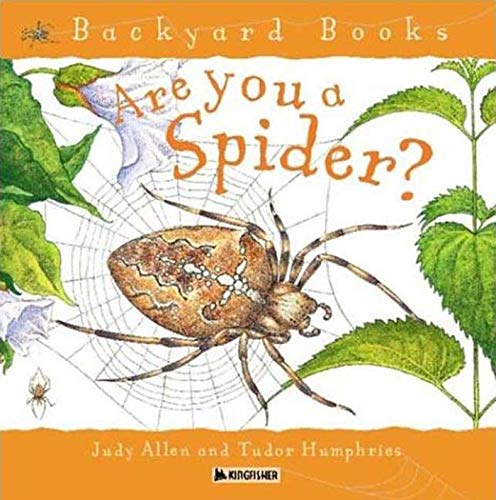


Are You a Spider? is a simple, nonfiction book that teaches kids about spiders. It explains how spiders grow, spin webs, and catch food with easy-to-understand text and illustrations.
I’m Trying to Love Spiders uses humor and fun facts to help kids (and adults) overcome their fear of spiders. Playful illustrations and interesting science make learning about spiders exciting and less scary.
Jumper: A Day in the Life of a Backyard Jumping Spider follows a tiny jumping spider as he hunts, explores, and avoids danger. This story blends facts with storytelling to give kids a close-up look at a spider’s daily life.
Spider Crafts for Preschoolers
Spider crafts are a fun way to build creativity while reinforcing story concepts. Hands-on projects help kids develop fine motor skills and imagination. Try these spider-themed crafts to add extra learning fun!
- Spider Preschool Craft
- Preschool Spider Craft
- Spider Craft for Preschoolers
- Salt-Painted Spider Web Craft
- Spider Paper Plate Craft
Spider Worksheets
Worksheets are a great way to reinforce learning through fun, structured activities. Spider-themed printables can help kids practice sequencing, fine motor skills, and early literacy. Check out these related worksheets for even more learning fun!
- Spider Counting
- Spider Life Cycle
- Color by Number Spider
- Itsy Bitsy Spider Printable
- Spider Life Cycle Diagram
FAQs
This activity is perfect for preschool and kindergarten kids ages 3-6. Younger kids may need help cutting and pasting, while older ones can do it more independently. It’s a great way to build early literacy and comprehension skills.
It helps, but it’s not required! Reading the book first makes sequencing easier since kids will recognize the story events. If you don’t have the book, you can tell the story using the sequencing pictures.
Try using the cards for a storytelling game! Have kids act out the events as they put them in order. You can also glue the pictures onto a long strip of paper to create a sequencing timeline.
Story sequencing helps preschoolers build important literacy and comprehension skills, and this The Very Busy Spider activity makes it easy and fun. Kids will love putting the events in order while strengthening memory, storytelling, and fine motor skills.
Whether you’re a parent or teacher, this printable is a simple way to support early learning. Try pairing it with spider-themed books, crafts, and worksheets for even more hands-on fun!


Tara is the brains behind Homeschool Preschool, where her journey from preschool and public school teacher to homeschooling mom of three fuels her passion for early childhood education. With a blend of expertise and firsthand experience, Tara’s writings offer practical tips and engaging resources to support families in creating meaningful learning adventures at home.