Why Emotional Regulation Matters for Preschool Learning
Nobody tells you why emotional regulation matters for preschool learning. You just find out—usually the hard way.
You set out the playdough. You printed the worksheet. You even remembered to grab the good scissors this time. You’re homeschooling preschool, and you’re trying to do it well.
But your shoulders are up near your ears. Your jaw is clenched. And your patience feels paper-thin before you’ve even called your child over.
Here’s the quiet truth no one mentions enough: Learning doesn’t start with the lesson. It starts with the nervous system.
If today feels off—if the activity flopped or your child melted down or you snapped when you didn’t mean to—you didn’t fail. Your child isn’t broken. This is just information. Not a problem.
At a Glance: Emotional Regulation & Learning
Why it matters: Dysregulated kids can’t learn—their thinking brain shuts down
Key insight: Your child co-regulates with your nervous system
What to do:
• Regulate yourself first (you’re the anchor)
• Ten peaceful minutes beat thirty tense ones
• Let activities go when they’re not working
Bottom line: Connection before curriculum. Your calm is their calm.
Emotional Regulation Comes Before Academics
Your preschooler’s brain is still learning how to feel safe and settled. It’s building the foundation for everything that comes later—focus, flexibility, problem-solving, resilience.
When a child feels dysregulated—overwhelmed, anxious, overstimulated—learning shuts down. The thinking part of their brain goes offline. It doesn’t matter how engaging the activity is or how perfect your lesson plan looks.
A calm body makes room for curiosity.
Here’s the gentle reframe: Ten peaceful minutes beat thirty tense ones—every single time.
You don’t need to finish the printable pack. You don’t need to push through when it’s not working. You need your child to be regulated enough to actually be present. That’s the whole game.
Your Child Borrows Your Nervous System
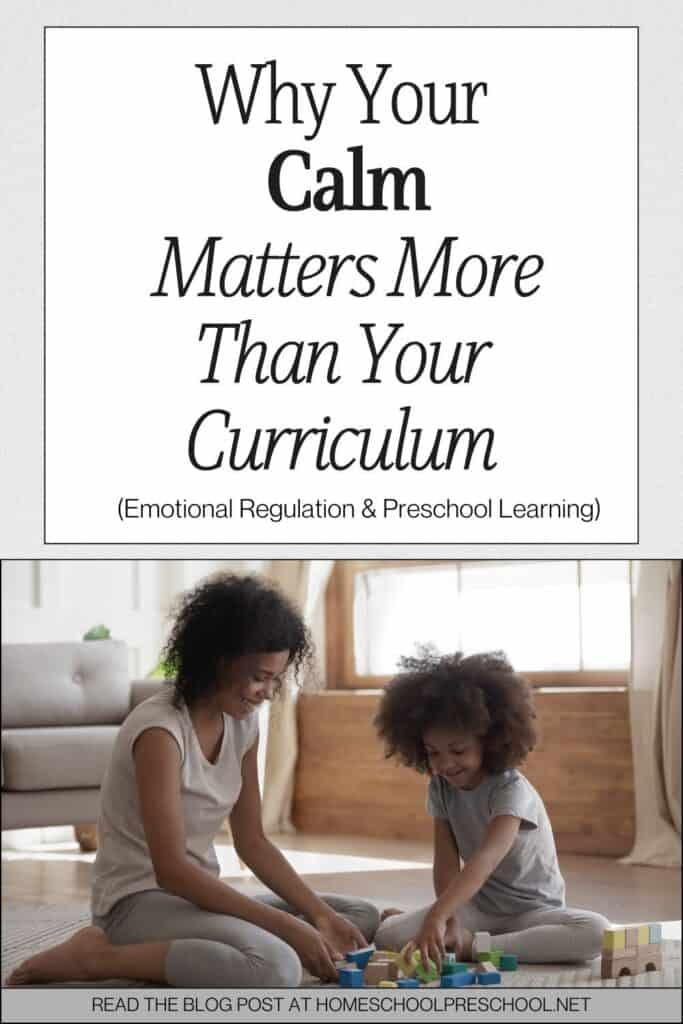
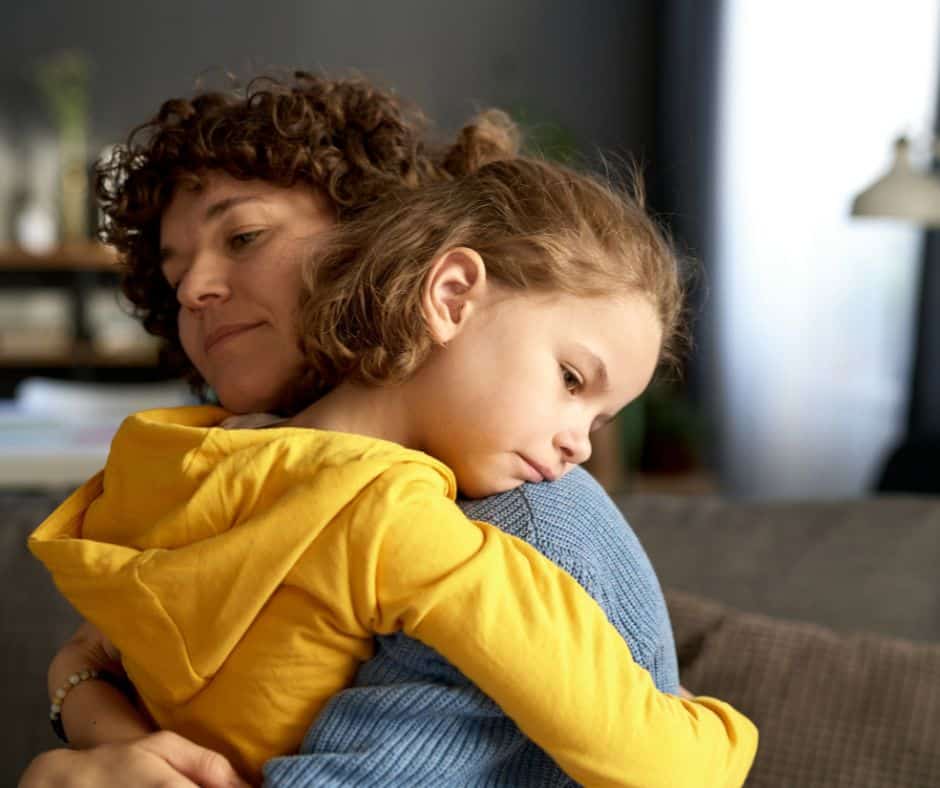
Kids don’t just listen to our words. They sync with our energy. When you rush, they rush. When you’re anxious, they feel it. When you soften, they soften too.
This is called co-regulation, but you don’t need the fancy term. You need to know this: Your preschooler is looking to you to know if they’re safe. If the moment is okay. If they can relax.
Think about it. The same puzzle that feels impossible during a chaotic morning—when you’re trying to get three things done and everyone’s hungry—suddenly becomes magical after you’ve had a snack, taken a deep breath, and slowed down.
Same puzzle. Different nervous system.
And here’s the relief: You don’t need to be perfectly calm. You just need to be a little more grounded than your child. That’s it. You’re the anchor, not the Buddha.
Teaching Happens Through Presence, Not Performance
Preschool learning isn’t about delivering content. It’s not about how many activities you complete or whether your child can write their name yet.
It’s about shared attention and emotional safety.
Sitting nearby counts.
Smiling counts.
Pausing the plan when it’s not working counts.
Connection is the curriculum at this age.
Your child will learn their letters. They’ll learn to count, to cut, to share. But right now, what they’re learning most is whether the world is a safe place to explore. Whether trying new things feels good. Whether you’ll stay calm when they struggle.
That’s the foundation everything else is built on.
What Calm Teaching Actually Looks Like (In Real Life)
Calm teaching doesn’t look like a Pinterest board. It looks like this:
- Letting an activity go when it’s clearly not working
- Reading the same book for the fourth time because it feels comforting
- Choosing one printable instead of trying to finish the whole pack
- Taking a breath before you redirect behavior
- Saying “Let’s try this later” instead of powering through
- Choosing connection over completion
Calm doesn’t mean quiet. It doesn’t mean your child sits perfectly still or that you never feel frustrated.
Calm means you’re regulated enough to respond instead of react. That’s the bar. And some days you’ll hit it, and some days you won’t, and both are completely normal.
How to Create More Calm Without Overhauling Your Day
You don’t need a complete life overhaul. You just need a few small shifts that remove friction.
Fewer choices for you = more peace. Decision fatigue is real. When you’re constantly deciding what to do next, your nervous system stays activated. Print-and-go activities remove that mental load. One less thing to figure out.
Predictable routines without rigid schedules. Your child doesn’t need to do math at 10:03 AM. But they do settle better when they know what generally comes next. Morning routine, then playtime, then lunch. Simple rhythms, not rigid rules.
Structure supports calm. Pressure destroys it. There’s a difference between having a loose framework and feeling like you have to perform. You can create a structure that feels supportive—not suffocating.
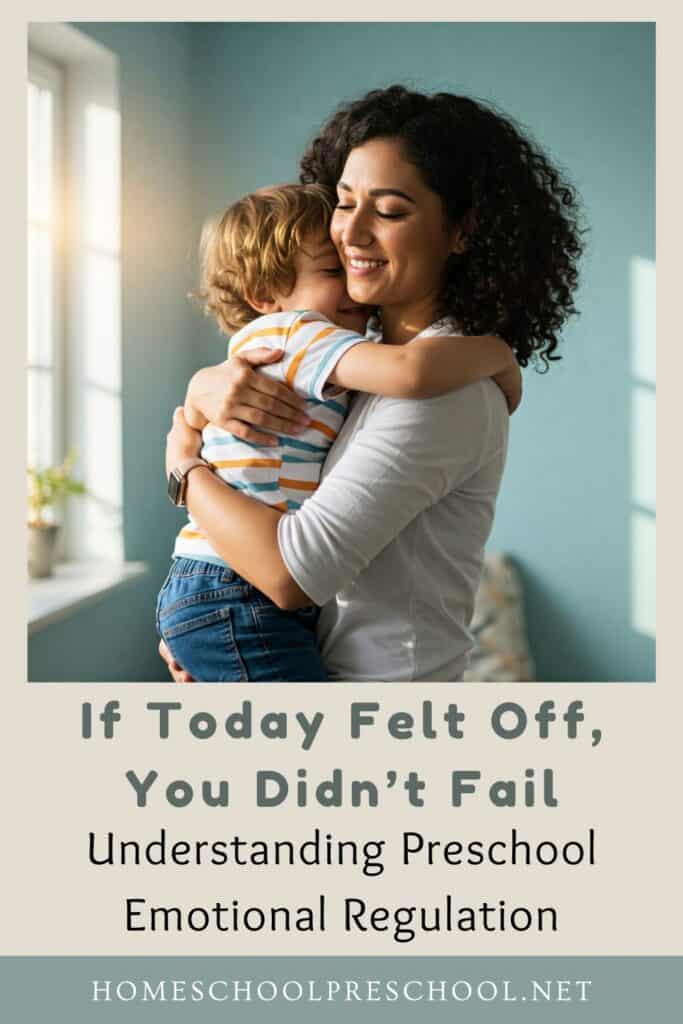
If you take nothing else from this, take this: You’re not trying to raise a perfect student. You’re raising a human who feels safe enough to learn.
And that starts with you giving yourself permission to slow down, simplify, and trust that peaceful moments matter more than productive ones.
Your calm is their calm. And that’s the most important lesson you’ll teach all week.
Tara is the brains behind Homeschool Preschool, where her journey from preschool and public school teacher to homeschooling mom of three fuels her passion for early childhood education. With a blend of expertise and firsthand experience, Tara’s writings offer practical tips and engaging resources to support families in creating meaningful learning adventures at home.